What PSI Should Honda Accord Tires Be? (Complete Guide)
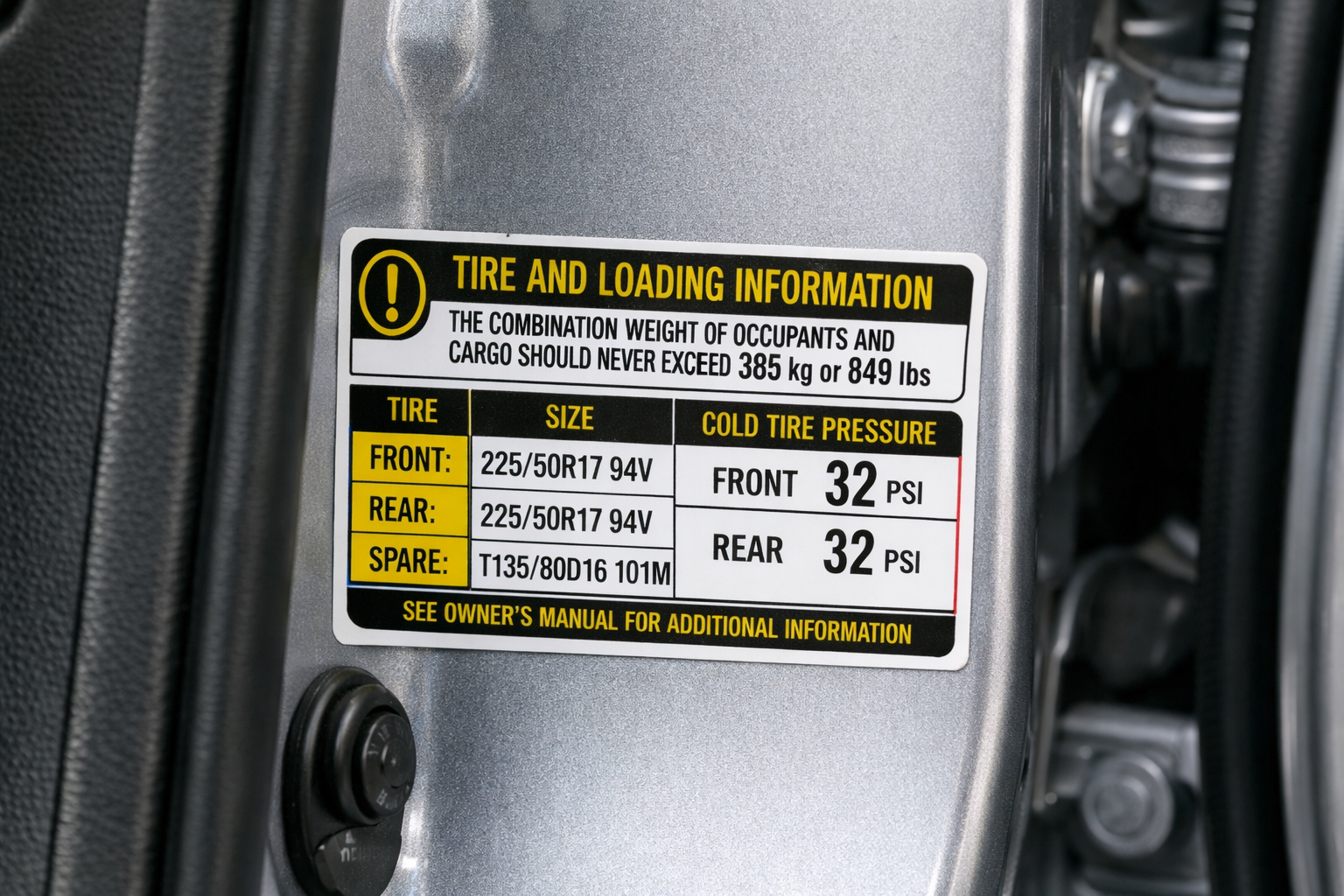
For nearly every Honda Accord sold, the correct tyre pressure is 32 PSI, and guessing this number is one of the most common mistakes owners make. Honda Accord tyres usually need 32 to 35 PSI. You should check your exact PSI on the driver’s side door sticker. This keeps your tyres safe, improves fuel efficiency, and provides better control while driving.
In this guide, you will learn the correct PSI range for Honda Accord tyres and where to find the exact number for your vehicle.
What Is the Recommended Tire PSI for the Honda Accord?
Some Accord years are more sensitive to maintenance issues; researching problem years before buying helps avoid preventable ownership headaches.
Honda Accord Tire PSI Chart:
| Model Year | Front PSI | Rear PSI |
| 2003 to 2007 | 32 PSI | 32 PSI |
| 2008 to 2012 | 32 PSI | 32 PSI |
| 2013 to 2017 | 32 PSI | 32 PSI |
| 2018 to 2024 | 32 PSI | 32 PSI |
Where Can You Find the Correct Tire PSI for Your Accord?
Many drivers guess tyre pressure, but Honda already provides the exact PSI for your specific Accord, making mistakes completely avoidable. These spots show the factory-recommended PSI for your specific model year and trim, so you always set the pressure correctly and avoid guesswork.
- Driver door sticker: Shows the exact front and rear PSI for your Accord.
- Owner’s manual: Lists tyre pressure for all trims and wheel sizes.
- Honda website: Lets you check PSI by entering your model year and version.
The driver door sticker is the most reliable source because it accounts for your specific trim, wheel size, and load rating. Online charts and forums sometimes list incorrect pressures for certain years, particularly if aftermarket wheels were factory-installed on specific trims. Always cross-reference with the door sticker before setting pressure.
As recommended by automotive experts.
Does Tire PSI Change by Honda Accord Model Year?
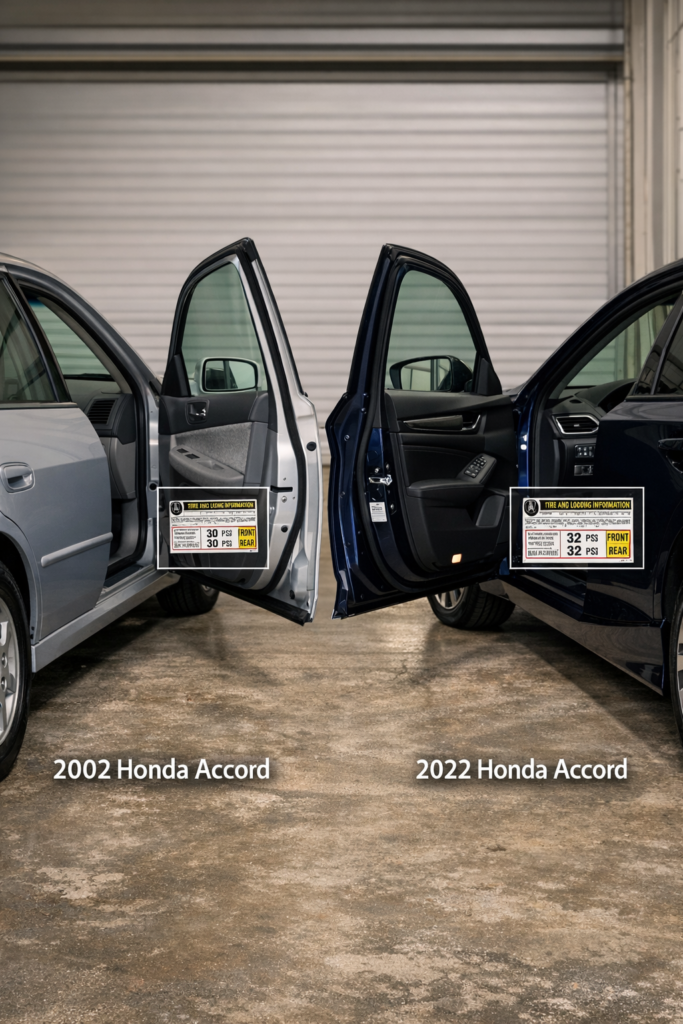
Most Honda Accord generations use the same PSI, but there are small variations in older models or trims with larger wheels. Newer Accords (2008 to 2024) stay consistent at 32 PSI, while some early 2000s models may shift slightly depending on wheel size. Always check your year, as minor changes can affect handling.
Honda Accord Tire PSI by Model Year:
| Year Range | Recommended PSI | Notes |
| 1998 to 2002 | 30 to 32 PSI | Lower trims stay at 30, larger wheels need 32. |
| 2003 to 2007 | 32 PSI | Same across trims, stable pressure range. |
| 2008 to 2012 | 32 PSI | No change even with different engines. |
| 2013 to 2017 | 32 PSI | Sport trims with 18 wheels stay at 32. |
| 2018 to 2024 | 32 PSI | Hybrid and non-hybrid use 32. |
In practice, Honda has kept the Accord tyre pressure consistent across generations because the suspension and weight balance have remained stable, even as engines and features have evolved.
Checking the door sticker matters more than trusting online charts, especially on older Accords with aftermarket wheels.
Some Accord years are more sensitive to maintenance mistakes, including incorrect tyre pressure.
Also Read: What Years To Avoid Honda Accord?
Does Trim Level or Wheel Size Affect Tire PSI?
Yes, tyre trims and wheel sizes can affect tyre sensitivity, but the recommended PSI usually remains the same. Sport trims and larger wheels do not always require higher PSI, but they react more strongly when pressure is even slightly off, so keeping the exact factory number becomes more important.
- Sport trims: Need precise PSI because stiffer suspensions show pressure changes fast.
- Larger wheels: Ride becomes harsher if PSI drops even a little.
- Low-profile tyres lose air more quickly and feel underinflated sooner.
- Aftermarket wheels often require closer monitoring because tyre volume can change even if PSI remains the same.
Should You Adjust Tire PSI for City or Highway Driving?
You do not need different PSI for city or highway driving because Honda sets one pressure that works safely in both conditions. Just keep the factory PSI, usually 32. What matters more is checking the pressure often, as city roads can drop PSI faster, while long highway trips heat the tyres and raise them slightly.
City driving creates more stop-and-go cycles, which means tyres flex more frequently at lower speeds. This gradually releases air over time, especially in older tyres or those with minor valve stem wear. Highway driving at sustained speeds generates heat that temporarily raises PSI by 3 to 5 points. Neither condition requires you to adjust from the factory setting, but both are reasons to check pressure at least once a month rather than relying on the TPMS alone.
What Does Cold Tire Pressure Mean for the Honda Accord?
Cold tyre pressure means checking the PSI before the tyres warm up from driving. Honda recommends using cold readings, as heated tyres show higher readings. Measuring them cold gives you the true, accurate pressure your Accord needs for safe handling and even wear. Many drivers overinflate without realising it because they check PSI right after driving, which almost always gives a falsely high reading.
- When to measure: Check PSI in the morning or after the car sits for at least 3 hours.
- Why cold matters: Heat raises PSI and gives false readings, making you think the pressure is correct when it is not.
How Does Weather Affect Honda Accord Tire PSI?
Weather changes your Accord’s tyre pressure more than most drivers realise. Cold air lowers the PSI, while hot weather raises it. These swings can affect braking, fuel use, and the car’s stability, so checking pressure during seasonal changes is important.
- Winter PSI drop: Cold air shrinks, causing a 1 to 2 PSI loss for every 10°F drop.
- Summer PSI rise: Heat expands air, adding 1 to 2 PSI and sometimes triggering the TPMS.
This is why tyre shops see the highest TPMS warnings during seasonal temperature shifts, not because of leaks.
What Happens If the Tire PSI Is Too Low on an Accord?
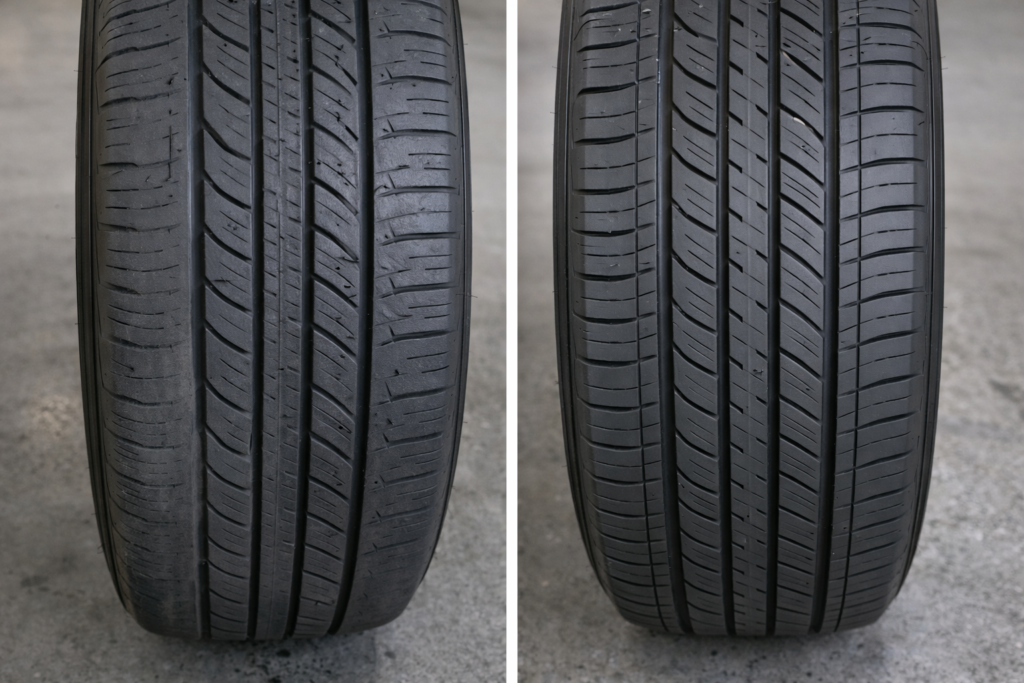
Low tyre pressure harms your Accord in several ways. The car feels heavier, the engine works harder, and the tyres heat up more than they should. Driving like this for a long time can damage the tyres and even affect how safely the car stops or turns. Long-term low pressure is one of the fastest ways to ruin otherwise good tyres. This is why many Accord owners replace tyres early without realising that pressure neglect, not tyre quality, was the real problem.
- Poor MPG: Low tyre pressure increases rolling resistance and fuel consumption.
- Tire wear: Edges wear out fast, and the tyre can overheat.
- Safety risk: Steering becomes slow, and braking distance gets longer.
Many Accords fall short of their expected lifespan for one simple reason: neglecting tyre pressure.
A Honda technician once described a customer who came in complaining about poor fuel economy and rough steering on a 2019 Accord. The car had been driven for three months at 24 PSI, eight pounds below the factory setting. The front tyres showed uneven edge wear, the braking distance had increased noticeably, and the owner had no idea the pressure was low because the TPMS light had never turned on. A single pressure check would have prevented months of unnecessary tyre wear and a premature replacement.
Also Read: How Many Miles Can A Honda Accord Get?
What Happens If the Tire PSI Is Too High on an Accord?
Too much air makes the ride stiff and reduces the tyres’ grip on the road. Your Accord may feel bumpy, and the tyres can wear out faster in the centre. High PSI also reduces the car’s stability during braking or on rough roads. Overinflation reduces the tyre’s contact patch, which directly affects braking grip.
- Harsh ride: Extra pressure makes bumps and potholes feel stronger.
- Fast centre wear: The middle of the tyre wears more quickly than the edges.
- Reduced control: Less traction affects braking and cornering.
How Does Correct PSI Improve MPG and Ride Comfort?
The right PSI helps your Accord roll smoothly without wasting energy. When pressure is set correctly, the engine does not struggle, and the tyres stay flat on the road, as they are designed to. This balance improves fuel economy and makes the drive more comfortable.
- Better MPG: Proper tire pressure reduces aerodynamic drag, helping the car use less fuel.
- Smoother ride: Tires absorb bumps better when inflated to the right pressure.
- Stable handling: Correct PSI keeps the car steady during turns and braking.
Real-world fuel economy tests on midsize sedans consistently show a 0.5 to 1.0 MPG improvement when tyres are maintained at the correct PSI versus running 6 to 8 PSI low. Over a full year of driving, that difference adds up to several tanks of fuel. For Accord owners who already benefit from Honda’s efficient engines, correct tyre pressure is one of the simplest ways to protect that fuel economy without spending anything. Tyre pressure affects more than ride quality; it even changes how hard the engine and timing system work over time.
Also Read: Do Honda Accords Have Timing Belts Or Chains?
Can You Rely on the TPMS Light to Indicate Tire Pressure?
You should not depend only on the TPMS light because it warns you too late, usually when the pressure has already dropped too much. It is helpful, but it is not a precise measuring tool. Checking PSI with a gauge is still the only reliable way to keep your Accord tyres at the correct level.
During routine inspections, tyre shops and Honda service centres still rely on manual pressure gauges, because TPMS alerts come too late to prevent uneven wear.
How TPMS Works on the Honda Accord:
TPMS warns you when a tyre drops about 25% below the recommended PSI. It detects low pressure but does not show exact numbers, so you still need a manual check.
Limits of TPMS Accuracy:
TPMS can miss small drops, react slowly in cold weather, and will not alert you if the tyres are overinflated. That is why a handheld gauge remains the safer, more accurate method. A practical habit that many experienced Accord owners follow is checking tyre pressure on the first of every month. This takes less than five minutes with a basic handheld gauge and costs nothing. Over time, it builds a reliable picture of how each tyre holds pressure, which also helps identify slow leaks before they become flat tyres on the road.
What Are Common Honda Accord Tire Pressure Mistakes?
Many drivers make simple PSI mistakes that hurt fuel economy and wear out their tyres early. These errors are easy to avoid once you know what to look for, and fixing them keeps your Accord running more smoothly and safely.
- Trusting the TPMS only: It warns late and does not show the exact PSI.
- Not checking monthly: Tires lose air slowly even without leaks.
- Setting PSI when tyres are hot: Gives false high readings.
- Ignoring seasonal changes: Weather shifts can rapidly raise or lower PSI.
- Overinflating for mileage: Extra PSI hurts traction and centre wear.
One mistake that rarely gets mentioned is inflating tyres to the maximum PSI printed on the tyre sidewall. That number is the tyre’s maximum capacity, not the recommended operating pressure. Many owners confuse the two and overinflate significantly. The correct number is always on the driver’s door sticker, not the tyre itself.
FAQ’s:
Is 32 PSI the correct tyre pressure for most Honda Accord models?
Yes, most Accord years and trims are designed to run best at 32 PSI on all four tyres.
Should I check my Accord’s tyre pressure when the tyres are cold?
Yes, cold readings give the true PSI before heat raises the pressure.
Do I need to change PSI for city or highway driving?
No, you should keep the factory PSI because Honda sets it for all driving conditions.
Can the weather affect the PSI in Honda Accord tyres?
Yes, cold drops PSI and heat increases it, so seasonal checks are necessary.
Is it okay to depend only on the TPMS for tyre pressure?
No, TPMS reacts slowly and does not display the exact PSI, so a gauge check is still needed.
Conclusion:
Honda has kept the Accord tyre pressure simple for a reason. When PSI remains at the factory setting, the car drives predictably, tyres last longer, and fuel economy remains consistent. Most handling and wear complaints trace back to pressure neglect, not design flaws. Check it monthly, trust the door sticker, and your Accord will behave exactly as Honda intended.
The five-minute monthly pressure check is the lowest-effort, highest-return maintenance habit an Accord owner can build. It costs nothing, requires only a basic gauge, and directly protects tyre life, fuel economy, and braking safety. Most owners who develop this habit early never experience the premature tyre wear or handling complaints that pressure neglect causes.