How Long Do Honda Brake Pads Last? (Inspect Now)
Most Honda owners only think about brake pads when they hear a squeal; by then, the damage has often already started. Whether you drive a lightweight Civic or a fully-loaded Odyssey, knowing exactly when to replace your pads can save you $300 to $600 in avoidable rotor repairs.
In this guide, you will learn when to inspect and replace your Honda’s brake pads, which helps you avoid costly repairs, maintain safe stopping distances, and keep your car performing at its best.
Why Does Brake Pad Lifespan Matter?
Brake pads directly affect how fast your car stops. If they wear too thin, stopping distance increases and damage spreads to the rotors and calipers. Replacing pads on time protects your safety and saves money by preventing bigger repairs later.
For example, a Honda Accord with 2mm pads needs roughly 20% more stopping distance than one with fresh 8mm pads a difference that can mean the gap between a near-miss and a collision in emergency braking.
Are Worn Honda Brake Pads Dangerous?
In real driving, thin brake pads reduce braking power and increase stopping distance, especially in emergencies.
- Longer stopping distance: Pads under 3mm can increase stopping distance by 15 to 20%, which matters most in wet conditions or sudden stops
- Rotor damage: Metal-on-metal contact scores the rotor surface, turning a $150 pad job into a $400 to 600 rotor replacement
- Brake fade: Thin pads overheat faster, reducing braking force precisely when you need it most
This is not optional maintenance; it is basic safety.
Can Delayed Brake Pad Replacement Increase Repair Costs?
In most cases, delaying pad replacement often turns a $150 job into a $600+ repair. When brake pads wear below 2mm, the metal backing plate makes direct contact with the rotor surface. Every stop grinds metal against metal, scoring deep grooves into the rotor. A rotor that could have lasted 70,000+ miles gets destroyed in as little as 2,000 to 3,000 miles of metal-on-metal contact. Once grooved, rotors cannot be resurfaced; they must be replaced. That turns a $150 pad replacement into a $400 to $600 job per axle. If both axles are neglected, you are looking at $800 to $1,200 in a single visit. The parts cost the same; what multiplies is the labor and the rotor replacement fee that was entirely avoidable.
How Many Miles Do Honda Brake Pads Last?
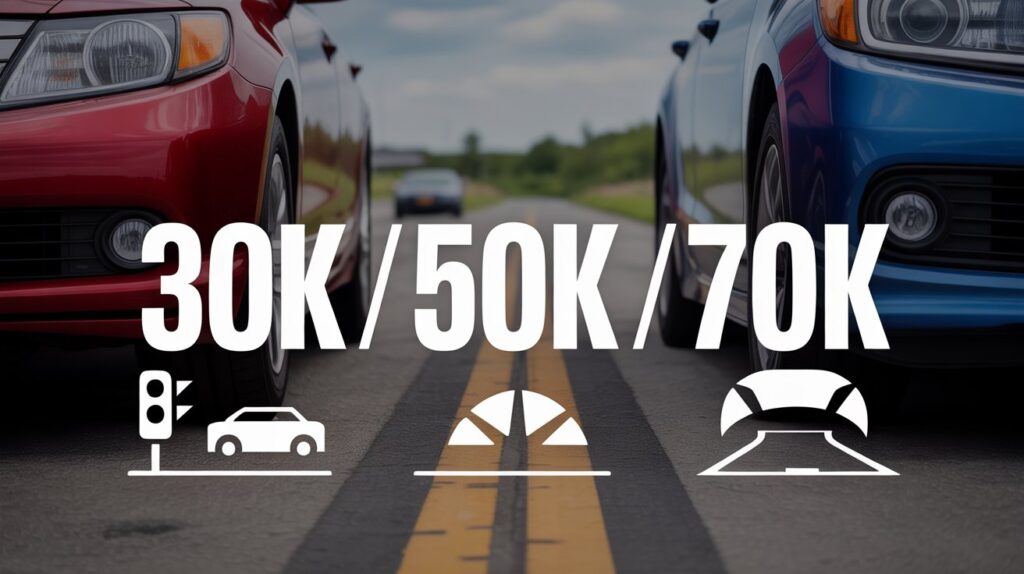
Most Honda brake pads last 40,000 to 60,000 miles in mixed driving. Most Honda owners do not think about brake pads until they hear a noise or the dealer brings it up during an oil change. The problem: by the time noise starts, pads are typically already below 3mm, the replacement threshold. You’ve lost your buffer. By then, the pads are often already close to their limit. Some drivers hit 70,000 miles on highways, while aggressive city drivers may need pads at 30,000 miles. Mileage varies because driving habits matter more than brand.
What Is the Average Mileage for Honda Brake Pads?
| Driving Type | Average Pad Life |
| City driving | 30,000 to 40,000 miles |
| Mixed use | 40,000 to 60,000 miles |
| Highway use | 60,000 to 70,000+ miles |
If you split your driving 50 by 50 between city and highway, expect to land in the 45,000 to 55,000 mile range. The single biggest variable? How often you brake hard. Two Honda Accord drivers with identical cars can see a 20,000-mile difference in pad life purely due to driving habits. Real-world data from Honda owners supports these ranges.
What Is the Safe Brake Pad Thickness for Honda Cars?
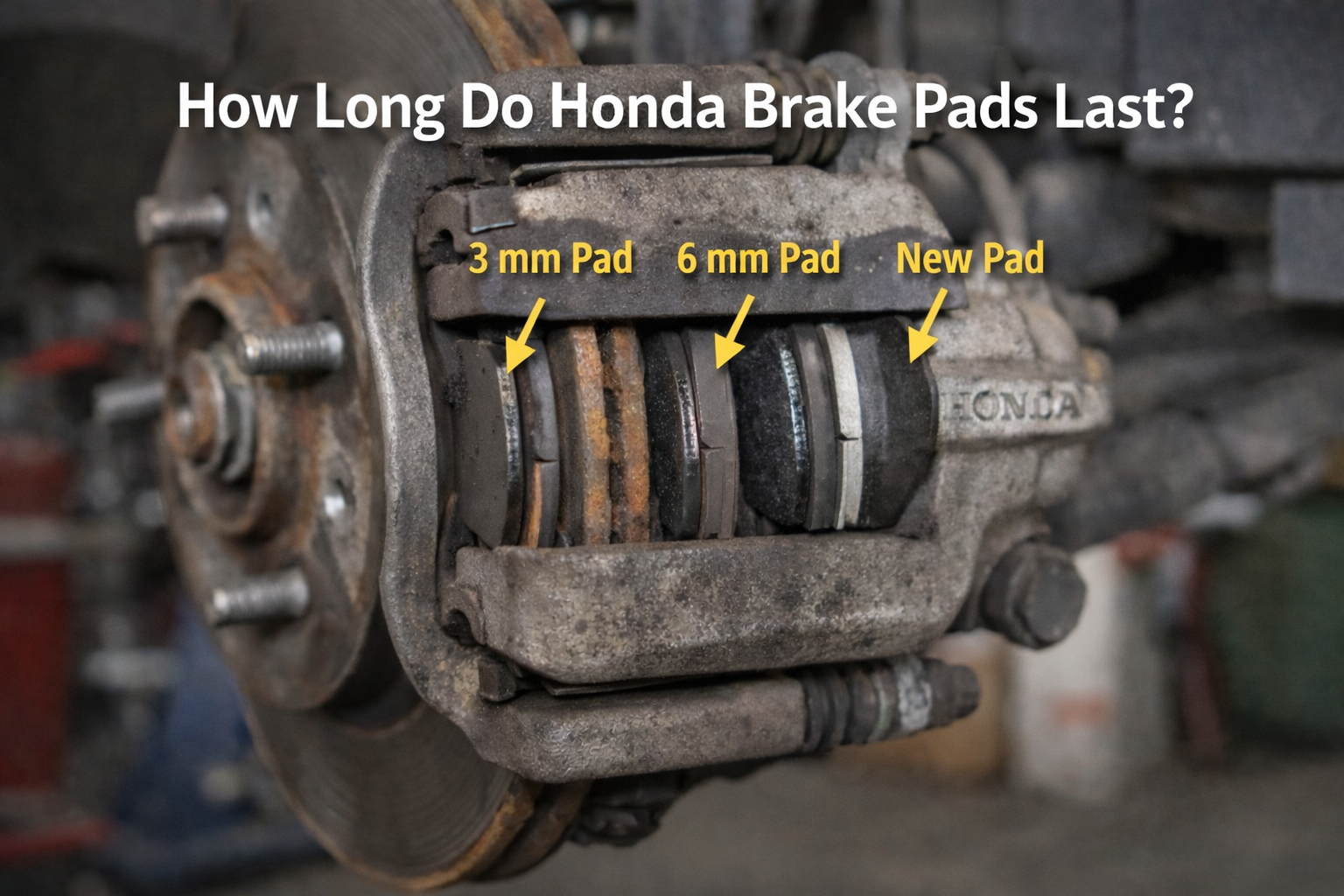
Safe thickness is 3 to 4 mm. Anything below that is end-of-life.
| Pad Thickness | Status |
| 8 to 10 mm | New |
| 5 to 6 mm | Good |
| 3 to 4 mm | Replace soon |
| Under 3 mm | Unsafe |
In a typical visual inspection of a Honda Accord, pads around 4 mm still look okay to most drivers, but technicians already mark them as near-replacement. Below 3 mm, heat buildup increases quickly.
Why Do Honda Brake Pads Wear Out Faster Than Normal?
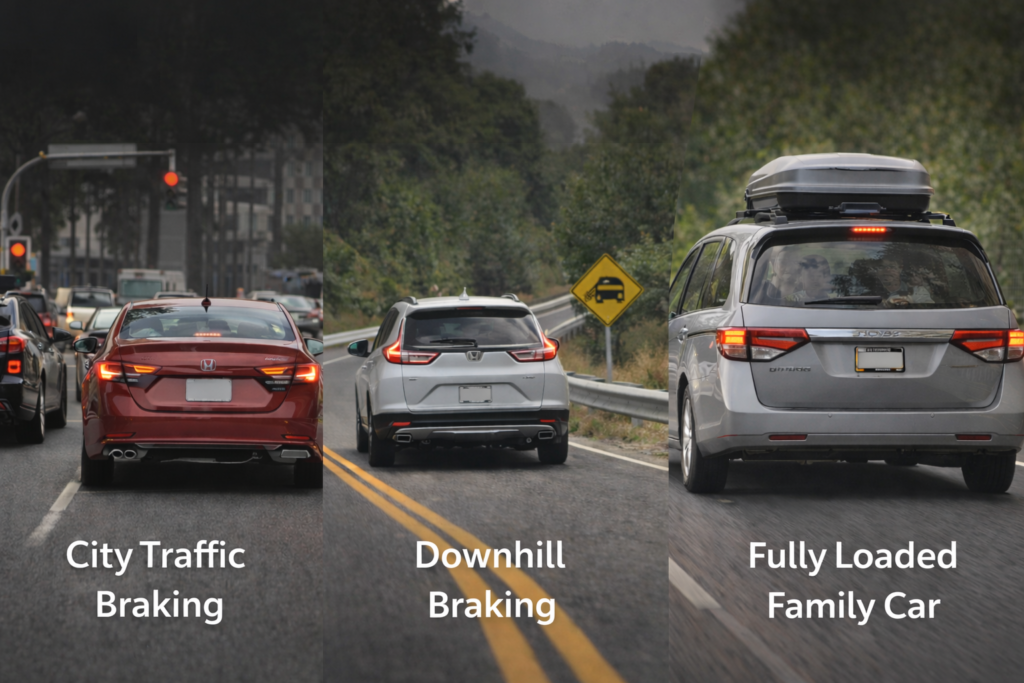
Brake pads wear faster than normal when driving habits and conditions consistently work against them. The most common causes are frequent hard braking, heavy stop-and-go city traffic, driving in hilly areas, and carrying extra passengers or cargo regularly.
Downhill driving is particularly damaging. Drivers who ride the brakes on long descents instead of using engine braking can wear pads down in half the expected time. Practical fix: On long downhill stretches, shift to a lower gear (or use ‘B’ mode on Honda hybrids) to let engine braking slow the car. This alone can double the life of your brake pads on hilly routes. Towing or carrying heavy loads also increases braking force required at every stop, which accelerates pad wear significantly even on newer Hondas.
Does Driving Style Impact Honda Brake Pad Longevity?
Yes, more than anything else. The difference is significant: a driver who brakes from 60mph to 0 generates far more heat than one who slows gradually from 60 to 20mph before stopping. Heat is what destroys pad material. Keeping a 3 to 4 second following distance and anticipating stops rather than reacting to them is the single most effective habit for extending pad life. Two identical Hondas can have completely different pad life.
Is City Driving Harder on Brake Pads Than Highway Driving?
City driving wears pads almost twice as fast. The math is straightforward: in city traffic, a driver can brake 50 to 80 times within 10 miles. On a highway, that same 10 miles might require 2 to 3 brake applications. Each city stop generates heat that breaks down pad material. Smooth highway driving lets pads cool completely between uses. Over 40,000 miles, that difference compounds; city drivers often need two pad replacements in the same mileage where a highway driver needs one.
Highway driving uses brakes far less. In heavy city traffic, drivers may brake dozens of times within a few miles. Even smooth drivers wear pads faster simply because the brakes never get a break.
Why Do Front Honda Brake Pads Wear Faster Than Rear?
Front Honda brake pads wear out faster because most of the stopping work is done at the front. When you brake, the car’s weight shifts forward. This puts more pressure on the front wheels, so the front pads handle about 70% of the braking force.
The engine also sits over the front axle, adding extra load to the front axle. Front brakes slow the car down, while rear brakes mainly help with balance and stability. Honda service guidelines expect this wear pattern, which is why technicians always inspect the front pads first. This is normal behavior, not a defect, and it happens on nearly all front-engine vehicles.
Tire pressure directly affects how evenly your brakes work. Under-inflated tires increase rolling resistance and force the brakes to compensate, which accelerates front pad wear faster than most drivers realize.
Also Read: What PSI Should Honda Accord Tires Be?
Do Honda Models Wear Brake Pads at Different Rates?
Honda brake pad life changes by model because weight, power, and how the vehicle is used all affect braking load. Lighter cars stop more easily and save pads. Heavier vehicles work the brakes harder and wear them faster. This is normal engineering behavior, not a quality issue.
What Honda service data and long-term owner reports show:
Honda Civic:
Civic brake pads usually last 50,000 to 70,000 miles. Its lighter body and smaller engine put less stress on the brakes, especially on the highway. At $150 to 200 per axle replacement, a Civic owner replacing pads once vs twice in 100,000 miles saves $150 to 200.
Honda Accord:
Accord brake pads typically last 40,000 to 60,000 miles. Extra weight and stronger engines mean more braking force than a Civic.
Honda CR-V and Honda SUVs:
CR-V pads often last 35,000 to 55,000 miles. Taller height, heavier body, and frequent city driving increase brake wear.
Honda Odyssey (Minivan):
Odyssey pads usually last 30,000 to 45,000 miles. Passenger loads and stop-and-go driving make minivans the hardest on brakes. Odyssey owners should budget for brake service every 2 to 3 years rather than 3 to 4 like a Civic driver
Honda Hybrids:
Hybrid models can exceed 70,000 miles before brake pads need to be replaced. Regenerative braking slows the car using the electric motor, reducing friction brake use.
Expert insight:
Honda technicians expect shorter pad life as vehicle weight increases. This wear pattern aligns with Honda maintenance guidelines and real-world inspection data.
Planning long-term Honda maintenance? Knowing whether your Accord has a timing belt or chain helps you schedule major service intervals alongside brake inspections for better cost planning.
Also Read: Do Honda Accords Have Timing Belts Or Chains?
What Factors Affect Honda Brake Pad Life?
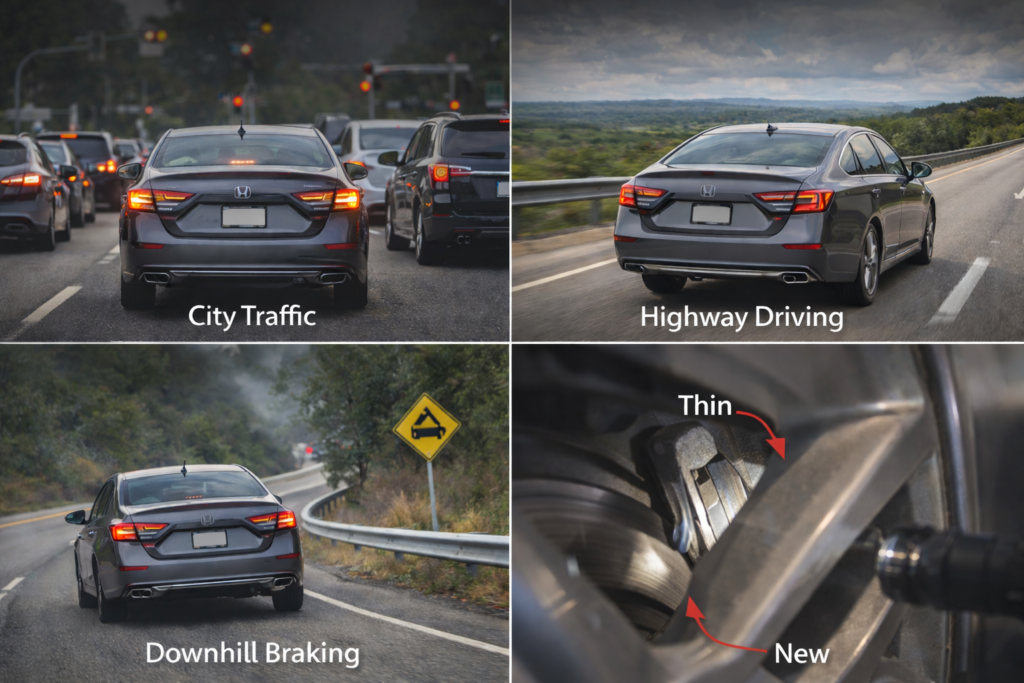
Honda brake pad life is not fixed. It changes based on vehicle weight, driving habits, road conditions, and pad material. No single factor controls wear. Everything adds up over time, which is why two Honda owners can see very different brake pad lifespans.
Which Brake Pad Material Lasts the Longest?
Brake pad material plays a major role in lifespan and performance.
- Ceramic pads: last the longest
- Semi-metallic pads: medium lifespan
- Organic pads: shortest lifespan
Are Ceramic Brake Pads Better for Longevity?
Ceramic brake pads last the longest for most Honda drivers. They wear slowly, stay quiet, and produce less brake dust. The higher upfront cost is usually offset by longer replacement intervals.
Semi-Metallic vs Organic Brake Pads :
- Semi-metallic pads stop harder but wear faster and can be noisy. Best for aggressive driving.
- Organic pads are cheap and quiet but wear quickly. Not ideal for long-term use.
Expert note:
Honda technicians generally recommend ceramic pads for daily driving because they balance longevity, safety, and rotor protection better than other materials.
This guidance aligns with Honda maintenance standards and real-world brake inspections performed during routine service checks.
What Are the Signs Honda Brake Pads Need Replacement?
Honda brake pads usually warn you before they become dangerous. The problem is that most drivers ignore those warnings until damage starts. The most common sign is squealing when braking. This sound comes from a wear indicator built into the pad. It means the pads are low but still safe for now. Grinding, however, is serious. That means metal is touching metal, and rotor damage is already happening.
You may also feel weaker braking or need more distance to stop, especially in traffic or rain. Some drivers notice a brake warning light, which often appears when pad wear affects brake fluid levels. Vibration in the steering wheel during braking can also signal worn pads, which can cause rotor damage.
Expert Guide:
If you hear noise, feel reduced stopping power, or see a warning light, your Honda brake pads should be inspected immediately. Waiting longer only increases repair costs and safety risk.
Can You Check Honda Brake Pads Without Removing Wheels?
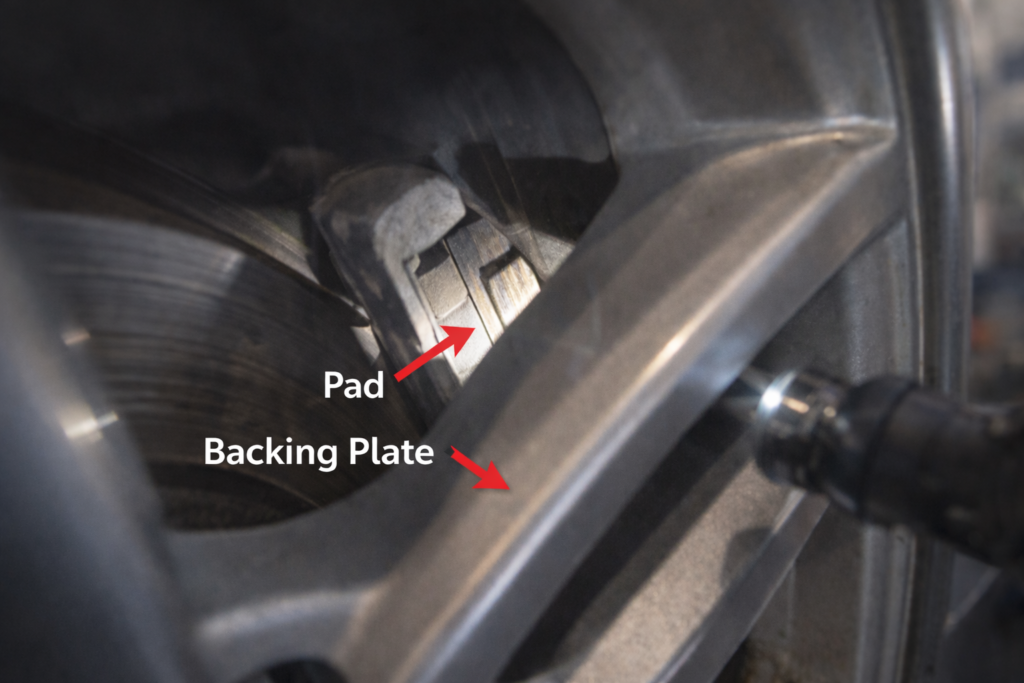
Yes, on many Honda models. During routine brake checks, technicians often use a flashlight through the wheel spokes. If the friction material is thinner than the metal backing plate, replacement is already overdue.
How to Visually Inspect Honda Brake Pads
- Look through the wheel spokes
- Check pad thickness
- Under 3 mm = replace
Takes under 2 minutes.
What Is a Brake Wear Indicator?
A brake wear indicator is a small metal tab built into the brake pad. When the pad wears down to a certain thickness, this tab makes contact with the rotor and creates a high-pitched squealing sound. It is intentionally annoying; the goal is to get your attention before the pad becomes unsafe. On most Honda models, this indicator triggers around 2 to 3mm of remaining pad thickness.
How Often Should Brakes Be Professionally Inspected?
Honda brake pads should be professionally inspected every 10,000 to 15,000 miles, or at every oil change visit. Most Honda dealerships and service centers include a brake inspection as part of routine maintenance checks. If you drive primarily in city traffic or hilly areas, inspect every 10,000 miles rather than waiting for the longer interval.
Are OEM Honda Brake Pads Better Than Aftermarket?
OEM Honda pads are engineered specifically for your vehicle’s weight, rotor type, and ABS calibration. They last 40,000 to 60,000 miles and perform predictably, but they are not always the best value. For most daily drivers, ceramic aftermarket pads from brands like Bosch QuietCast, Akebono ProACT, or Power Stop Z17 outperform OEM in longevity and dust reduction while costing $20 to $40 less per axle. Where OEM wins is on newer Honda models still under warranty; using aftermarket pads cannot void a warranty by law, but OEM pads eliminate any compatibility dispute with the dealer. Avoid cheap no-name pads under $25 per axle; they use low-grade organic compounds that wear out in 20,000 to 25,000 miles and can score rotors faster than OEM pads would.
Is the Dealer Lying About Your Honda Brake Pads?
Not always, but it happens. Dealerships sometimes recommend pad replacement when pads are at 4mm, even though the safe driving range is 3mm. This is not always dishonest; technicians prefer to replace early rather than have a customer return with rotor damage.
The best way to protect yourself is to ask the technician to show you the pad thickness measurement directly. Any shop with nothing to hide will do this without hesitation. If they cannot give you a specific number, get a second opinion before approving the job.
A simple rule: at 4mm, ask the technician, Can I safely wait until my next oil change? A good technician will say yes. At 3mm or below, do not wait; the margin for error is gone.
Dealer vs Local Shop: Where Should You Replace Honda Brake Pads?
| Place | Cost | Recommendation |
| Dealer | High | OEM accuracy |
| Local shop | Lower | Best value |
| DIY | Lowest | Experienced owners |
How Much Does Honda Brake Pad Replacement Cost?
Most Honda brake jobs cost $150 to $300 per axle.
What Is the Average Honda Brake Pad Replacement Cost?
| Item | Cost |
| Pads | $50 to $150 |
| Labor | $80 to $150 |
| Total | $130 to $300 |
How Can You Make Honda Brake Pads Last Longer?
Small driving changes do not feel important day to day, but over 40,000 miles, they make a real difference. Driving smarter saves money.
What Driving Habits Extend Brake Pad Life?
The most impactful change is increasing your following distance to 3 to 4 seconds. At that distance, you can slow down gradually instead of braking hard, and gradual braking generates significantly less heat. Drivers who make this one change typically see 8,000 to 12,000 additional miles from a single set of pads. The second habit is coasting. When you see a red light ahead, lift off the accelerator early and let the car slow naturally before applying the brakes. This reduces how often you reach heavy braking, the stops that generate the most pad-destroying heat.
New to car ownership? First-time Honda Accord drivers who understand braking habits early avoid the most common and expensive maintenance mistakes in the first 50,000 miles.
Also Read: Is A Honda Accord A Good First Car?
Does Regular Brake Maintenance Help?
Yes, but most drivers never do it. Brake caliper slide pins need lubrication every 12,000 to 15,000 miles. When these pins seize, the caliper cannot retract fully after braking. The pad stays pressed lightly against the rotor even when you are not braking, creating constant low-level friction. This can wear one pad down to 2mm while the opposite pad on the same axle still has 6mm left. The result: uneven braking, pulling to one side, and a pad replacement job that costs double because only one side was maintained. A $20 caliper service at your next oil change prevents this entirely.
What Are the Biggest Myths About Brake Pad Life?
Brake pad myths can lead to unnecessary costs and unsafe driving.
Is Brake Pad Replacement Based Only on Mileage?
No. Brake pads should be replaced based on their condition, not just the miles on your car. Wear, driving style, and braking habits matter more.
Are Lifetime Brake Pads a Scam?
Mostly yes. Lifetime brake pad warranties usually mean the manufacturer will replace the pads for free when they wear out, but you still pay for labor, rotor inspection, and any related damage. The pads themselves are not literally everlasting.
In practice, lifetime warranty pads are often lower-grade organic compounds that wear faster than ceramic or semi-metallic alternatives. You may end up returning for free pad replacements more often, while paying full labor costs each time. For most Honda drivers, buying quality ceramic pads once is better value than chasing lifetime warranty claims.
Expert tip: Always check pad thickness and look for signs of wear, even if mileage seems low.
FAQ’s:
My Honda dashboard shows a brake warning light. Do I need to replace pads immediately?
Not always. The brake warning light can also indicate low brake fluid, which itself is often caused by worn pads (fluid level drops as calipers extend). Check pad thickness first; if above 3mm, top up fluid and monitor. Below 3mm, replace immediately.
Can regenerative braking on Honda hybrids reduce pad wear?
Yes. Regenerative braking slows the car, reducing friction and extending pad lifespan.
How can I check my Honda brake pads without removing the wheels?
Look through wheel spokes or use a flashlight; pads under 3 mm need replacement.
Which brake pad material lasts the longest?
Ceramic pads last the longest, stay quiet, and perform well for daily driving.
Can I replace just front brake pads and skip the rear?
Yes, and it is common. Front pads handle 70% of braking load and wear 2 to 3x faster than rear pads. Replacing fronts only is normal Honda maintenance. Just confirm rear pad thickness is above 4mm before skipping them.
Conclusion:
Here is the practical summary: check pad thickness at every oil change, replace when you hit 3mm, choose ceramic pads for daily driving, and never ignore grinding sounds. If you drive a heavier Honda like the CR-V or Odyssey, inspect every 10,000 miles, not 15,000. The cost of staying ahead of brake wear is $150–300. The cost of ignoring it is $600+, plus a safety risk that no saving is worth.