Do Honda Accords Have CVT Transmissions? (Find Out Now)
Yes, most modern Honda Accord models use CVT transmissions, but not all. It depends on the year, engine, and trim level. Older Accords used traditional automatic or manual gearboxes. Newer models (especially after 2018) mostly use CVT, except for some higher-performance trims with a 10-speed automatic.
In this guide, you will quickly learn which Honda Accords have CVT transmissions, how they differ, and what actually matters in real-world driving and reliability.
Which Honda Accord Years Have CVT?
Honda did not switch overnight. CVT came in gradually and then became standard.
| Model Year | Transmission Type |
| Before 2013 | Automatic / Manual |
| 2013 to 2017 | CVT (4-cylinder only) |
| 2018 to 2022 | CVT (1.5L) / 10-speed auto (2.0L) |
| 2023 to 2026 | CVT standard (gas + hybrid e-CVT) |
This timeline is what most competitors completely miss, and it is exactly what users are searching for.
Read Guide: When Will the Honda Accord Be Redesigned?
Did Older Honda Accords Use Automatic Instead of CVT?
Yes. Before 2013, Accords mostly came with 5-speed or 6-speed automatic transmissions and some manual options.
No CVT was used back then, which is why older models feel more traditional to drive.
When Did Honda Accord Start Using CVT?
Honda introduced CVT in the Accord around 2013, mainly in 4-cylinder models.
By 2018, CVT became the default for most trims, especially fuel-focused ones.
Which Engines in the Accord Use CVT?
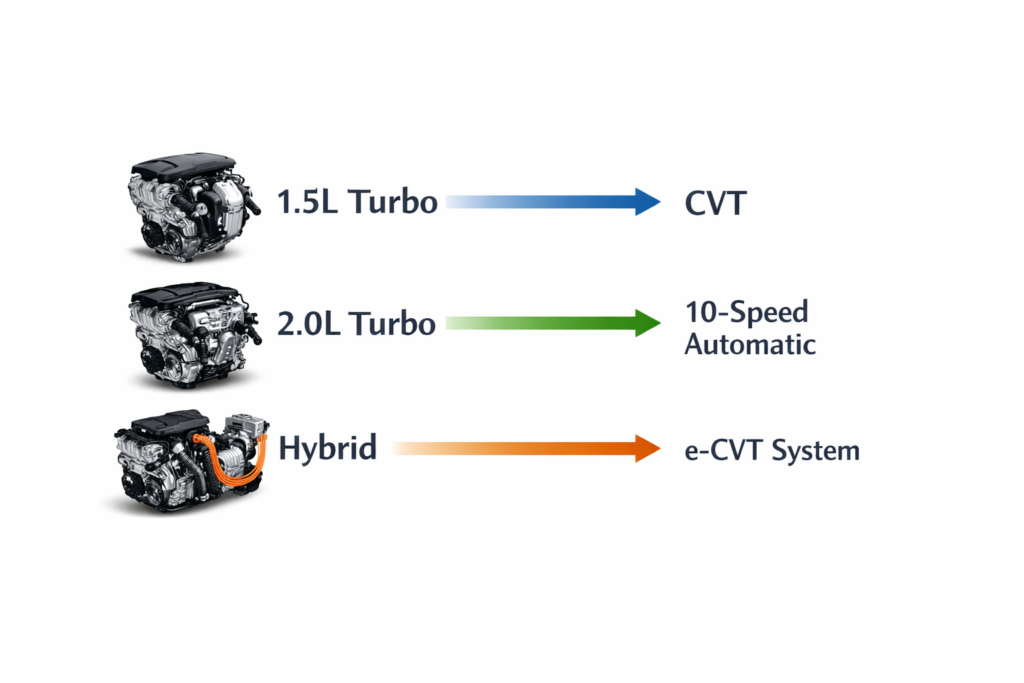
Not all engines use the same transmission many buyers misunderstand this part.
- 1.5L turbo CVT
- 2.0L turbo 10-speed automatic
- Hybrid e-CVT system
This engine split matters more than the model year in many cases.
Does the 1.5L Turbo Engine Use CVT?
Yes. The 1.5L turbo engine is always paired with a CVT.
It is designed for fuel efficiency and smooth driving, not aggressive performance.
Does the 2.0L Turbo Engine Have an Automatic Transmission?
Yes. The 2.0L turbo uses a 10-speed automatic, not a CVT.
This setup gives better acceleration and a more gear-based driving feel.
Do Hybrid Honda Accords Use CVT or Something Else?
Hybrid Accords do not use a traditional CVT. They use something called e-CVT, which works differently.
| Type | How It Works | Reliability |
| CVT | Belt + pulleys | Good (needs maintenance) |
| e-CVT | Electric motor system | Very high |
Many online guides get this wrong. e-CVT has no belt, so fewer failure risks.
Honda officially explains hybrid drivetrain systems on their global engineering and product pages.
What is an e-CVT in Honda Hybrid Models?
e-CVT is an electronic system using electric motors instead of belts.
It continuously adjusts power without physical gear shifting.
Is e-CVT More Reliable Than a Traditional CVT?
Yes. e-CVT is generally more reliable because it has fewer moving parts.
In real-world use, hybrid Accords often have fewer transmission issues.
CVT vs Automatic in Honda Accord: What is the Difference?
The difference is not just technical; it changes how the car feels.
- CVT smooth, no gear shifts
- Automatic noticeable gear changes
- CVT offers better fuel economy
- Automatic better performance
In real driving conditions, CVT-equipped Accords usually deliver around 5–10% better fuel economy compared to traditional automatic models.
If you have driven both, you can notice the difference quickly when driving. This difference also affects overall drivetrain performance and long-term driving comfort.
Which Transmission Feels Better to Drive?
If you like smooth driving, the CVT feels better.
If you want power and quick response, the 10-speed automatic wins.
Which one is more reliable long-term?
Both CVT and traditional automatic transmissions can be reliable, but only when they are properly maintained. In real use, CVT systems tend to fail earlier if the transmission fluid is ignored or not changed on time. On the other hand, automatic transmissions usually handle rough driving and inconsistent maintenance better, which is why they feel more forgiving in long-term abuse situations.
From experience, most well-maintained Honda Accord CVTs do not fail early, and problems usually trace back to skipped servicing.
How Can You Tell If Your Accord Has a CVT?

Quick ways to check without guessing:
- No gear shifts while accelerating, likely CVT
- Gear labels missing (no 1–6) CVT
- The owner’s manual confirms the transmission
You can also check using your VIN, which gives exact specs.
In practice, a test drive is often the easiest way to confirm, since CVT behavior feels very different from a traditional automatic.
Can You Check Transmission Type by VIN?
Yes. A VIN lookup will show your exact transmission type.
It is the most accurate method if you are unsure.
Are There Visual Signs of a CVT?
Yes, but subtle.
CVT cars do not show gear changes and feel more linear when accelerating.
Is the Honda Accord CVT Reliable Long Term?
Yes, but only with proper maintenance.
Most failures happen because owners skip fluid changes, not because CVT is weak. In real-world workshop cases, most CVT issues show up in cars that missed regular fluid service, not because the transmission itself is weak.
In real-world cases, well-maintained Accords easily cross 150k to 200k miles without issues.
Also Read: How Reliable Is Honda Accord
What Are Common Honda CVT Problems?
- Overheating due to old fluid
- Slipping or delayed response
- Whining noise under load
These usually show up when maintenance is ignored.
What Causes CVT Failure in Accords?
CVT failure in Honda Accords is mostly linked to basic maintenance mistakes rather than design issues. The biggest reason is skipping CVT fluid changes, which slowly damages the internal system. Aggressive driving for long periods can also increase heat and wear. Another common issue is using the wrong transmission fluid, which can seriously affect performance and shorten the lifespan.
How Long Does a Honda Accord CVT Last?
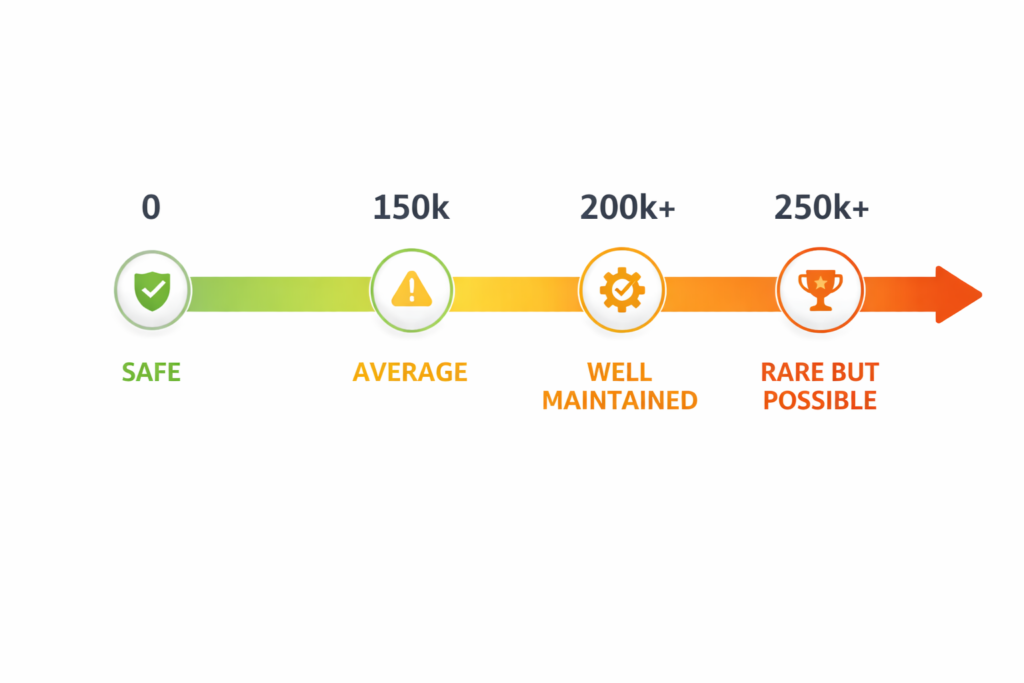
A properly maintained CVT can last 150,000 to 220,000 miles, sometimes more.
Some owners report going beyond 250k miles with consistent servicing.
What Mileage Can You Expect From a CVT?
In normal real-world driving, most Honda Accord CVTs last around 150,000 miles on average. If the vehicle is maintained properly and driven carefully, many owners report crossing 200,000 miles without major issues. The difference mainly comes down to how often the fluid is changed and how the car is driven daily.
Can a CVT Last Over 200,000 Miles?
Yes, but only if you maintain it regularly.
Skipping maintenance usually cuts lifespan significantly.
How Do You Maintain a Honda Accord CVT Properly?
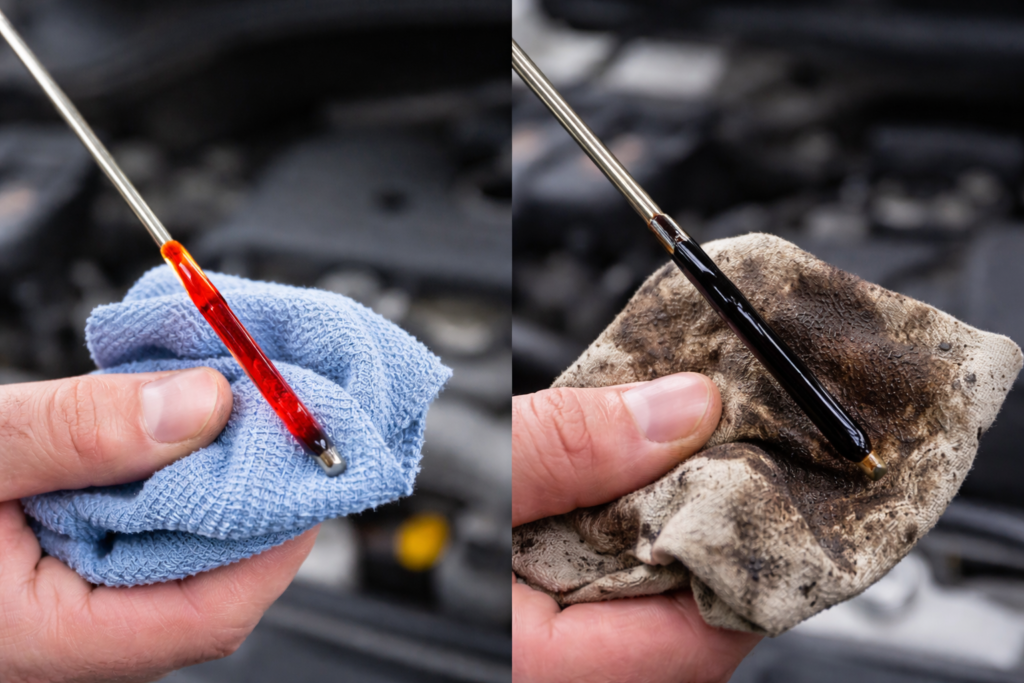
Maintenance is simple, but many people ignore it.
- Change CVT transmission fluid every 30k to 60k miles based on driving conditions
- Use Honda-approved fluid only
- Avoid overheating the transmission
Ignoring CVT maintenance is the fastest way to shorten its lifespan and can lead to expensive repairs.
When Should You Change CVT Fluid?
Every 30,000 to 60,000 miles, depending on driving conditions.
Heavy traffic and heat require more frequent changes.
What Maintenance Mistakes Should You Avoid?
One of the biggest mistakes is ignoring CVT fluid changes for too long, which slowly damages the system. Using cheap or incorrect transmission fluid is another common problem that can lead to long-term issues. Also, driving hard when the engine and transmission are still cold puts extra stress on the system and should be avoided.
Should You Buy a Honda Accord With a CVT?
For most people, yes, it is a smart choice. It offers better fuel economy, smoother driving, and lower running costs.
But if you want performance or aggressive driving, a 10-speed automatic is a better fit.
Who Should Choose a CVT Accord?
A CVT-equipped Honda Accord is a better match for people who mainly drive in the city and want smooth, fuel-efficient performance. It also suits daily commuters who prefer comfort over sporty driving. If your focus is on saving fuel and having a relaxed driving experience, CVT is generally a good choice for you.
When Should You Avoid a CVT Model?
You should avoid a CVT Honda Accord if you prefer sporty driving or quick gear-based performance. It is also not ideal for people who regularly tow heavy loads or drive aggressively. And honestly, if you are not ready to follow proper maintenance like fluid changes, then CVT is not the right option for long-term use.
FAQs:
Do all Honda Accords have CVT transmissions?
Yes, most modern Accords use CVT, but higher trims like 2.0L models use a 10-speed automatic instead.
Is the Honda Accord CVT reliable for daily use?
Yes, it is reliable if you follow proper maintenance, like regular CVT fluid changes.
Which Honda Accord models use CVT?
Most 4-cylinder Accords from 2013 onward and nearly all 2023 to 2026 models come with CVT systems.
How long does a Honda Accord CVT last?
With proper care, a CVT can last between 150,000 and over 200,000 miles in real-world conditions.
Do Honda Accord hybrids use a regular CVT?
No, hybrid models use an e-CVT system that works differently and is generally more reliable.
Conclusion:
Honda Accord transmissions are not one-size-fits-all. While most newer models rely on CVT for efficiency and smooth driving, exceptions like the 2.0L turbo and hybrid systems make a big difference. Understanding these variations helps you make smarter buying and maintenance decisions. Instead of relying on general assumptions, always match the transmission type with the model year and engine to avoid confusion and costly mistakes later. Always verify the transmission type before buying, especially in used models where trims and engines vary.