Do Honda Accords Have Timing Belts Or Chains? (Find Out 2026)
Many Honda Accord owners do not realize their engine uses a timing belt or chain until something goes wrong. That mistake can cost thousands of dollars. The timing system is one of the most critical parts of your engine, and choosing the wrong model year can mean expensive repairs later.
This guide explains the differences, the model years, and what you should check to protect your engine.
How the Honda Accord Timing System Works?
Inside your engine, the crankshaft and camshaft must stay perfectly synchronized. The timing system connects them so the valves open and close at the exact moment needed for combustion.
Even a small timing issue can reduce power, cause misfires, or trigger warning lights. If timing fails completely, serious engine damage can occur, which is why this system is critical to engine health.
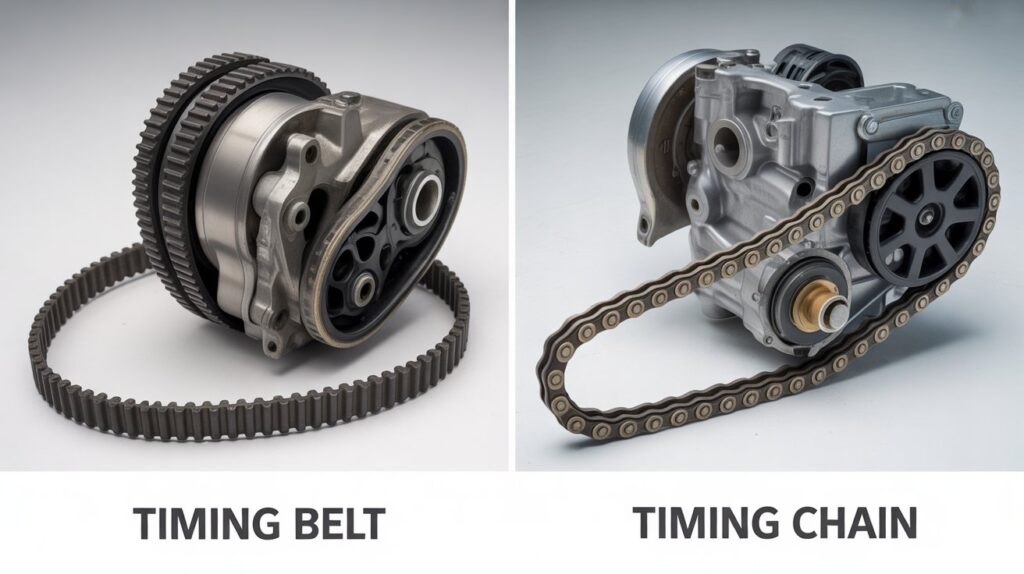
Belt vs. Chain:
Timing Belt:
A rubber-based belt that runs quietly but wears out over time. It must be replaced on schedule to avoid failure.
Timing Chain:
A metal chain inside the engine that handles heat better and is designed to last much longer, often for the life of the engine if oil maintenance is done properly.
Which Honda Accord Models Use a Timing Belt?
Honda used timing belts mostly on older Accord engines and all V6 models. Timing belts naturally degrade, so scheduled replacement is essential to prevent engine damage.
Accords with timing belts:
- 1990 to 2002: All engines
- 2003 to 2017: V6 engines (3.0L, 3.5L)
- V6 Hybrid models: Same years
Skipping belt replacement on these models is one of the most common reasons for catastrophic engine failure.
Many repair shops see V6 Accord engines fail simply because owners delay timing belt service. In real-world cases, the belt often looks fine from the outside but fails internally. This is why mechanics strongly recommend replacing the belt on schedule, not when symptoms appear.
Which Honda Accord Models Use a Timing Chain?
Honda transitioned most 4-cylinder Accord engines to timing chains for better durability and lower long-term maintenance costs.
Accords with timing chains:
- 2003 Present: 4-cylinder engines (2.0L, 2.4L, 1.5T)
- 2018 Present: 2.0T engines
- All current 4-cylinder Honda Accord models
These engines are generally cheaper to own over time because there is no routine chain replacement interval.
When Did Honda Accord Switch to Timing Chains?
Honda began switching Accord 4‑cylinder engines to timing chains in the early 2000s. V6 engines continued using timing belts for many years because of their design.
| Year Range | Engine | Timing System |
| 1990 to 2002 | 4-Cyl | Belt |
| 1990 to 2002 | V6 | Belt |
| 2003 to 2012 | 4-Cyl (2.4L) | Chain |
| 2003 to 2012 | V6 (3.0L) | Belt |
| 2013 to 2017 | 4-Cyl (2.4L) | Chain |
| 2013 to 2017 | V6 (3.5L) | Belt |
| 2018 Present | 1.5T / 2.0T | Chain |
Honda introduced chains first on 4-cylinder engines while keeping belts on V6 engines for packaging and design reasons.
Does Engine Type Affect the Accord Timing System?
Yes. Engine type directly determines the timing system used.
- K-Series 4-cylinder: Timing chain
- Earth Dreams 1.5T / 2.0T: Timing chain
- Older F-Series 4-cylinder: Timing belt
- J-Series V6: Timing belt
This is why checking the engine, not just the model year, is important.
What Happens If a Honda Accord Timing Belt Breaks?
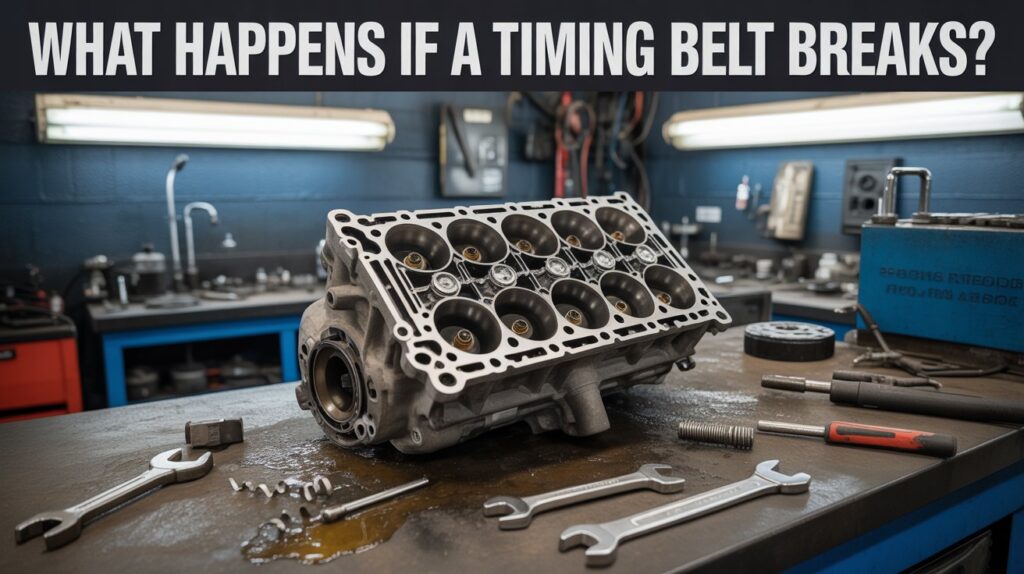
If a timing belt fails, the engine instantly loses synchronization and shuts down. In most cases, internal damage follows.
Common damage includes:
- Bent valves
- Damaged pistons
- Broken cylinder head components
- In severe cases, a full engine replacement
Real World Example:
A 2012 Honda Accord V6 owner ignored the 100,000 mile timing belt service to save money. The belt snapped on the highway, bending multiple valves. The repair estimate exceeded $3,800, far more than the original belt replacement cost.
Are Honda Accord Engines Interference Engines?
Yes. Nearly all Honda Accord engines are interference engines. This means the pistons and valves share the same space at different times.
If the timing belt breaks, those parts can collide. That is why belt replacement on V6 models is not optional, it is preventative protection.
How Much Does Accord Timing Belt Replacement Cost?
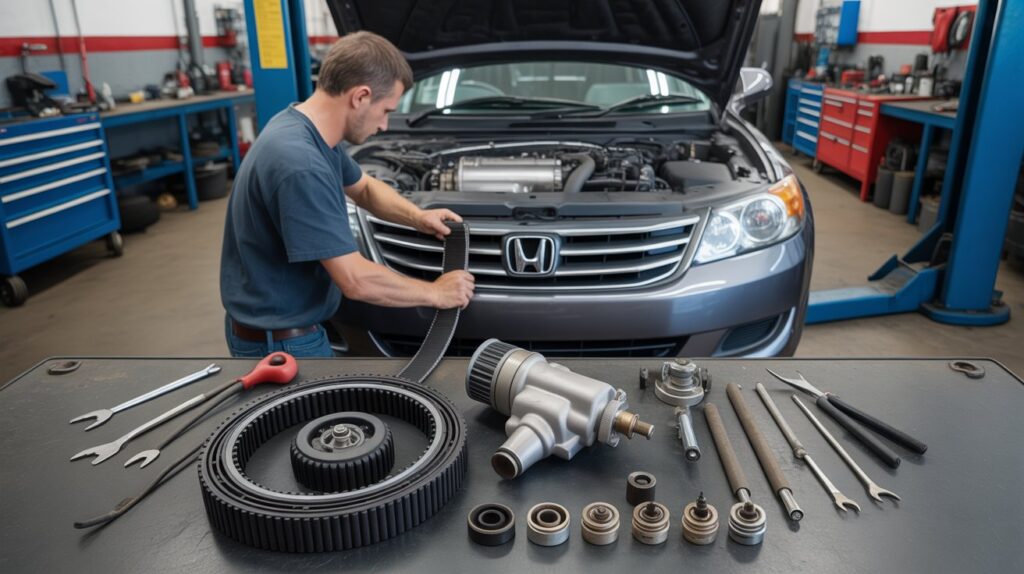
Costs vary based on labor rates and engine complexity, but V6 engines are more expensive because access is tighter and additional parts are often replaced together.
Typical Cost Range:
V6 engines:
- Parts: $250 to $400
- Labor: $400 to $700
Older 4-cylinder engines:
- Parts: $150 to $250
- Labor: $300 to $500
Full V6 timing belt kit:
- $300 to $500 (parts)
- $450 to $750 (labor)
Replacing the water pump and tensioners at the same time is strongly recommended.
Does Accord Timing Chain Need Replacement?
In real ownership, most Accord timing chains last well past 200,000 miles when oil changes are done on time. There is no set replacement interval.
Problems usually appear only when oil changes are skipped or oil levels run low.
Warning signs include:
- Rattling noise during cold starts
- Rough idle or loss of power
- Check engine light related to cam/crank timing
Good oil maintenance is the key to chain longevity.
Which Honda Accord Years Are Best for Low Maintenance?
If low ownership cost matters, chain-driven 4-cylinder models are the safest choice.
Best Low-Maintenance Years:
- 2003 to 2007 (2.4L)
- 2008 to 2012 (2.4L)
- 2013 to 2017 (2.4L)
- 2018 to 2022 (1.5T)
- 2018 Present (2.0T)
These models avoid expensive timing belt services and have proven long-term reliability.
Is a Timing Chain Better Than a Belt for the Honda Accord?
For most owners, a timing chain is the better option. It lasts longer, requires less scheduled service, and lowers long‑term costs. Timing belts work well, but many owners delay the service, and that delay is what usually causes expensive engine damage.
If you are choosing between two Accord models, the timing system alone can make a big difference. A timing chain usually means lower maintenance and fewer surprise repairs. A timing belt means planned service, but higher risk if ignored.
A timing chain:
- Lasts longer
- Handles heat better
- Eliminates $800 to $1200 belt replacement jobs
Belts work well, but they demand strict maintenance. Chains offer peace of mind.
FAQ’s:
Does a Honda Accord timing chain last the life of the engine?
Yes, as long as oil changes are done on time.
Do Accord V6 engines always use timing belts?
Yes, up to the 2017 model year.
How often should a timing belt be replaced?
Usually every 90,000 to 105,000 miles.
Do timing chains need service?
Rarely, unless oil maintenance is poor.
Will a broken belt always ruin the engine?
Not always, but serious damage is very likely.
Conclusion:
Both systems can work well, but for most owners, a timing chain simply means fewer worries and fewer big repair bills over time. Timing belts require scheduled replacement, and ignoring that service can destroy the engine. If you want fewer major repairs and lower lifetime cost, a chain-driven Honda Accord is the smarter choice.If you are buying a used Accord, checking whether it has a belt or chain should be one of the first things you confirm.