When to Change Spark Plugs in Your Honda Accord? Full Guide!
Rough idling, check-engine light, or sudden fuel drop in your Honda Accord? In most cases, worn spark plugs are the real cause, and Honda does not make the timing obvious. I will show you exactly when to change them, based on real Accord engines, not guesses.
This guide outlines the exact intervals, signs, and steps to keep your engine running smoothly.
What Do Spark Plugs Do in a Honda Accord?
Spark plugs are critical components of your Honda Accord’s ignition system, and knowing when to change spark plugs in your Honda Accord directly affects how efficiently the engine creates combustion and delivers power. If you have owned an Accord for a few years, you have probably felt this firsthand.
On my 2010 Accord, delaying spark plug replacement caused random misfires that disappeared immediately after replacement.
Role of Spark Plugs in Combustion:
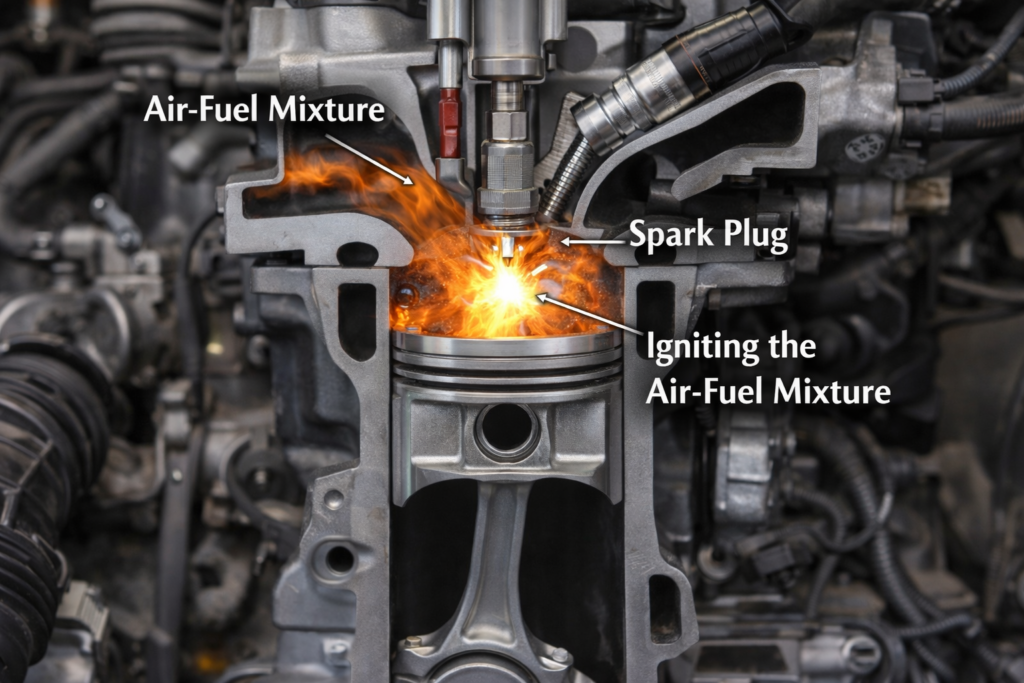
In the Honda Accord’s engine, spark plugs create an electrical arc that ignites the air-fuel mixture in each cylinder. This precise spark ensures smooth power delivery and minimises emissions. Advanced considerations include how plug heat range affects pre-ignition in turbocharged models such as the 1.5T and 2.0T engines.
Types Used in Accord Models:
Honda Accords typically use iridium or platinum plugs for longevity. For instance, NGK ILZKR7B11 is common in recent gas models, while hybrids might employ DILZKAR7D11S. These materials resist fouling better than copper, lasting up to 120,000 miles in ideal conditions.
When Should Honda Accord Spark Plugs Be Replaced?
Determining when to change spark plugs in your Honda Accord involves consulting the owner’s manual and considering driving habits. Recent models emphasise longer intervals due to advanced plug technology.
I have seen 2015-2017 Accords start misfiring around 80k miles in city driving, even though Honda says 100k+.
General Guidelines by Generation:
For 7th- to 9th-generation Accords (2003 to 2017), intervals range from 60,000 to 105,000 miles, often with platinum plugs. The 10th gen (2018 to 2022) and 11th gen (2023-2026) extend this to 100,000 to 120,000 miles with iridium types. Hybrids may require checks at 90,000 miles.
Combining wrong fuel and worn spark plugs silently reduces performance, mileage, and engine life.
Also Read: What Gas Does A Honda Accord Take?
Factors Affecting Lifespan:
Urban stop-and-go driving shortens life by accelerating wear and tear, while highway miles extend it. Severe conditions, such as dusty environments or frequent towing, can halve intervals. Use the maintenance minder system in modern Accords for personalised alerts.
Honda’s Official Recommendations:
Per Honda, 2023-2026 Accords recommend an inspection every 30,000 miles and replacement at 120,000 miles if needed. Always cross-reference with your VIN for engine-specific advice.
How Do You Know Honda Accord Spark Plugs Are Bad?
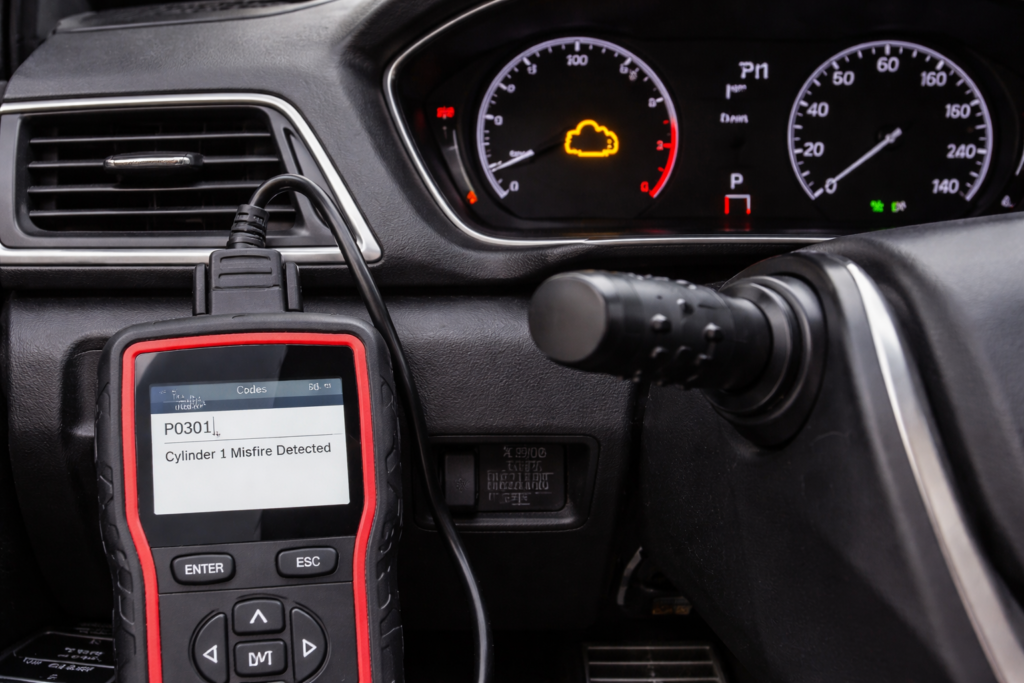
Recognising symptoms early prevents escalation. Advanced owners should monitor OBD-II codes, such as P0300, for misfires.
Performance Symptoms:
Engine misfire, reduced acceleration, or poor fuel economy signal wear. A 30% drop in MPG is common with faulty plugs. Rough idling or hard starts in cold weather are also red flags. A customer’s 2018 Accord came in for poor acceleration plugs were original at 92k and completely worn.
If your Accord jerks, hesitates, or loses power, the real cause may not be the transmission; worn spark plugs are often the hidden trigger.
Also Read: Why Does My Honda Accord Jerk When I Accelerate?
Visual Inspection Tips:
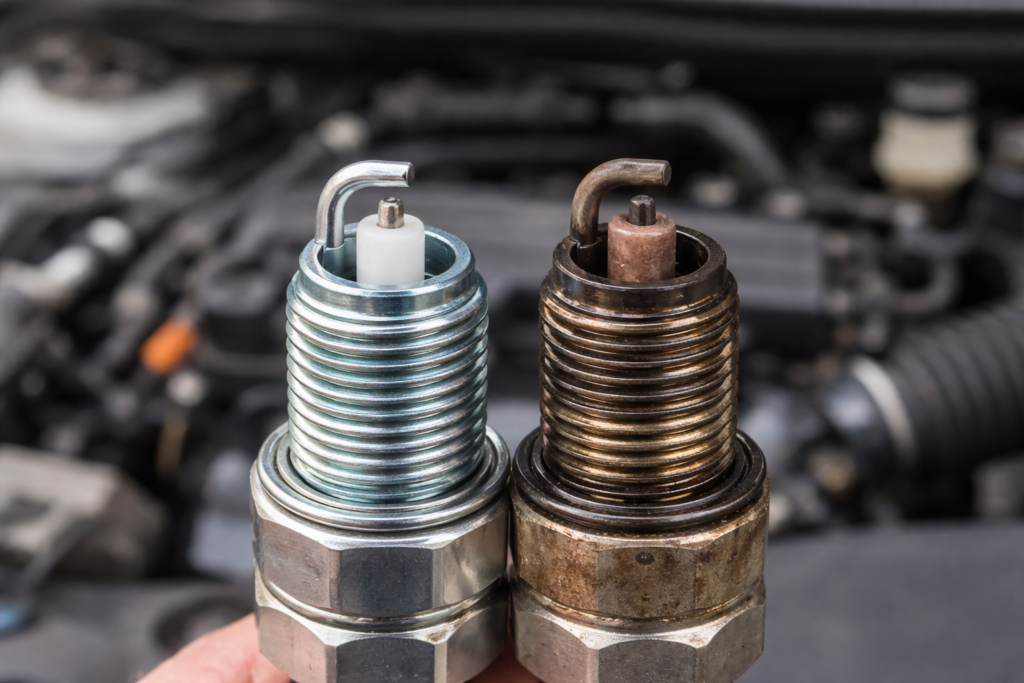
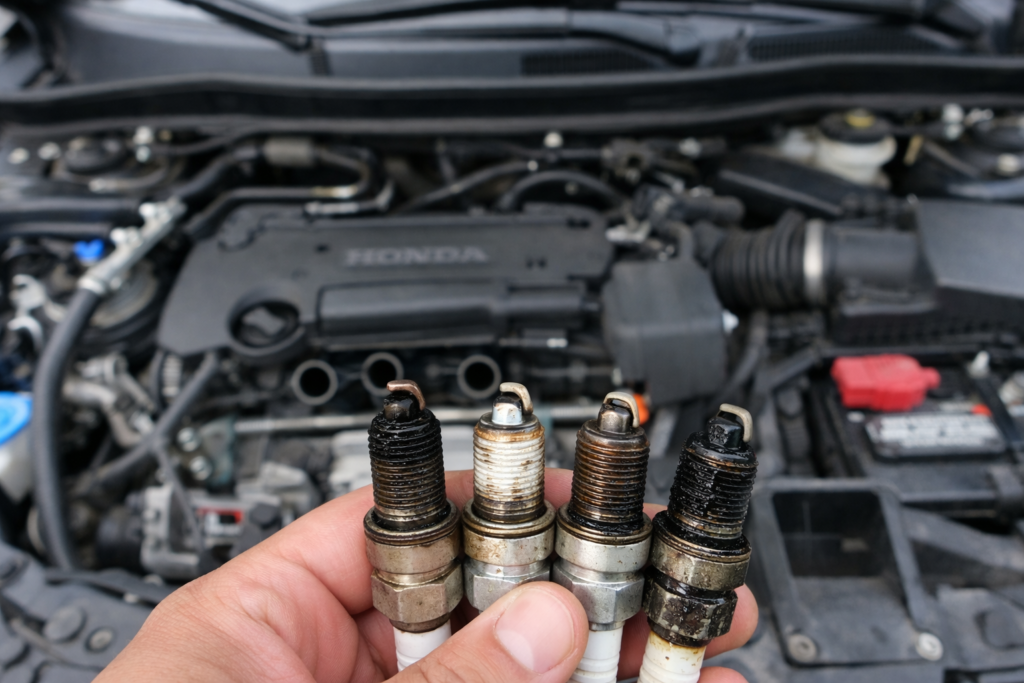
Remove plugs to check for carbon buildup, oil fouling, or electrode erosion. Normal wear shows light tan deposits; black soot indicates a rich mixture.
Diagnostic Codes to Watch:
Use a scanner to detect cylinder-specific misfires. Persistent codes after a reset require immediate replacement to prevent engine damage.
What Tools Are Needed to Replace Accord Spark Plugs?
Equipping yourself properly ensures a smooth DIY process. For advanced mechanics, precision tools are key.
Essential Tools List:
You will need a 14mm spark plug socket, torque wrench (set to 18-22 ft-lbs), ratchet extensions, and dielectric grease. Anti-seize compound is optional but recommended for aluminium heads.
Best Plug Recommendations:
Stick to OEM or NGK/Denso iridium for reliability. For hybrids, NGK DILZKAR7D11S is top-rated, though Bosch 96328 offers a cost-effective alternative. Avoid cheap generics to prevent pre-ignition.
OEM vs. Aftermarket Options:
OEMs ensure fitment; aftermarket suppliers, such as Bosch, can save up to 70% by verifying compatibility with part numbers.
How to Replace Spark Plugs in a Honda Accord?
For advanced users, this process takes 1-2 hours. Always disconnect the battery first.
Preparation and Safety:
Park on level ground, let the engine cool, and wear gloves. Gather tools and new plugs gapped to 0.039-0.043 inches.
If your B1 service code appears, spark plug wear may already be affecting engine performance.
Also Read: What Does B1 Mean On A Honda Accord?
Removal Process:
Detach ignition coils, use compressed air to clear debris, then loosen plugs counterclockwise. Inspect for oil leaks, indicating gasket issues.
Installation and Testing:
Apply anti-seize sparingly, torque to specs (e.g., 18 ft-lbs for most Accords), and reconnect coils. Start the engine to check for smooth operation.
How Much Does a Honda Accord Spark Plug Replacement Cost?
Budgeting helps; costs vary by model and location.
Most customers I see delay this job until a misfire appears, which always costs more in the end.
DIY vs. Professional Service:
DIY: $50-150 for parts. Professional: $293-344 for 2024 models, including labour.
Average Costs by Model:
Older Accords: $150-250. Recent hybrids: Up to $400 due to access complexity.
| Model Year | Parts Cost | Labor Cost | Total Estimate |
| 2018 to 2022 | $80 to 120 | $100 to 150 | $180 to 270 |
| 2023 to 2026 | $100 to 150 | $150 to 200 | $250 to 350 |
| Hybrids | $120 to 200 | $150 to 200 | $270 to 400 |
What Mistakes Ruin Honda Accord Spark Plugs?
Even experienced mechanics slip up; here is how to sidestep issues.
Over-Torquing Plugs:
Exceeding torque can strip threads. Use a wrench set to exact specs.
Ignoring Related Components:
Replace ignition coils if worn; check valve cover gaskets for leaks.
Skipping Gap Checks:
Improper gap leads to misfires. Measure with a feeler gauge.
Model-Specific Advice for Honda Accord
Tailor advice to your generation for the best results.
7th-9th Generation Tips:
These use 2.4L or 3.5L engines and require a change every 105,000 miles. Watch for V6 access challenges.
10th Gen and Beyond:
Turbo models (1.5T/2.0T) benefit from 100,000-mile intervals. 2023+ focus on emissions compliance.
Hybrid Accord Considerations:
Hybrids integrate electric assist, so plugs last longer but require hybrid-specific tools. Use NGK for optimal regen efficiency.
What Else Should You Service with Spark Plugs?
Bundle for efficiency.
When to Check Coils?
Inspect coils during plug changes; replace if resistance is out of spec.
Integrating with Tune-Ups:
Combine with air filter and fuel injection cleaning for comprehensive service.
Fuel System Synergies:
Clean injectors to complement plug performance, especially in high-mileage cars.
Why Does My Accord Run Roughly After a Plug Change?
Post-install issues? Address promptly.
Common Post-Change Problems:
Misfires from loose connections or wrong gap recheck torque.
When to Seek Professional Help?
If codes persist, visit a dealer for ECU diagnostics.
Monitoring Improvements:
Track MPG and idle smoothness over 500 miles.
Spark plugs and timing components work together; when one is ignored, overall engine timing and performance suffer.
Also Read: Do Honda Accords Have Timing Belts Or Chains?
Common Honda Accord Spark Plug Problems Explained
What if the plugs are stuck? Use penetrating oil and patience to avoid breakage. How often for high-mileage? Inspect every 30,000 miles beyond 150,000. Signs of failure include knocking or sluggish response.
For authoritative information, refer to Honda’s official maintenance site.
Pro Tips for Longer-Lasting Accord Spark Plugs
For the best spark plugs for the Honda Accord 2.4L, opt for NGK laser iridium. Risks of not changing on time include converter failure, which can cost $ 1,000 or more. For the 2018 Honda Accord, follow 100,000-mile intervals but adjust for turbo wear. Use the VIN for precise parts, inspect every 30k, and apply a protectant to the coils. Digitally track mileage via apps for reminders.
Replacing spark plugs in your Honda Accord at the right time helps ensure smooth performance and savings. Recap: Watch for misfires, follow 100k-mile averages, and DIY if confident. Take action, check your manual, or schedule service today to ensure peak performance and longevity.
FAQ’s:
How much does it cost to replace spark plugs on a Honda Accord?
DIY: $50 to 100 for parts; professional: $150-300 including labour.
How long do Honda spark plugs last?
Typically 30,000 to 120,000 miles, depending on iridium vs. platinum types.
What are the symptoms of bad spark plugs?
Rough idling, slow starts, and high fuel consumption signal replacement time.
What spark plugs does the Honda Accord use?
Often, NGK iridium, such as ILZKR7B11; check the manual for specifics.
How often to change spark plugs in a 2006 Honda Accord?
Around 105,000 miles or 7 years per manual.
Conclusion:
Spark plugs do not fail overnight, but ignoring them slowly kills performance. If your Accord feels rough, slow, or thirsty, plugs should be checked first. Follow the right interval for your engine, not guesswork; your car will thank you.