What Is VSA on a Honda Accord? (Function, and Common Problems)
Most Honda Accord drivers only notice VSA when the warning light turns on, and that is where confusion starts. This system quietly works in the background to prevent loss of traction and improve control, especially in sharp turns or on slippery roads. But when it fails, it can affect how your car behaves.
Understanding what VSA actually does, and what its warning signs mean, can save you from bigger problems later.
What Does VSA Stand for in Honda Vehicles?
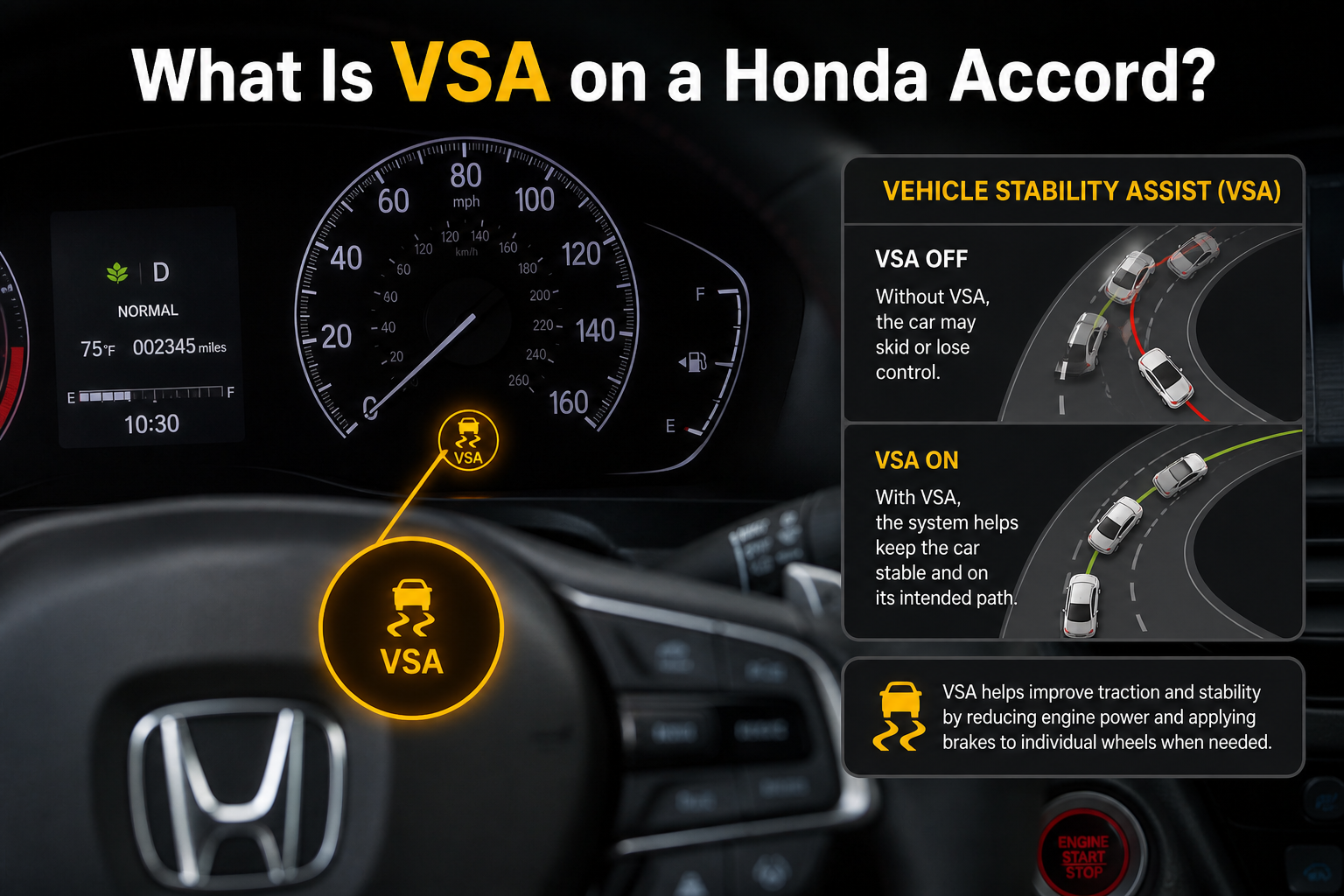
VSA stands for Vehicle Stability Assist. It is Honda’s name for stability control.
Other brands call it ESC (Electronic Stability Control), but the purpose is the same: to keep the car from sliding or losing control.
Also Read: What is the Difference Between Honda Civic and Honda Accord?
How Does the VSA System Work in a Honda Accord?
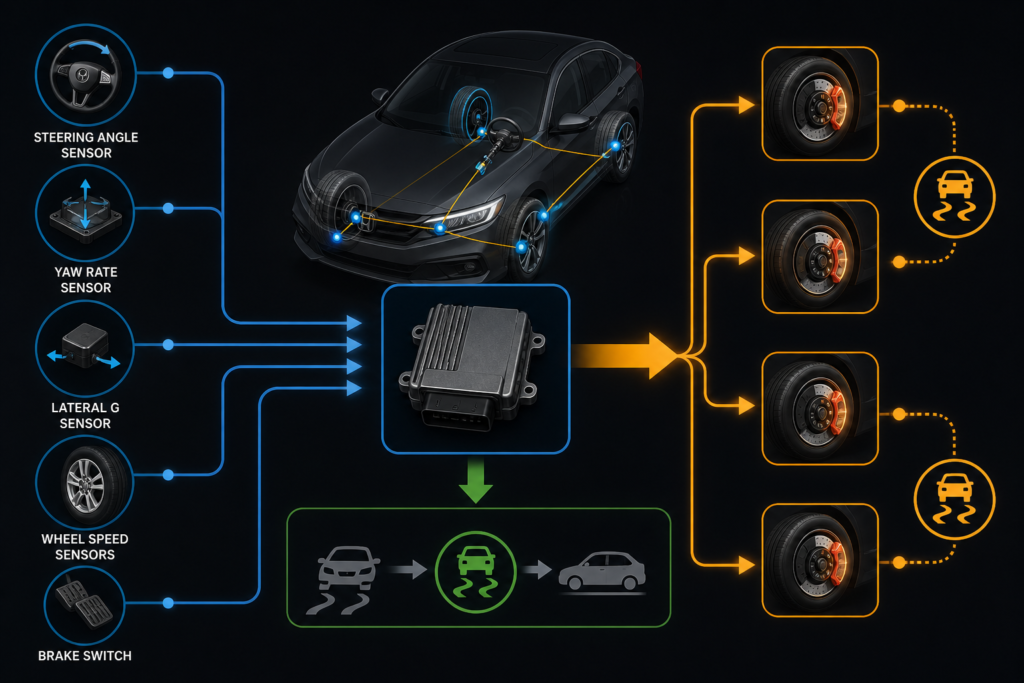
VSA constantly watches how your car is behaving on the road using sensors. If it detects loss of control, it reacts instantly.
Key Actions VSA Takes:
- Applies the brake to specific wheels
- Reduces engine power
- Helps correct steering direction
What VSA Feels Like While Driving?
When VSA activates, the driver may notice that the car slightly slows down on its own. The steering also feels more controlled, and engine power drops for a short moment. This brief hesitation is completely normal because the system is actively working to maintain safety and prevent loss of traction.
When Does VSA Activate While Driving?
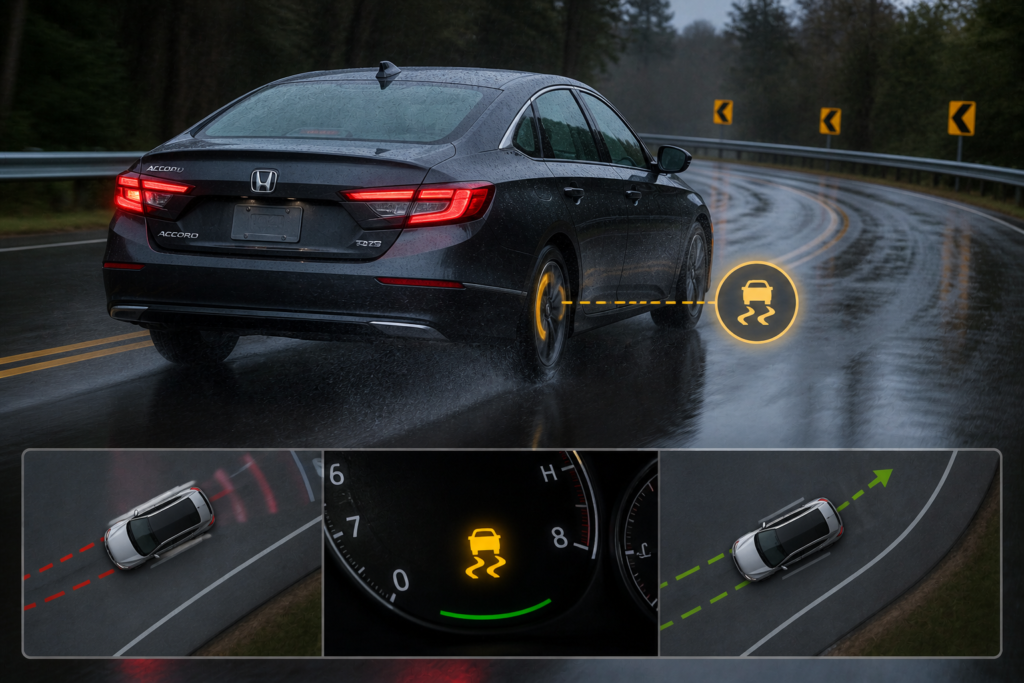
VSA activates only when needed, not all the time.
Common situations:
- Sharp turns at high speed
- Wet or slippery roads
- Sudden steering movements
- Uneven road surfaces
For example, if your Accord starts sliding in the rain, VSA quickly stabilizes it.
Read Guide: Why Does My Honda Accord Jerk When I Accelerate?
How Does VSA Improve Stability and Traction?
Instead of letting the car slide, VSA steps in and balances braking and engine power to keep things under control.
| Situation | What VSA Does |
| Oversteer (rear slides) | Applies the brake to the outer front wheel |
| Understeer (front slides) | Reduces speed and adjusts braking |
| Wheel spin | Cuts engine power |
This is especially helpful when roads are wet, slippery, or uneven.
What Does the VSA Light Mean on a Honda Accord?
The VSA light shows the current status of the system. If the light is blinking, it means the system is actively working to stabilize the car. However, if the light stays solid ON, it usually indicates a problem that needs attention. A flashing light during driving is normal, but a constant light should not be ignored.
Why Is the VSA Light On in My Honda Accord?
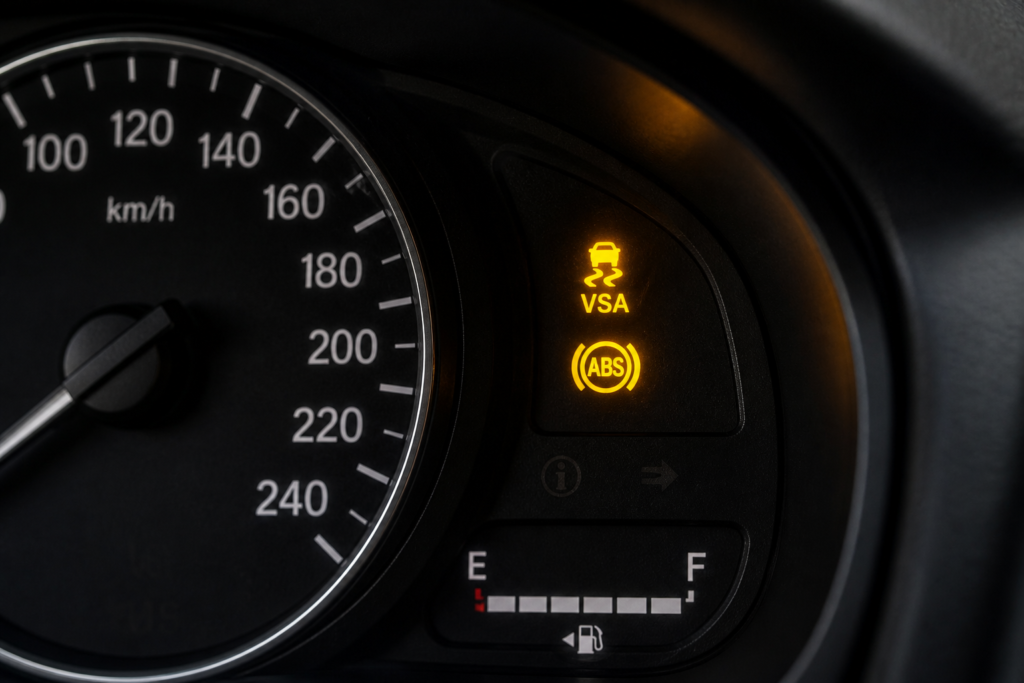
A solid VSA light usually means a fault in the system.
Common reasons:
- Faulty wheel speed sensor
- Low battery voltage
- ABS issue
- Steering angle sensor problem
In many real cases, a weak battery triggers this light unexpectedly.
Most Common Real-World VSA Problems
In most Honda Accord cases, the VSA system itself does not fail. The issues usually come from small connected components. The most common problem is a faulty wheel speed sensor. Weak or dying batteries can also trigger false warnings, while steering angle sensor issues often appear after wheel alignment. These are based on real repair patterns rather than theory.
Expert Insight: When VSA Problems Are NOT Real Failures
Sometimes the VSA light appears even when the system is fine. This usually happens due to low battery voltage or temporary sensor glitches. In most cases, the system resets after fixing the small issue.
What Causes the VSA System to Malfunction?
The VSA system depends on multiple sensors and electronic components working together. If even one part fails, the system may stop functioning properly. Common causes include dirt or damage in wheel speed sensors, internal failure in the ABS module, low battery voltage, or misalignment in the steering sensor. Older Honda Accord models (2005 to 2012) usually face more sensor-related issues, while newer models are more electronically sensitive.
How Can You Diagnose a VSA Problem Step by Step?
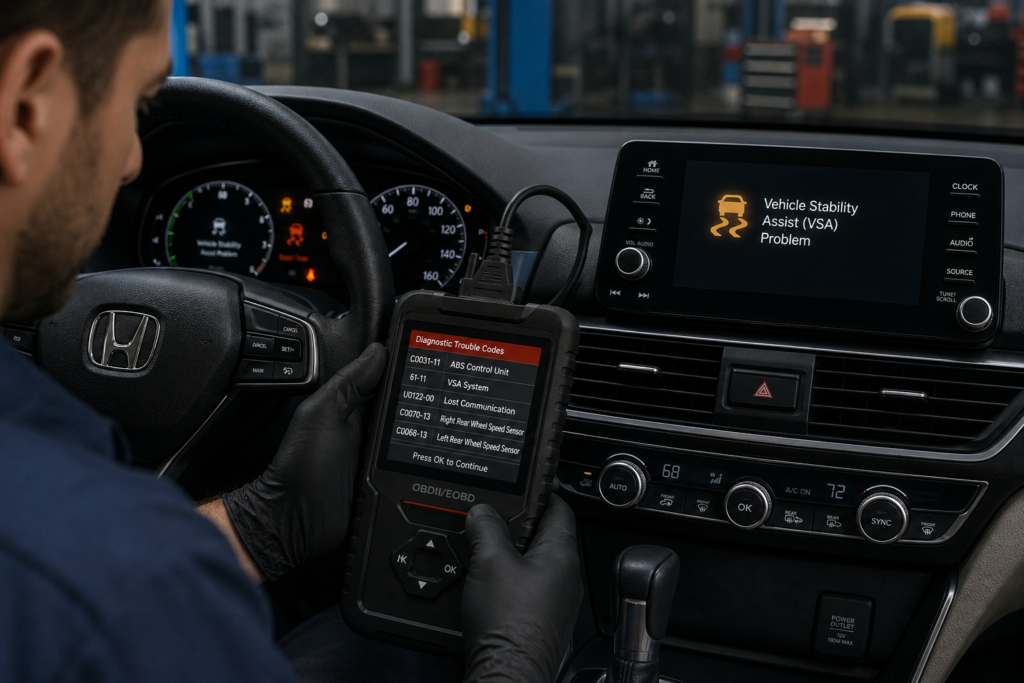
Start simple before going to a mechanic.
Basic checks:
- Check battery condition
- Inspect tires for uneven wear
- Restart the car
Next level:
- Scan with the OBD tool
- Check ABS codes
From workshop experience, most VSA issues are diagnosed within minutes using a basic scan tool.
How Do You Reset the VSA Light on a Honda Accord?
You can try a simple reset first.
Basic reset steps:
- Turn off the engine
- Disconnect the battery for 10 to 15 minutes
- Restart the car
If the issue is still there, the light will come back. That means a real fault exists.
Is It Safe to Drive With the VSA Light On?
Yes, but with caution.
The car will still drive normally, but stability support is disabled. This means a higher risk on wet or slippery roads.
Avoid aggressive driving until the issue is fixed.
Does VSA Affect Acceleration or Engine Power?
Yes, when the VSA system activates, it can reduce engine power and limit throttle response. This helps prevent wheel spin and keeps the vehicle stable. Because of this, the car may suddenly feel slower, but it is actually a safety action, not a mechanical problem or fault in the engine.
Can You Turn Off VSA on a Honda Accord?
Yes, most Accord models have a VSA OFF button.
You can disable it manually, but the system will turn back on when you restart the car.
When Should You Turn VSA Off?
You should only turn it off in specific situations.
Useful cases:
- Driving in deep snow
- Stuck in sand or mud
- Trying to free a stuck vehicle
In normal driving, keeping VSA ON is always safer.
How Much Does It Cost to Fix a VSA System?
Repair cost depends on which part fails, not the whole system.
| Problem | Estimated Cost |
| Wheel speed sensor | $80 to $200 |
| Steering angle sensor | $150 to $400 |
| ABS module | $500 to $1200 |
| Battery replacement | $100 to $250 |
In Pakistan or local markets, costs may vary, but sensor issues are usually the cheapest fix.
From real-world repairs, most drivers end up fixing a sensor, not the full VSA system.
Is VSA the Same as Traction Control or ESC?
VSA is not the same as traction control or ESC, but they are closely related systems. VSA is Honda’s overall stability control system, while traction control specifically prevents wheel spin. ESC is the general industry term used for stability systems in all cars. In Honda vehicles, VSA already includes traction control as part of its overall function.
What Sensors Does the VSA System Use?
VSA relies on multiple sensors to work correctly.
Main sensors:
- Wheel speed sensors
- Steering angle sensor
- Yaw rate sensor
- Brake pressure sensor
If even one fails, the system may shut off completely.
When Does VSA Not Work Effectively?
The VSA system has limits and cannot override physical conditions. It becomes less effective in situations such as very high speeds, icy or extremely slippery roads, or sudden extreme steering movements. Even with VSA active, careless driving can still result in loss of control, as the system is designed to assist, not replace, safe driving behavior.
FAQs:
Can I drive my Honda Accord with the VSA light on?
Yes, but stability control is disabled, so drive carefully on wet or slippery roads.
Does VSA automatically turn back on after restarting the car?
Yes, the system resets and turns on automatically every time you restart the engine.
What causes the VSA and check engine light to come on together?
It usually points to a sensor, ABS issue, or engine-related fault affecting stability control.
How do I know if my VSA system is working properly?
If the light only flashes during slippery conditions, the system is working as expected.
Can VSA prevent accidents completely in a Honda Accord?
No, it only helps improve control, but it cannot overcome extreme driving conditions or physics.
Conclusion:
VSA is one of those features you do not think about until it matters. It quietly improves control and safety, especially in difficult driving conditions. But it is not magic; it has limits and can fail if key components go bad. Knowing how it works, when it activates, and what warning signs mean puts you ahead of most drivers. If you understand what VSA is on a Honda Accord, you are not just informed, you are driving smarter and safer. In most Honda Accord cases, VSA issues are minor sensor or battery-related faults rather than a full system failure.