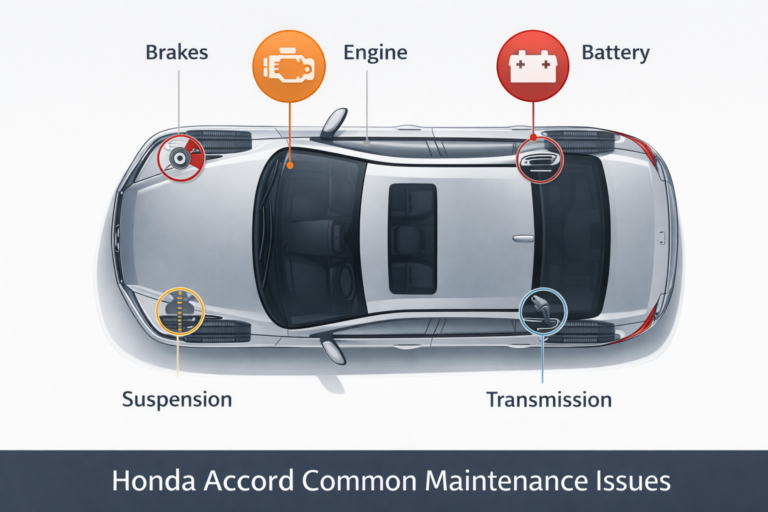

When to Get an Oil Change for Honda Accord? (Check Oil Life)
Most Honda Accord models need an oil change every 7,500 to 10,000 miles using synthetic oil. Older models may need it sooner. Always follow the Maintenance Minder for exact timing. Always follow your model year’s maintenance reminder for the best engine performance and lifespan.
In this guide, you will get a clear, simple answer based on real Honda maintenance guidelines.
Why Are Oil Changes Important for the Honda Accord?
Engine oil protects your Honda Accord’s engine from friction, heat, and wear. It keeps moving parts smooth, cool, and clean so the engine can perform at its best.
However, many drivers ignore when to get an oil change for Honda Accord (check oil life), and that is where problems begin. Skipping oil changes allows dirt and metal particles to build up inside the engine, reducing performance and increasing heat and wear.
Real-life experience shows that cars with perfect exteriors can still have ruined engines when owners ignore oil maintenance. Clean oil is what truly protects the engine from long-term damage and expensive repairs.
What Does Engine Oil Do?
Engine oil does more than lubricate:
- Reduces friction between moving parts
- Absorbs and carries away heat
- Traps dirt, debris, and tiny metal shavings
- Keeps seals and gaskets in good condition
Using the wrong oil or delaying changes can shorten engine life and reduce fuel efficiency.
What Happens When Honda Accord Oil Gets Dirty?
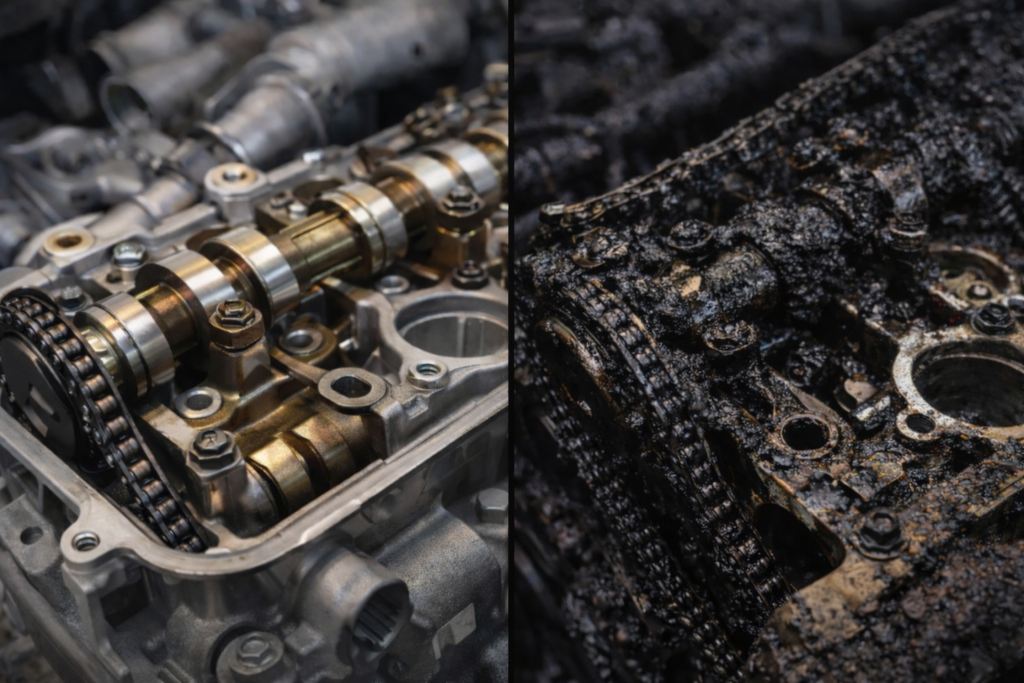
Dirty oil loses its protective properties. It becomes thick, flows poorly, and cannot remove heat efficiently. Over time, this increases engine wear, causes sludge buildup, and can lead to major repairs, such as timing chain or turbo failures.
Ignoring oil changes can quietly destroy your timing components.
Learn how timing chains in the Honda Accord depend on clean oil to avoid expensive engine failures.
What Engine Problems Do Late Oil Changes Cause?
- Sludge buildup in engine passages
- Premature wear of pistons and bearings
- Increased oil consumption
- Reduced fuel efficiency
- Potential engine failure
Real mechanics have seen 3 to 5-year-old Accords with severe internal damage from skipped oil changes, even when the car looked new on the outside.
When Should You Change Oil in a Honda Accord?
There is no one-size-fits-all. Oil change intervals depend on:
- Engine type (1.5T, 2.0T, or hybrid)
- Driving style (city vs highway, short trips)
- Oil quality (synthetic lasts longer than conventional)
Modern Hondas rely on the Maintenance Minder, which tracks actual engine conditions rather than just mileage.
How Many Miles Between Honda Accord Oil Changes?

- Older models (pre-2013) usually require oil changes every 5,000 to 7,500 miles.
- Newer models with synthetic oil can go 7,500 to 10,000 miles, sometimes longer if driving is gentle.
- Short trips, city driving, or towing reduce oil life and may require earlier changes.
Not every Accord model handles neglect in the same way.
Before buying or maintaining, check our guide to prevent costly mistakes.
Also Read: What Years To Avoid Honda Accord?
Should Oil Be Changed by Time or Mileage?
- Mileage-based: Best if you drive daily.
- Time-based: Change at least once a year if driving less than 5,000 miles.
Oil degrades over time, even if the car is rarely used, so both factors matter.
Is a 5,000-Mile Oil Change Necessary for the Honda Accord?
Not usually. Modern engines and synthetic oils last longer. Dealers sometimes suggest 5,000 miles for extra safety or profit, but following the Maintenance Minder is the most accurate approach for your engine’s longevit
What Are Honda Accord Oil Change Intervals by Year?
2018 Honda Accord 1.5T: Oil change usually around 8,000 to 10,000 miles
2020 Honda Accord 2.0T: Follow Maintenance Minder, often near 10,000 miles
Recommended Oil Change Intervals
| Model Year | Engine Type | Recommended Interval |
| Pre-2012 | All | 5,000 to 7,500 miles |
| 2013–Present | 1.5T, 2.0T | Follow Maintenance Minder |
| 2013–Present | Hybrid | Follow Maintenance Minder |
- Turbo engines run hotter; changing oil slightly earlier helps protect the turbo bearings.
- 1.5T engines are sensitive to oil quality, while 2.0T engines handle heat better.
How Does Honda Maintenance Minder Work?
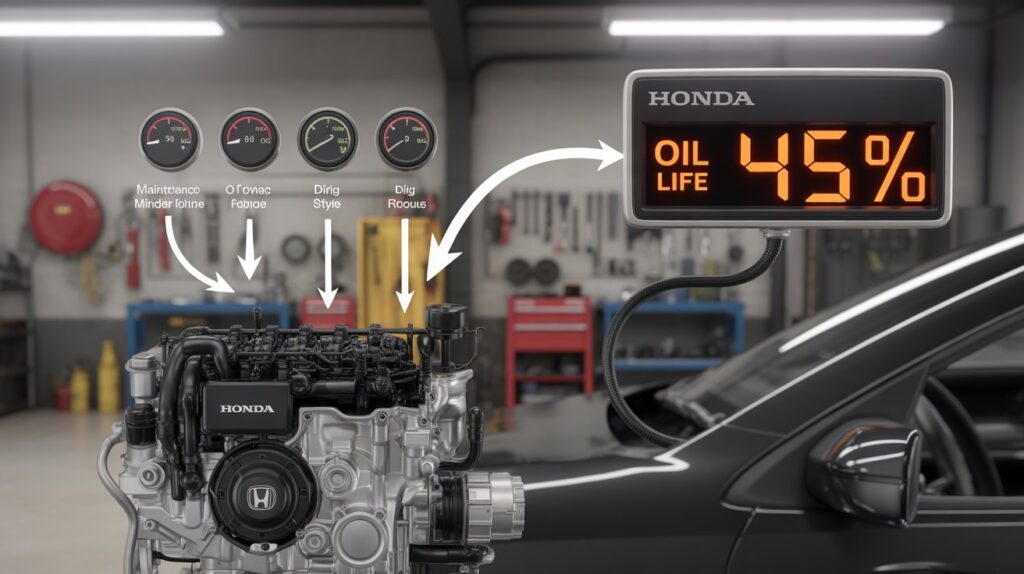
The Maintenance Minder uses real driving data instead of fixed mileage:
- Engine load
- Temperature
- Trip length and city/highway mix
It calculates oil wear in real time, so you change oil only when necessary.
What Do Honda Oil Life Percentages Mean?
- 100%: Fresh oil
- 15%: plan service
- 5%: Change oil now
Trust the system; it was designed by Honda engineers to maximize engine life.
Maintenance Minder vs Mileage: Which Is Better?
- Maintenance Minder: Accurate, based on engine conditions
- Mileage only: Conservative, does not account for driving style
Following the Minder ensures your engine is protected while avoiding unnecessary oil changes.
What Is the Best Oil for the Honda Accord?
Using the right oil prevents engine wear and maintains high fuel efficiency.
Recommended Oil Grades by Engine:
| Engine Type | Oil Grade |
| 1.5T | 0W-20 Synthetic |
| 2.0T | 0W-20 Synthetic |
| Hybrid | 0W-20 Synthetic |
- Synthetic oil lasts longer, flows better, and keeps engines cleaner.
- Conventional oil works but requires more frequent changes.
How Driving Habits Affect Honda Accord Oil Life?
Extreme heat or cold reduces oil life. In very hot climates, changing oil slightly earlier helps protect engine and turbo components.
Your driving style can drastically reduce oil life:
- City driving: More stop-and-go traffic, higher engine heat
- Short trips: Oil does not fully warm, mand oisture accumulates
- Extreme weather: Cold starts or hot climates accelerate oil breakdown
What Are the Signs a Honda Accord Needs an Oil Change?

Honda often signals that oil needs to be changed before the dashboard alert appears. Look for:
- Dashboard warnings: Oil life alert, Maintenance Minder notification
- Engine symptoms: Louder engine noise, rough idle, reduced fuel economy
Recognizing these early prevents serious damage and keeps your engine running efficiently.
Should You Do a DIY or Professional Oil Change?
| Factor | DIY | Dealer / Mechanic |
| Cost | Lower | Higher |
| Time | More | Less |
| Inspection | Limited | Full check included |
- DIY: Saves money if done correctly; mistakes can damage the engine.
- Dealer: Safer for warranty and thorough inspection.
How Much Does a Honda Accord Oil Change Cost?
A Honda Accord oil change typically costs $50 to $90 at a mechanic and $25 to $45 if done DIY, depending on oil type and location.
What Are Common Honda Accord Oil Change Myths?
- Oil must be changed every 3,000 miles. False for modern synthetic oil
- Black oil means it is bad Oil naturally darkens as it works
What Are the Benefits of Regular Oil Changes?
- Extends engine life past 200,000 miles
- Improves fuel efficiency
- Preserves resale value
- Prevents costly repairs due to sludge or wear
Also Read: How Many Miles Can A Honda Accord Get?
FAQ’s:
Should I follow the Honda Maintenance Minder for oil changes?
Yes. The Maintenance Minder uses real driving data and engine conditions, making it more accurate than fixed mileage intervals.
Can synthetic oil really last 10,000 miles in a Honda Accord?
Yes. Newer Accords using full synthetic oil can safely reach up to 10,000 miles if driving conditions are normal.
Does driving style affect when I should change oil?
City driving, short trips, towing, and extreme temperatures reduce oil life and require earlier oil changes.
Is changing oil every 5,000 miles always necessary?
No. Modern Honda Accord engines do not require 5,000-mile changes unless driving conditions are severe.
What happens if I delay oil changes in a Honda Accord?
Late oil changes cause sludge buildup, increased engine wear, poor fuel efficiency, and can lead to expensive engine repairs.
Conclusion:
Changing oil at the right time keeps your Honda Accord engine smooth, efficient, and long-lasting. Follow the Maintenance Minder, use the correct oil type, and adjust intervals based on your driving habits. Regular oil changes prevent costly repairs and help your Accord easily reach high mileage without performance issues.