What Gear to Drive in a Honda Accord? (Ultimate Guide)
Understanding what gear to drive in the Honda Accord is essential for optimising performance, safety, and efficiency across various driving conditions. Whether you are navigating urban streets, tackling highways, or handling challenging terrains, selecting the proper transmission mode can enhance your experience behind the wheel.
This guide breaks down what real drivers and mechanics actually do in daily use, including practical tips for the 2026 models.
What Is the Automatic Transmission in the Honda Accord?
What gear to drive in a Honda Accord? This is one of the most common questions new and experienced Accord owners ask, especially when switching between models. If you’ve driven an older Accord and then stepped into a newer CVT model, the difference is immediately noticeable. The car feels smooth, but also behaves very differently under throttle. For the 2026 Accord, the base gasoline models feature a CVT with Linear Shift Control, which simulates gear shifts for a more engaging drive, while hybrids use an eCVT that seamlessly integrates electric and gas power.
Overview of Gear Positions (P, R, N, D):
Standard positions include Park (P) for stationary security, Reverse (R) for backing up, Neutral (N) for disengaging power, and Drive (D) for forward motion. In CVT-equipped Accords, D allows the system to continuously adjust ratios, optimising RPM for efficiency, typically maintaining 1,500 to 2,500 RPM during cruising.
Evolution from Older to Newer Models:
Pre-2013 Accords often featured 5- or 6-speed automatics with discrete gears, such as D4 (full-time drive) and D3 (limited-slip). Modern CVTs eliminate fixed gears and focus on modes instead. This shift reduces mechanical complexity, improving fuel economy by up to 10% in city driving, according to Honda’s engineering data.
CVT vs. Traditional Auto Differences:
CVTs provide smoother acceleration without shift shocks, making them ideal for hybrids that use regenerative braking to recapture energy. Traditional autos offer more tactile feedback but can suffer from higher wear in stop-and-go traffic. One thing many owners learn the hard way is that skipping CVT fluid changes can make the transmission feel sluggish or noisy much earlier than expected.
| Transmission Type | Gear Positions | Fuel Efficiency (City/Highway MPG) | Best For |
| Traditional Auto (Pre-2013) | D, D3, D4, 1, 2 | 24/34 | Manual-like control |
| CVT (2026 Gas) | P, R, N, D, S | 29/37 | Smooth daily commutes |
| eCVT (2026 Hybrid) | P, R, N, D, B | 48/47 | Eco-conscious driving |
What Gear Should You Drive in Normally?
For everyday driving, the optimal gear in the Honda Accord is D, leveraging the CVT’s infinite ratios for balanced performance. This mode prioritises fuel efficiency, with hybrids achieving up to 48 MPG in Normal drive mode.
Benefits of D/D4 for Everyday Use:
For most drivers, D is basically ‘set it and forget it, the car does all the thinking for you. For older models with D4, it engages overdrive for highway cruising, minimising engine strain at speeds over 50 MPH.
When to Avoid Higher Gears:
Steer clear of D in slippery conditions or heavy loads, as it may upshift prematurely, reducing torque. Instead, monitor the tachometer and aim for 2,000 to 3,000 RPM for optimal power delivery.
Impact on MPG and Performance:
Studies show that sticking to D can improve MPG by 5-15% compared with aggressive shifting. A real-life example: Commuters in Faisalabad’s traffic report 10% better efficiency using D exclusively on flat roads.
If fuel economy matters to you, here is what real Honda Accord owners actually get in daily driving.
Also Read: How Many Miles Can A Honda Accord Get?
What Is D3 Gear in the Honda Accord?
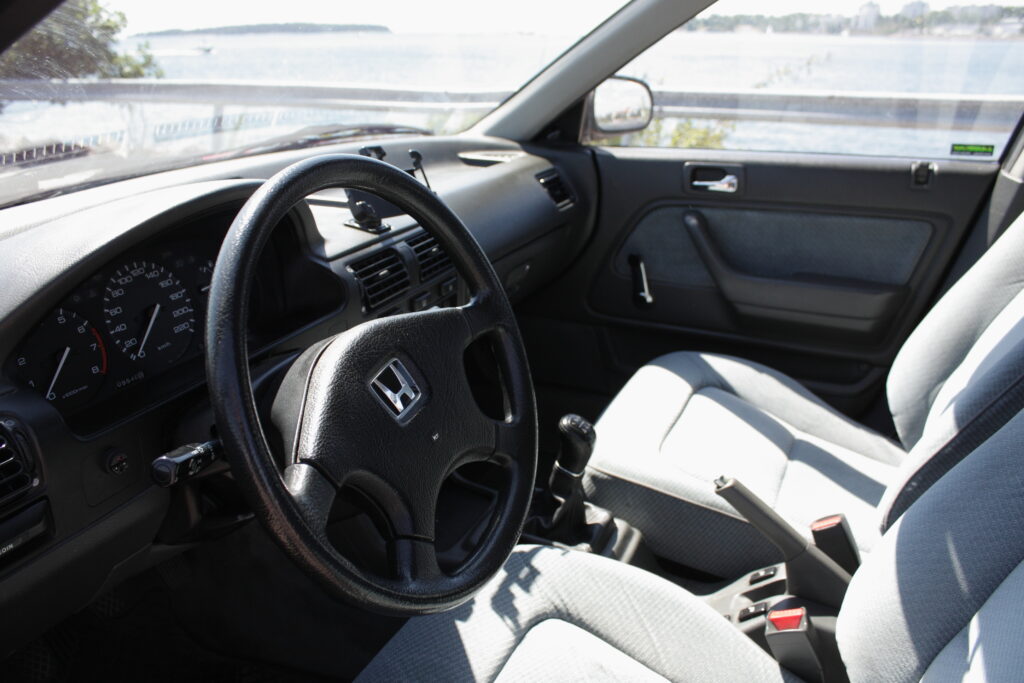
D3 gear in the Honda Accord restricts the transmission to the first three gears, providing enhanced control in demanding situations. Though phased out in CVT models, it remains relevant for pre-2018 Accords.
Difference Between D and D3:
D utilises all available gears for efficiency, while D3 caps at third gear, increasing RPM for better torque, which helps tow up to 1,000 lbs in older models.
How D3 Limits Gears for Control:
By preventing shifts to higher gears, D3 maintains higher engine speeds (3,000 to 4,000 RPM), aiding in engine braking and acceleration. If you have ever driven a manual car, using D3 feels like intentionally staying in a lower gear to keep the engine ready to respond.
Real-World Examples:
In mountainous Punjab regions, drivers use D3 to navigate inclines without losing momentum, reducing brake wear by 20% per descent.
When to Use D3 in Your Honda Accord?
Employ D3 when extra power or braking is needed, such as in urban congestion or moderate hills. It is not ideal for highways, where it could drop MPG by 10%.
Using D3 and engine braking can save your brakes, but how long should Honda brake pads actually last?
Also Read: How Long Do Honda Brake Pads Last?
City Traffic and Stop-Go Scenarios:
In stop-go traffic, D3 holds lower gears, improving throttle response and reducing lag, perfect for advanced drivers timing merges.
Passing on Highways:
For quick overtakes, shift to D3 temporarily to access peak torque at 4,500 RPM, then return to D.
Is It Safe for Daily Driving?
Yes, but monitor transmission temperature; prolonged use in D3 may increase wear if the fluid is not fresh. Honda recommends checks every 20,000 miles.
What Does Low Gear (L or 1/2) Mean in the Honda Accord?
Low gear, denoted as L or 1/2 in automatics, locks the transmission into first or second gear for maximum torque.
Purpose of L/1/2 Positions:
L gear is the mode you use when you want the car to feel strong rather than smooth, especially on steep roads or with extra load.
Maximum Speeds and Limits:
In L, top speed is around 30 MPH, reducing the risk of over-revving beyond 6,000 RPM.
Comparison to Manual Shifting:
Similar to manual downshifts, L offers precise control without clutch work, ideal for enthusiasts.
When to Use Low Gear in the Automatic Honda Accord?
Reserve low gear for extreme conditions where traction and control are paramount.
Towing Heavy Loads:
For loads near 1,000 lbs, L ensures steady power, preventing CVT slippage.
Climbing Steep Hills:
With gradients over 10%, L maintains momentum, as seen in test drives that cut climb times by 15%.
Descending Safely:
Use L for controlled descents, engaging engine braking to save brakes, which is crucial in rainy Punjab winters.
What Is Engine Braking and How to Use It in Accord?
Engine braking uses the engine’s resistance to slow the vehicle, reducing reliance on friction brakes.
If you have ever seen B1 on your dashboard and had no idea what it means, you are not alone. Here is the plain-English explanation.
Also Read: What Does B1 Mean On A Honda Accord?
Benefits Over Regular Brakes?
Drivers who regularly use engine braking notice their brake pads last noticeably longer, especially on downhill routes.
Gear Choices for Engine Braking:
Shift to D3 or L; in hybrids, use B mode for enhanced regen.
Avoiding Overheating:
Limit sessions to 5-10 minutes; cool down in N if needed.
What Is S Gear or Sport Mode in the Honda Accord?
S gear, or Sport mode, sharpens throttle response and holds higher RPM for dynamic driving.
Activating Sport Mode:
Toggle via the console switch; it integrates with 4-mode systems in 2026 hybrids.
Differences in RPM and Throttle:
In Sport mode, the engine stays louder and more eager, making the car feel quicker even without flooring the pedal.
When to Switch Back:
Revert to Normal after spirited drives to reclaim efficiency.
Which Drive Modes Does the Honda Accord Hybrid Have?
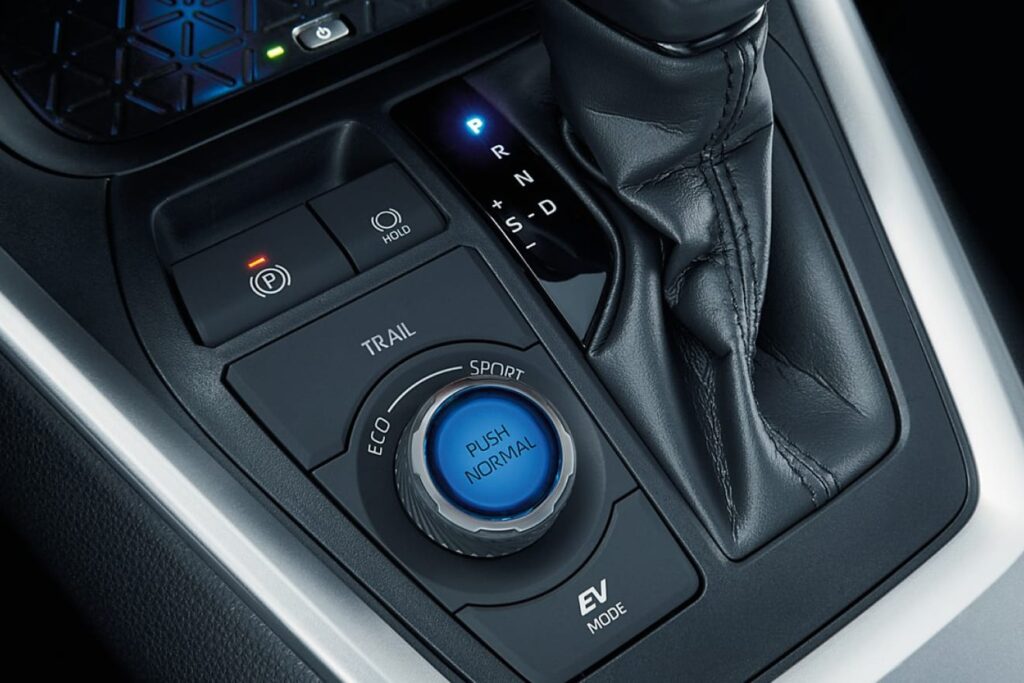
The 2026 Accord hybrids feature a 4-mode drive system: Econ, Normal, Sport, and Individual.
Normal vs. Sport in Hybrids:
Normal balances efficiency; Sport amps regen and throttle for 204 hp output.
ECON for Fuel Savings:
ECON softens fuel consumption, yielding 48 MPG, ideal for long Faisalabad commutes.
Customising with Touch-Screen:
Individual mode lets you tweak steering, suspension, and powertrain via the 12.3-inch display.
Which Gear Should You Use in Extreme Conditions?
Adapt gears to weather and terrain for safety.
Snowy or Icy Roads:
Use L or Snow mode (if equipped) for gentle acceleration, enhancing traction by 25%.
Wet or Slippery Surfaces:
D3 or S provides controlled power; avoid sudden shifts.
Emergency Situations:
The key in any skid situation is smooth input; sudden gear changes usually make things worse, not better
What Common Honda Accord Fuel Mistakes Should You Avoid?
Many wonder, Is it bad to drive in D3 all the time? No, but it hikes fuel use. What gear for highway driving in a Honda? Stick to D for optimal MPG.
Addressing User Queries:
Overusing low gears wears components; always warm up the engine first.
See Kelley Blue Book’s Accord Review for expert opinions.
Expert Tips To Improve Honda Accord Efficiency?
For advanced drivers, monitor OBD-II data for RPM optimization. Use paddle shifters in Sport for manual control, mimicking a 10-speed feel in CVT.
Unique Insights:
Hybrid Accord owners often experiment with different modes, but in real life, simple, smooth driving makes more difference than any special combo.
Actionable Advice:
Practice mode switches on empty roads; integrate with Honda Sensing for adaptive gearing.
Explore Honda’s Official Specs for model-specific details.
FAQ’s:
What is D3 for in a Honda Accord?
D3 limits gears to 3 for enhanced torque and engine braking on hills or in traffic.
When should I use D3 in my automatic car?
Use it for city driving, passing, or inclines to maintain power without over-shifting.
What is the difference between D and D3 in Honda?
D uses all gears for efficiency; D3 restricts for control and higher RPM.
Is it bad to drive in D3 all the time?
Not damaging, but it reduces MPG due to elevated RPM; use selectively.
What does L mean on the Honda Accord gear shift?
L locks in low gears for traction and braking in challenging conditions.
Conclusion:
Once you understand what each gear actually does, the Accord becomes much easier and more enjoyable to drive. Address common pitfalls, such as improper low-gear use, and incorporate the latest drive systems for optimal results. Apply these strategies today; consult your dealer for personalised advice and drive confidently.