How Long Do Honda Civic Batteries Last? Check Battery Health!
A Honda Civic battery typically lasts 3 to 5 years under normal driving conditions. Cars driven daily with longer trips usually hit the higher end, while city-driven Civics in hot weather often need a battery sooner.
This guide breaks down what actually kills Civic batteries, how mechanics catch trouble early, and when replacing them saves you from a no-start situation.
How Many Years Does a Honda Civic Battery Last?
In real-world use, 3 to 5 years is normal.
The first two years are usually quiet, with no warning signs. After year three, battery performance depends heavily on climate, charging health, and how the car is driven.
Mechanics often see failures earlier in hot regions, even when mileage is low.
What Is the Average Life of a Honda Civic Battery?
The practical average is around 4 years.
Civics driven regularly on highways tend to last longer, while stop-and-go city cars lose battery strength faster due to repeated shallow charging.
Clean terminals and a properly charging alternator often squeeze out several extra months, sometimes more.
What Causes Honda Civic Batteries to Die Early?
In the shop, most early battery failures come down to avoidable habits.
Common reasons mechanics see:
- Short trips that never fully recharge the battery
- Heat damage to internal battery plates
- Corroded or loose battery terminals
- Electronics left running after shutdown
A battery usually does not die suddenly. It weakens quietly first.
Read Our Guide On: What Years To Avoid Honda Civic?
Does Hot Weather Shorten Civic Battery Life?
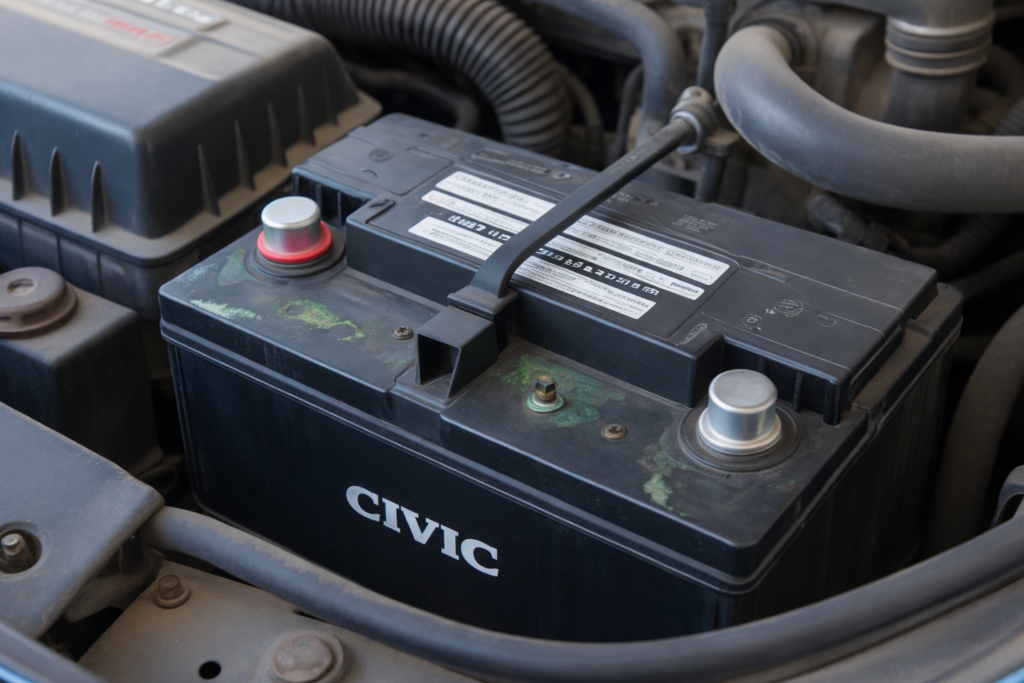
Yes, heat is the biggest silent killer of Civic batteries.
High heat cooks the battery from the inside, speeding up chemical wear you can not see. Over time, fluid evaporates, internal plates wear out, and capacity drops. In hot climates, it is common for Civic batteries to fail a full year earlier than expected.
Do Short Trips Drain Honda Civic Batteries Faster?
Yes. Short trips slowly wear batteries down.
Why short trips hurt:
- The alternator does not run long enough to recharge
- AC, lights, and screens drain more power than restored
- The battery stays partially charged for weeks
After months of this, the battery loses capacity permanently.
How Do Mechanics Test a Honda Civic Battery?
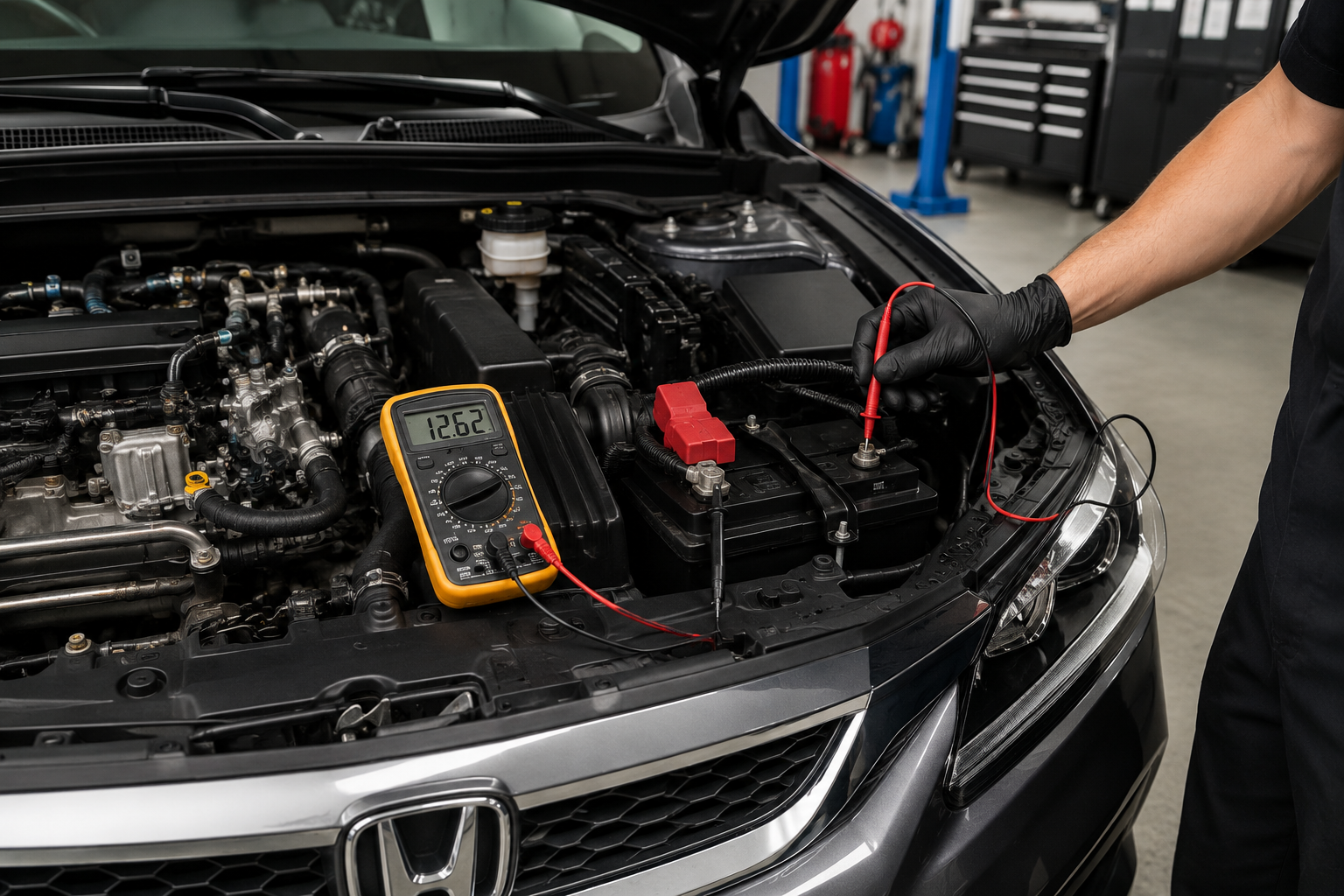
Good mechanics do not guess; they test.
| Voltage Test | Checks the resting charge | Low voltage, weak battery |
| Load Test | Simulates engine start | Fails if the battery can not hold power |
| Charging Test | Checks the alternator output | Confirms proper recharging |
A battery can show good voltage and still fail under load.
Can a Bad Alternator Kill a Civic Battery?
Yes, and it is more common than most drivers think.
What mechanics see:
- The battery drains while driving
- The electrical system runs only on battery power
- New batteries fail within weeks
Replacing the battery without fixing the alternator wastes money.
When a Civic battery fails repeatedly, the alternator and charging system should always be tested together to rule out a deeper electrical problem.
What Is Parasitic Drain in Honda Civic Models?
Parasitic drain means power is being used after the car is off.
Common causes:
- Interior or trunk lights staying on
- Aftermarket alarms or stereos
- Faulty control modules
Parasitic drain is easy to miss because the car starts fine for weeks before the battery finally gives out. If your Civic sits unused for several days and struggles to start, a drain test at any shop can identify the exact cause within minutes. Aftermarket accessories are the most common culprit in Civics that were modified before purchase. Even a small drain can kill a healthy battery by morning.
Is a Honda Civic Battery Covered Under Warranty?
Most batteries include limited warranty coverage.
| Battery Type | Free Replacement | Prorated Coverage |
| OEM Honda Battery | 2 to 3 years | Up to 5 years |
| Aftermarket Battery | 1 to 3 years | Brand dependent |
Always check the purchase date, not the install date.
How Much Does It Cost to Replace a Civic Battery?
Battery replacement usually costs $120 to $250, depending on brand and labor. Higher-quality batteries cost more upfront but usually last longer, especially in extreme climates. Battery replacement is just one of several ownership costs Honda drivers should plan for over time.
When budgeting for a replacement, keep in mind that labor at a dealership typically costs more than at an independent shop. Many auto parts stores like AutoZone or O’Reilly also install batteries for free if you buy from them, which can save $30 to $60 on the total cost.
Are There Real Honda Civic Battery Failure Stories?
One Civic came into the shop after dying in a grocery store parking lot during a heat wave. The battery tested okay two weeks earlier, so the owner ignored slow cranking. Internally, the plates had already warped from heat. By the time it failed, the alternator had been overworked too. A simple early replacement would have avoided a tow and extra repair costs.
Many Civic owners experience failure between 3 and 4 years, especially during heat waves. Some batteries pass tests weeks earlier, then fail overnight due to internal plate damage.
Ignoring slow cranking is the most common mistake.
When Should You Replace a Honda Civic Battery?
Replace the battery before it strands you.
Clear warning signs:
- Slow or weak engine starts
- Dimming headlights
- Battery warning light
- The battery is older than 4 years
A battery older than four years should be tested at every oil change, even if it seems fine. Most auto parts stores offer free battery testing, and catching a weak battery early costs nothing compared to a tow truck and emergency replacement. Mechanics consistently find that owners who replace proactively never deal with unexpected no-start situations. Waiting too long usually means failure happens when you least expect it.
How Long Do Honda Civic Hybrid Batteries Last?
Civic hybrid batteries typically last 8 to 10 years. They are designed for long-term cycling and rarely fail early when driven regularly and maintained properly. Failures are uncommon without warning signs.
Civic hybrid batteries are built differently from standard 12-volt batteries. They use nickel-metal hydride chemistry designed to handle thousands of charge cycles over many years. Regular highway driving keeps them healthier longer because consistent speed maintains steady charge levels. If a hybrid battery does begin to fail, the car usually shows reduced fuel economy and more frequent engine cycling before any starting problems appear.
Also Read: How Long Do Honda Accord Hybrid Batteries Last?
FAQ’s:
Can a Honda Civic battery last more than 5 years?
Yes. With regular driving, a healthy alternator, and mild weather, some Civic batteries last over five years.
Is it normal for a Civic battery to fail suddenly?
Yes. Internal battery damage often builds quietly, then fails without warning, especially in hot climates.
Why do Honda Civic batteries fail earlier in hot areas?
Heat speeds up internal chemical wear, dries battery fluid, and permanently reduces charge capacity faster.
How can I check my Civic battery health without tools?
Slow starts, dim lights, and weak electronics are early signs that your battery is losing strength.
Should I wait until the battery completely dies before replacing it?
No. Replacing early prevents breakdowns, towing costs, and electrical stress on the alternator.
Conclusion:
A Honda Civic battery usually lasts 3 to 5 years, but that number drops quickly in hot climates, stop-and-go traffic, or cars that sit unused for long periods. Heat damage, short trips, and a weak alternator are the three most common reasons Civic batteries fail before their time. Watching for slow cranking, dim lights, or a battery warning light gives you enough warning to replace it on your schedule instead of in a parking lot. Testing the battery after year three costs nothing at most shops and eliminates the guesswork. A timely replacement protects the alternator, avoids towing costs, and keeps your Civic reliable through every season.