How To Check Transmission Fluid Honda Accord? (Check Properly)
Checking transmission fluid on an Accord is not the same for every year. A proper transmission fluid level check for Honda Accord owners depends on whether the car has a dipstick, a sealed CVT, or a hybrid system. Older models have a dipstick. Newer CVT and hybrid models often do not.
Below is a clear, year-by-year guide on how to check transmission fluid Honda Accord. Written for real owners from 1990 models through 2026.
Always confirm specifications with your official Honda owner’s manual for your exact model year. Honda sometimes revises transmission service procedures mid-generation through technical service bulletins.
What Transmission Does Your Accord Have?
Before you touch anything, you need to know which transmission your car has. Honda changed systems several times.
| Model Years | Engine Type | Transmission Type |
| 1990 to 2002 | 4cyl / V6 | 4-Speed Automatic |
| 2003 to 2012 | 4cyl / V6 | 5-Speed Automatic |
| 2013 to 2017 | 4cyl | CVT |
| 2018 to 2022 1.5T | Turbo | CVT (Sealed) |
| 2018 to 2022 2.0T | Turbo | 10-Speed Automatic |
| 2023 to 2026 | Hybrid | e-CVT |
Honda Accord transmissions use different drivetrain architectures depending on engine layout and drivetrain design. Traditional automatics rely on hydraulic torque converters, while CVT systems use a steel belt and variable pulleys. Hybrid e-CVT models integrate electric motor drive units instead of a conventional gear set, which changes both fluid type and inspection method.
Most of the confusion online comes from people mixing CVT and traditional automatics. The checking method is completely different.
Does Your Accord Have a Dipstick?
Short answer:
- 1990 to 2012 models → Yes
- 2013+ CVT models → No traditional dipstick
- 2018+ 2.0T → No dipstick
- 2023+ Hybrid → No external dipstick
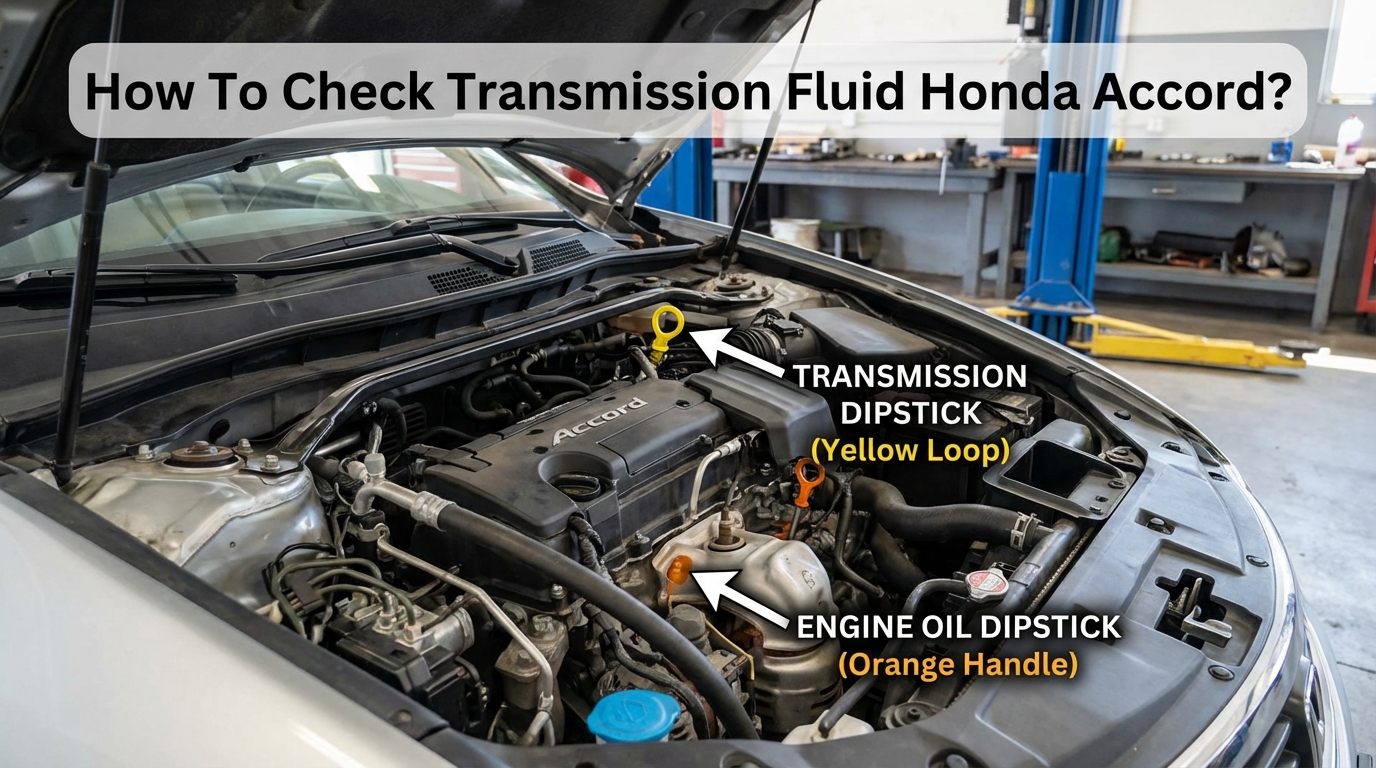
If you open the hood and do not see a yellow or orange transmission handle, your car likely uses a sealed system that requires a check bolt underneath the vehicle.
How to Check Fluid on Dipstick Models?
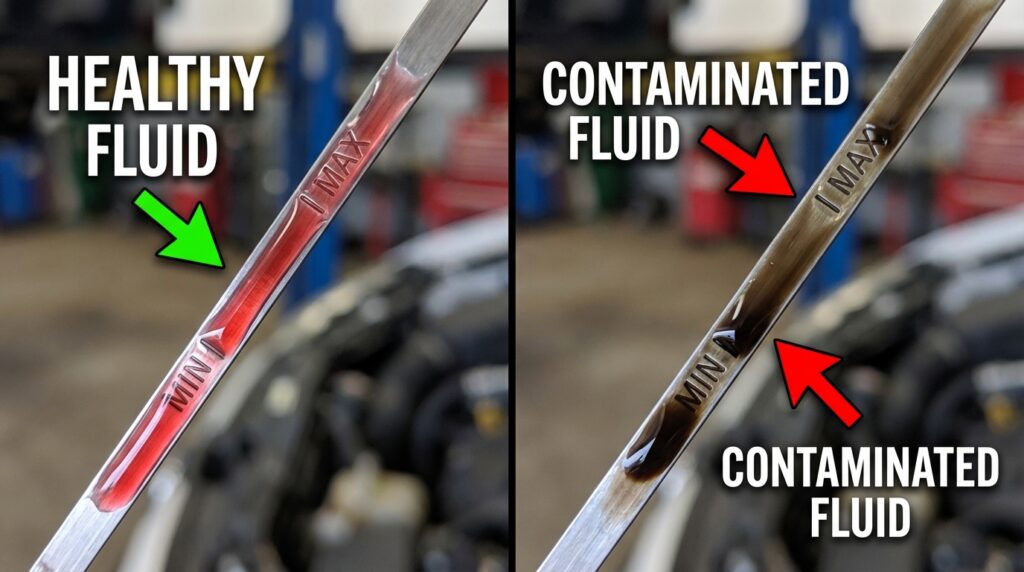
(1990 to 2012 Automatic) Warm the car to operating temperature. Park on a flat surface. Keep the engine idling. Pull the transmission dipstick, wipe it clean, reinsert it fully, then pull it again to read the level.
Fluid should be between the upper and lower marks. It should look red or light brown, not dark or burnt.
Quick Expert Tips
- Shift through all gears before checking
- Do not check it cold
- Use only Honda ATF DW-1
If fluid smells burnt or looks black, it is time for service, not just topping off.
Where Is the Dipstick Located?
On most 2003 to 2012 4-cylinder models, the dipstick is located toward the front of the engine bay, near the radiator. V6 models place it closer to the firewall. It usually has a yellow loop handle. If you see two dipsticks, the smaller one is engine oil.
Many owners search for the Honda Accord dipstick location because it can be confusing on V6 models.
How to Check CVT Fluid Without a Dipstick?
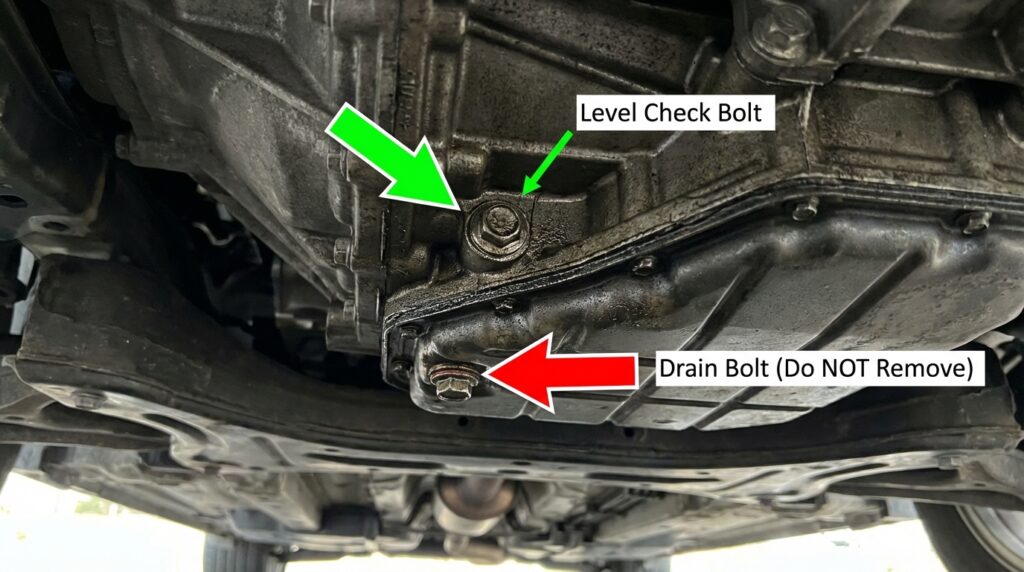
How To Check Transmission Fluid Honda Accord? The Honda Accord CVT fluid check is different from older automatic models because most CVT systems do not use a traditional dipstick.
(2013 to 2026 CVT Models) Honda removed the dipstick on most CVT Accords. The level is checked from underneath using a check bolt.
The vehicle must be level. Honda recommends checking CVT fluid between 95°F and 113°F. Too cold gives a false low reading. Too hot expands fluid and shows overfill. When you remove the check bolt, a small steady drip means the level is correct. No drip usually means it is low.
Overfilling damages CVT systems faster than low fluid.
Honda recommends dealer inspection for sealed CVT systems in newer models.
How to Check 10-Speed Auto Fluid?
(2018 2022 2.0T Models) The 10-speed automatic uses a sealed design similar to CVT models. Fluid is checked from underneath through a level plug. The engine must be warm. The vehicle must be perfectly level. A slight drip from the check port indicates proper level.
These units use a different fluid than older automatics. Using the wrong one can cause harsh shifting.
On 10-speed models, the fill plug and level plug are positioned close together. Removing the wrong bolt can cause fluid loss or incorrect level readings. Always identify the level check plug before loosening any fastener.
How to Check Hybrid e-CVT Fluid?
(2023 to 2026 Hybrid) Hybrid Accords use an electric motor drive system with an e-CVT design. There is no traditional shifting gearbox like older models.
Fluid level checks are done from the service port underneath. From 2023 to 2026, Honda technicians often use a scan tool to monitor the transmission temperature before removing the level plug.
Owners rarely need to check this manually unless servicing.
What Fluid Does the Honda Accord Use?
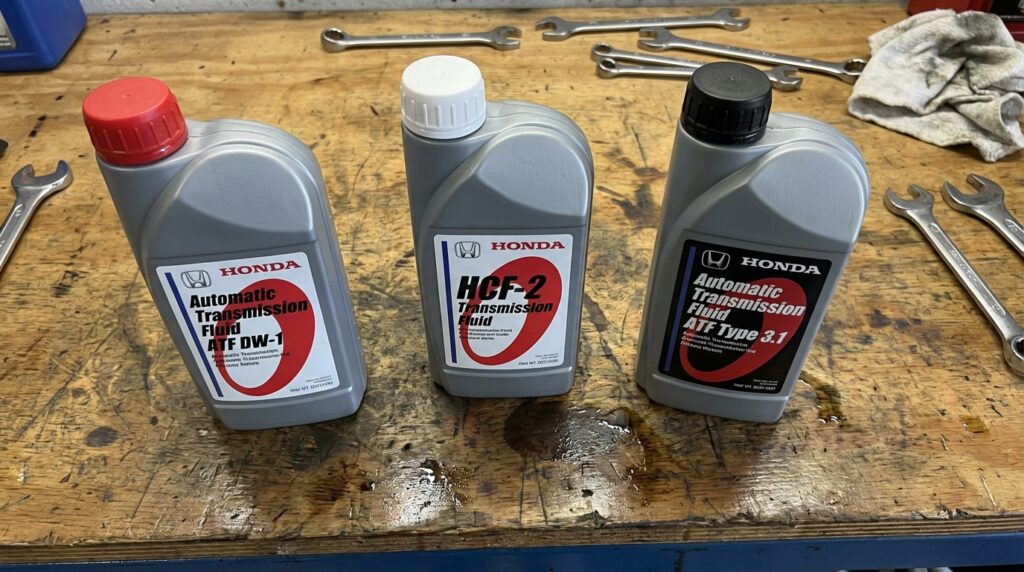
Using the wrong fluid is one of the biggest mistakes I see.
| Transmission Type | Required Fluid |
| 4 & 5-Speed Auto | Honda ATF DW-1 |
| CVT (2013+) | Honda HCF-2 |
| 10-Speed Auto | Honda ATF Type 3.1 |
| Manual | Honda MTF |
| Hybrid e-CVT | Honda HCF-2 (varies by year) |
Never use universal CVT fluid. Honda transmissions are sensitive to fluid chemistry.
What Is Fluid Capacity by Year?
Capacity depends on whether you are doing a drain & fill or a full rebuild fill.
| Model Type | Drain & Fill | Total Capacity |
| 2003 to 2012 Auto | 2.5–3 qt | 6–8 qt |
| 2013 to 2017 CVT | 3.5–4 qt | 8–9 qt |
| 2018+ CVT | 3.7–4 qt | 8+ qt |
| 10-Speed Auto | ~4 qt | 9+ qt |
Honda service bulletins strongly advise against universal transmission fluids. Using incorrect fluid can cause delayed shifting and long-term clutch wear.
Most DIY jobs are drain-and-fill, not full-capacity replacement.
What Temperature Should Fluid Be?
Transmission fluid should be checked when warm, not cold or overheated. Warm the vehicle by driving 10–15 minutes so the transmission reaches its normal operating range. Most technicians check the level when the fluid temperature is roughly 158°F to 176°F, which gives the most accurate reading.
Checking fluid outside this range can produce a false reading because transmission fluid expands significantly as it heats.
- Engine at normal operating temp
- Vehicle on level ground
- Fluid is warm to the touch but not hot
Cold checks give false readings. Overheated fluid expands and reads high.
Common Mistakes Owners Make
One mistake I see often is removing the drain bolt instead of the check bolt. The drain bolt sits lower on the transmission case. If you remove the wrong one, fluid will pour out, and you will need a full refill.
Many owners check the fluid cold and assume it is low. Transmission fluid expands significantly once warm, which can create false readings if checked too early.
Another common mistake is checking the level on a slight incline. Even a small tilt can shift fluid inside the transmission pan and produce an inaccurate reading.
What Are the Check Bolt Torque Specs?
Tools You May Need
- 3/8” ratchet
- Torque wrench
- 18mm socket
- Drain pan
- New crush washer
Torque wrench is strongly recommended because transmission drain bolts thread into aluminum housings that strip easily if overtightened.
Torque varies slightly by generation, but typical values are:
- CVT check bolt → 33 lb-ft
- Drain bolt → 36 lb-ft
- Always replace the 18mm aluminium crush washer when reinstalling the drain bolt. Reusing it often causes slow leaks.
Overtightening strips aluminium threads. Undertightening causes leaks. Use a torque wrench, not guesswork.
Always support the vehicle safely on jack stands before checking from underneath. Never rely on a hydraulic jack alone.
What Happens If Fluid Is Overfilled?
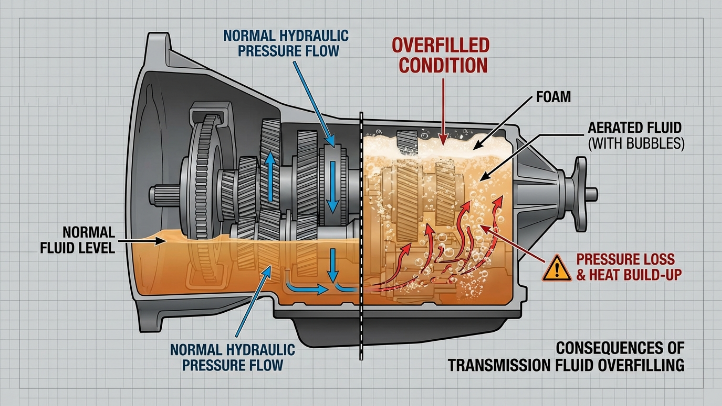
Too much fluid causes aeration. Air bubbles reduce hydraulic pressure inside the transmission. Transmission fluid expands significantly when hot. Even a small overfill can cause the rotating gears and shafts to whip the fluid into foam, which reduces hydraulic pressure inside the transmission.
This can lead to:
- Slipping between gears
- Delayed engagement
- Overheating
- Long-term internal wear
Many CVT failures occur after overfilling, not due to low fluid.
If your Accord jerks or shifts aggressively, fluid level could be the hidden cause.
Here is what is actually happening inside the transmission.
Read Guide: Why Does My Honda Accord Jerk When I Accelerate?
What Are the Signs of Wrong Fluid Level?
If you notice transmission slipping, Honda Accord models commonly experience this when fluid is low; the level should be checked immediately.
- Slipping or jerking
- Delayed shifting
- Burning smell
- Transmission overheating warning
If your Accord hesitates when shifting from Park to Drive, the fluid level should be checked immediately.
When Should You Check the Fluid?
For most Accords, the recommended service interval for transmission fluid inspection or replacement falls between 30,000 and 60,000 miles, depending on driving habits.
- Every 30,000 to 60,000 miles
- If shifting feels abnormal
- Before long road trips
Checking fluid after long highway drives is especially important because extended heat buildup can expose low fluid levels that may not appear during short trips.
In real inspection scenarios, many owners report hesitation only after highway driving. Heat expansion can temporarily mask low fluid until the transmission cools. Always recheck the level after symptoms appear, not days later.
Honda does not always list fluid checks in newer manuals because the systems are sealed, but inspections during service are still a smart idea.
Also Read: How Reliable Is Honda Accord?
FAQs:
Can I check the Honda Accord transmission fluid at home?
Yes. Dipstick models (1990 to 2012) can be checked easily at home, while sealed CVT and 10-speed models require access from underneath.
Does a 2015 Honda Accord CVT have a dipstick?
No. Most 2013+ CVT Accords use a sealed system and require checking fluid through a level check bolt underneath.
How do I know if my Honda Accord transmission fluid is low?
Delayed shifting, hesitation from Park to Drive, or transmission slipping usually indicates low fluid and requires immediate inspection.
What colour should Honda Accord transmission fluid be?
Healthy fluid should appear bright red or light brown; dark, burnt-smelling fluid indicates contamination and requires service.
When should transmission fluid be replaced in a Honda Accord?
Most models require service every 30,000 to 60,000 miles, depending on driving conditions and transmission type.
Conclusion:
Checking transmission fluid on a Honda Accord is simple on older dipstick models but requires more precision on newer sealed CVT, hybrid, and 10-speed systems. Temperature, level positioning, and correct fluid type all matter. Small mistakes, such as removing the wrong bolt or using universal fluid, can cause long-term damage. Follow the correct method for your specific model year to avoid costly repairs.