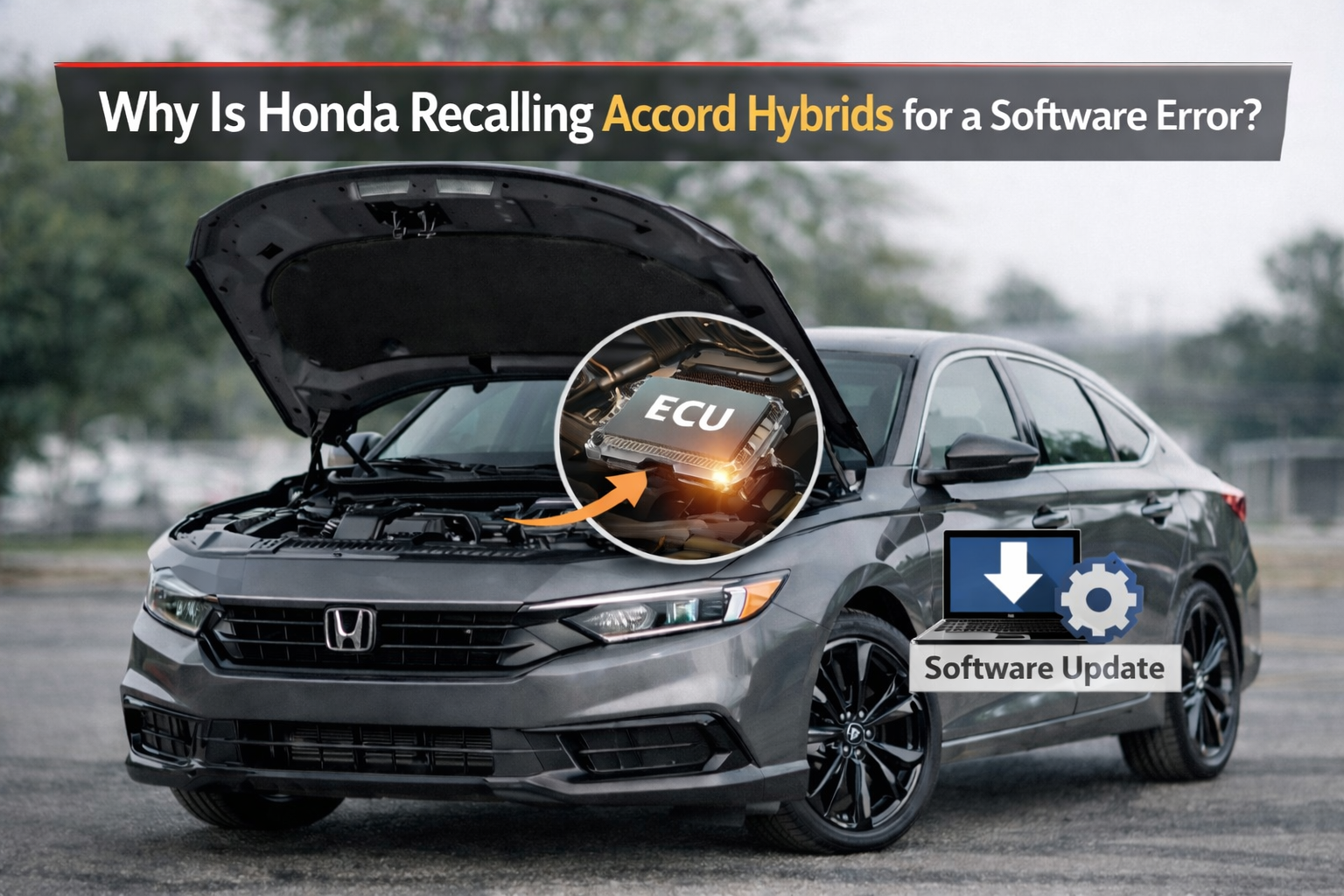
Why Is Honda Recalling Accord Hybrids for a Software Error? Check VIN!
Honda is recalling certain 2023 to 2025 Accord Hybrid models due to a propulsion control software calibration error that may reduce drive power. The fix is a free ECU reprogramming update performed at authorised dealerships. According to Honda and NHTSA filings, this recall is officially identified as Campaign Number 23V-567. Owners will see this number on their notification letter and in the federal safety recall database.
In this guide, we will understand Why Is Honda recalling Accord Hybrids for a Software Error. What this recall means and what it does not mean is critical before assuming major mechanical failure.
Which Honda Accord Hybrid Model Years Are Affected (2023 to 2025)?
The recall applies to specific production units of the 11th-generation Honda Accord Hybrid built between January 2023 and mid-2025.
| Model Year | Production Window (Approx.) | Hybrid Only? | Campaign Number |
| 2023 | Jan 2023 – Dec 2023 | Yes | 23V-567 |
| 2024 | Jan 2024 – Dec 2024 | Yes | 23V-567 |
| 2025 | Early 2025 builds | Yes | 23V-567 |
| 2026 | Not included (as of now) | No | – |
Only hybrid variants are affected. Gasoline-only Accords are not part of this campaign.
Honda has not extended the recall to 2026 production vehicles at this time.
How Many Vehicles Are Included in the Recall?
Approximately 256,000–257,000 vehicles in the United States are affected.
That number makes this one of the larger recent hybrid recalls for Honda, but it still represents a controlled campaign, not a fleet-wide crisis.
What Is the Intelligent Control Module (ICM) Software Issue?
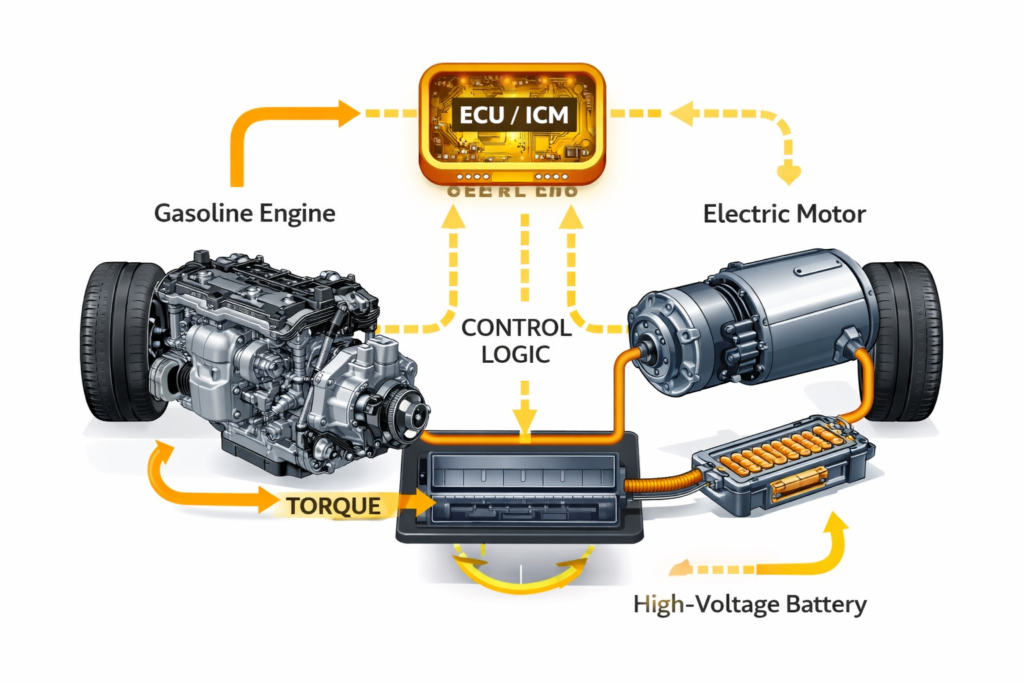
The Intelligent Control Module manages power sharing between the gasoline engine and the electric motor. In certain conditions, the software may misread data and activate a protective strategy.
Instead of smoothly balancing torque, it can limit propulsion to prevent potential system damage. This feels like a sudden loss of acceleration to the driver. The hardware is fine; the issue is the calibration logic inside the software.
From an engineering view, this is a logic fault, not a mechanical defect.
From a technical standpoint, the issue involves torque-blending logic within the hybrid Electronic Control Unit (ECU). Under certain load conditions, the fail-safe strategy may incorrectly interpret sensor data and reduce propulsion output more aggressively than intended. In real driving, this can feel like hesitation during acceleration rather than a full shutdown.
Can This Software Error Cause Loss of Drive Power?
Yes, but not total engine failure.
What Drivers May Notice:
- Sudden drop in acceleration
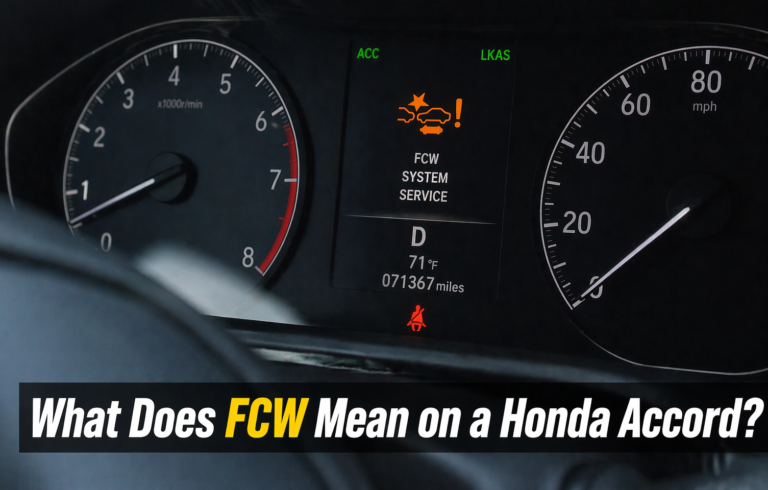
- Warning lights on the dashboard
- Vehicle entering limp mode
For example, a driver merging onto a highway may press the accelerator expecting a smooth hybrid boost, but instead feels a brief delay or reduced response. That momentary hesitation is what increases safety risk, especially in fast traffic.
In city stop-and-go traffic, the car may hesitate slightly when accelerating from a stop, which could surprise drivers but poses minimal risk at low speeds.
The car may still move, but with reduced power. That increases the risk of crashes in fast traffic. No fire risk is involved.
Is It Safe to Drive an Affected Accord Hybrid?
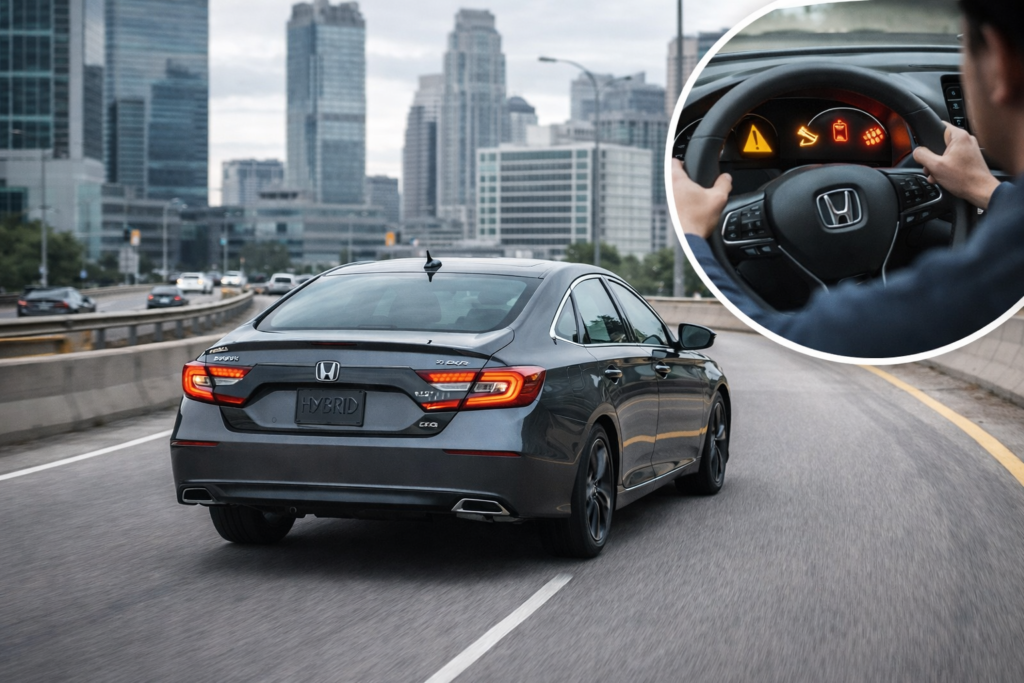
Short answer: It can be driven, but you should not ignore the recall.
If the warning lights come on or the car hesitates under throttle, schedule service immediately. Highway merging is where this issue becomes risky.
As a technician would advise, do not panic, but do not delay either.
Worried about handling in tricky conditions while your hybrid awaits a fix? See which Accords come with AWD for extra peace of mind.
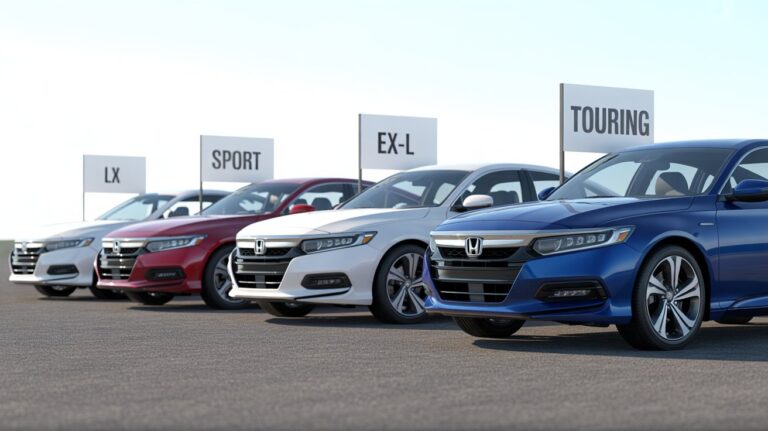
Does the Recall Affect All Trims (Sport, EX-L, Touring)?
Yes, if they are hybrid trims within the affected production range.
| Trim Level | Included If Hybrid? |
| Sport Hybrid | Yes |
| EX-L Hybrid | Yes |
| Touring Hybrid | Yes |
The issue is tied to the hybrid system, not trim features.
How Can You Check Your VIN for the Recall?
Checking your VIN is simple and takes less than a minute.
Steps to Verify
- Visit the official Honda recall page
- Enter your 17-digit VIN
- Confirm recall campaign status
You can also verify the status through the official federal recall database managed by the National Highway Traffic Safety Administration. If your VIN appears, contact your dealer and reference the recall campaign number listed in the system.
Check recalls directly on the NHTSA website.
What Is the Fix and How Long Will the Repair Take?
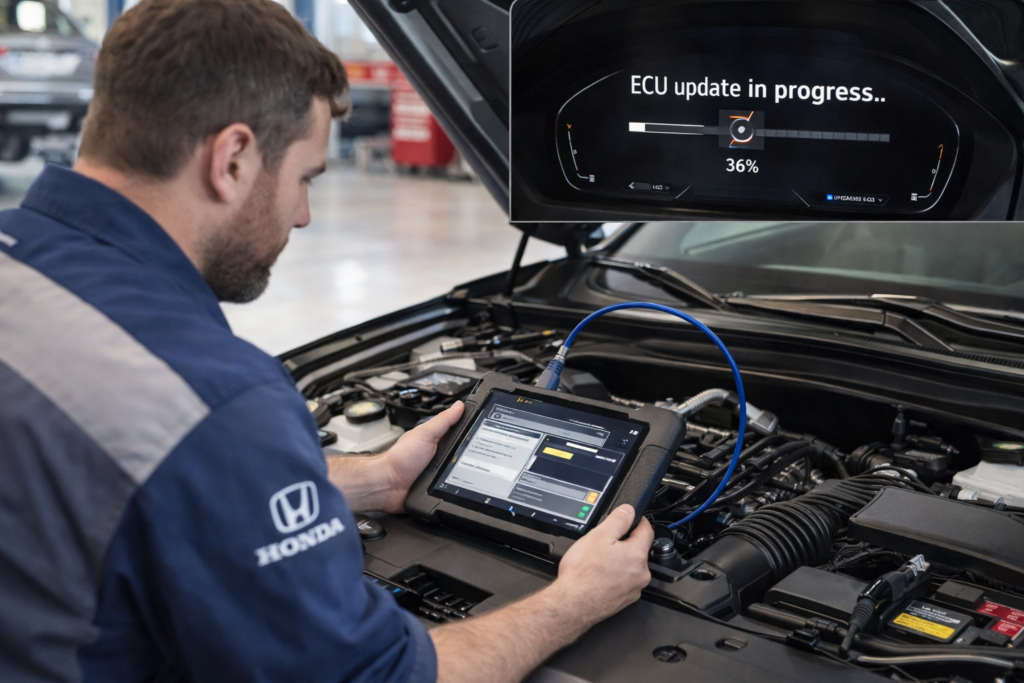
The fix is a dealer ECU programming update of the Intelligent Control Module. It usually takes 30 to 60 minutes once the vehicle is in the service bay. No parts are replaced.
In real-world dealership flow, you may wait longer due to scheduling, especially in busy metro areas. But the actual technical procedure is quick.
Dealers will perform an ECU software reprogramming procedure using factory diagnostic equipment. No mechanical components are replaced, and the hybrid battery system is not removed or modified during this repair.
Dealers follow the official Honda Service Bulletin (SB-23-ACC-HYB) to perform the ECU programming update correctly using factory diagnostic equipment.
Is the Recall Repair Free at Honda Dealers?
Yes. The repair is completely free.
Honda covers the software update under federal safety recall rules. Even if your vehicle is out of warranty, you will not pay for this correction.
If a dealer tries to charge diagnostic fees for this recall, push back politely.
When Will Honda Notify Owners?
Owner notification letters are typically mailed within weeks of the recall announcement.
Email notifications may also be sent if you are registered with Honda’s owner portal.
If you bought the car used, double-check your contact info with Honda to avoid missing updates.
Have Any Crashes or Injuries Been Reported?
As of the latest public update, no injuries or fatalities have been reported.
Most recalls of this type are proactive. Honda identified the calibration fault before widespread incidents occurred.
That is a sign of internal monitoring systems working correctly.
Will This Recall Affect Reliability or Resale Value?
In most cases, no long-term damage is expected.
Software recalls are common in modern hybrids because systems are complex. Once updated, resale impact is usually minimal, especially if repair documentation is kept.
From a resale standpoint, proof of recall completion reassures buyers.
Is This Related to Other Honda Hybrid Recalls?
Why Is Honda Recalling Accord Hybrids for a Software Error? This issue is separate from past airbag or fuel pump campaigns. It specifically targets hybrid propulsion software in the 11th-generation Accord.
Honda has issued prior hybrid software updates for older models, but this is not a battery-failure recall.
Each recall campaign has its own identification number and correction method.
Why Are Software Recalls Increasing in Modern Hybrid Vehicles?
Modern hybrids rely on dozens of electronic control units. More code means more chances for calibration errors.
Compared to early 2000s vehicles, today’s cars run millions of lines of software. Updates are now part of automotive life, similar to smartphone patches.
The 2026 Accord’s production will include tighter validation checks, but as vehicles become more software-driven, updates will remain common.
Most Asked Questions:
Is the Honda Accord Hybrid recall related to a battery failure?
No. The recall involves propulsion control software, not the hybrid battery pack itself.
Can this software issue cause a sudden loss of power while driving?
Yes. The system may unexpectedly reduce propulsion under certain torque-demand conditions.
Can the update be done over-the-air?
No, it requires dealer-level programming equipment.
Is the recall repair completely free at Honda dealerships?
Yes. Honda covers the full cost of ECU reprogramming under federal safety recall rules.
How soon should I schedule the recall?
Immediately, to ensure safe operation.
What exactly does the software update fix?
It corrects torque-blending calibration within the hybrid ECU to prevent unintended activation of the fail-safe.
Are 2026 Honda Accord Hybrid models included in this recall?
No official expansion includes 2026 models, according to the latest regulatory filing.
Does the recall affect fuel economy?
No, efficiency remains unchanged after the ECU reflash.
Conclusion:
This recall highlights how modern hybrid vehicles depend heavily on precise software calibration. While the issue poses a reduced risk of reduced drive power, it does not indicate mechanical failure or battery damage. Once the ECU update is completed, the vehicle should operate normally. Owners should verify their VIN, schedule the repair promptly, and keep documentation for future resale confidence.