Do Honda Civics Have Leather Seats? (Compare Trims 2026)
Leather seats in the Honda Civic are trim-specific, not year-specific. From 2000 to 2026, Honda has limited factory leather to premium trims such as EX-L (older models) and Touring or Sport Touring (modern models). Base trims consistently use cloth to keep pricing competitive. If you are buying new or used, the trim badge matters more than the model year.
This guide breaks down do Honda Civics Have Leather Seats, leather availability by generation, resale impact, durability, and ownership costs using real-world data.
Which Honda Civic Trims Come With Leather Seats?
Leather has mostly been reserved for top trims. Here is how it breaks down from older models to 2026.
| Model Years | Trim With Leather | Notes |
| 2006 to 2011 | EX-L (select years) | Optional in some markets |
| 2012 to 2015 | EX-L | First consistent leather offering |
| 2016 to 2021 | Touring | Standard leather |
| 2022 to 2024 | Touring | Leather standard |
| 2025 to 2026 | Touring / Sport Touring (Hybrid) | Leather standard |
In 2026 models, leather remains exclusive to Touring and Hybrid Sport Touring trims. Lower trims still use cloth.
Honda Civic Leather Seats by Generation (2000 to 2026)
| Generation | Model Years | Leather Availability | Trim Name |
| 7th Gen | 2000 to 2005 | Rare | None / Limited |
| 8th Gen | 2006 to 2011 | Optional | EX-L |
| 9th Gen | 2012 to 2015 | Consistent | EX-L |
| 10th Gen | 2016 to 2021 | Standard on top trim | Touring |
| 11th Gen | 2022 to 2024 | Standard on top trim | Touring |
| 11th Gen Hybrid | 2025 to 2026 | Standard on Sport Touring | Sport Touring Hybrid |
2026 Honda Civic Interior Updates:
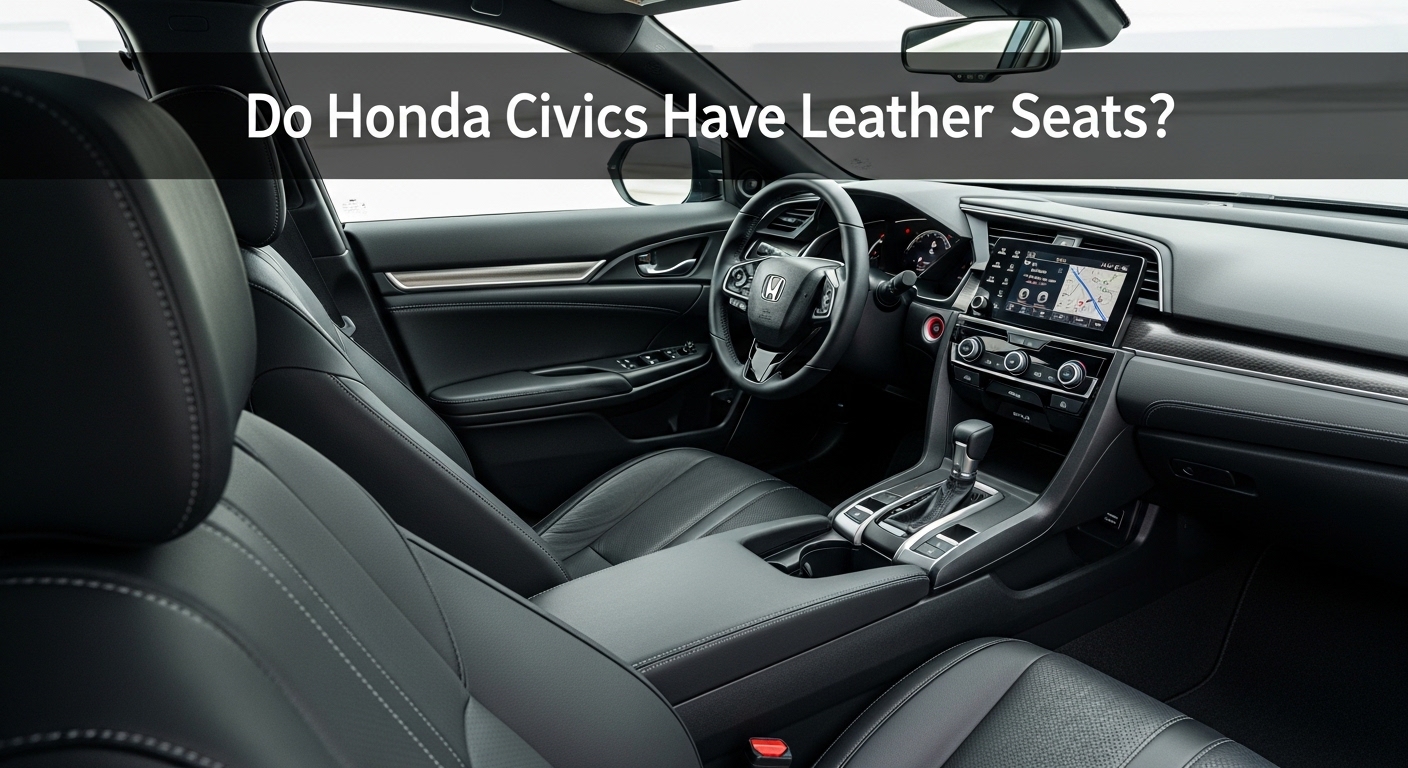
For the 2026 model year, Honda refined the Civic’s interior to feel more premium. Leather‑trimmed seats are standard on Touring and Sport Touring Hybrid trims, featuring updated stitching and softer materials for greater comfort. Heated front seats are standard on hybrid and higher trims, and available leather upholstery pairs with a 10.2‑inch digital instrument cluster and a 9‑inch infotainment screen with wireless Apple CarPlay and Android Auto support.
Did Older Honda Civic Models Have Leather?
Factory leather was rare before 2012. From 2000 to 2005, most Civics offered only cloth upholstery. Between 2006 and 2011, EX-L trims introduced limited leather options, but availability varied by market. Consistent leather availability began in 2012. If you find a 2008 model with leather today, it is often aftermarket-installed rather than factory-equipped.
Is Honda Civic Leather Real or Synthetic?
Honda uses leather-trimmed seats, not full leather everywhere.
That usually means:
- Seat centers are real leather
- Side bolsters may be synthetic
- Rear seats can mix materials
This design improves durability and lowers cost. It is not luxury-car leather, but it holds up well if maintained. Cracking usually happens after 6 to 8 years without conditioning, especially in hot climates.
Do Honda Civic Hatchbacks Offer Leather Seats?
Yes, but again, only on higher trims.
From 2017 to 2021, hatchbacks came with leather as part of the Sport Touring package.
From 2022 to 2026, Touring hatchbacks include leather as standard.
Lower hatch trims like LX or Sport stick with cloth.
If you want leather in a hatchback, you are automatically shopping the premium tier.
Do Honda Civic Hybrid Models Have Leather?
The Civic Hybrid returned in 2025, and leather is available on some trims.
- Hybrid Sport: Cloth seats
- Hybrid Sport Touring: Leather standard
For 2025–2026, the Sport Touring Hybrid comes with leather‑trimmed seats and heated front seats as standard, while the regular Hybrid Sport keeps cloth. The 2026 Sport Touring also features a 10.2‑inch digital cluster and improved interior tech over earlier hybrid models.
Thinking about owning a Civic Hybrid? Make sure your battery lasts as long as your leather seats!
Also Read: How Long Do Honda Civic Batteries Last?
Leather vs Cloth in a Civic: Which Is Better?
Leather Pros
- Easier to clean
- Looks more upscale
- Better resale appeal
Leather Cons
- Gets hot in the summer
- Needs conditioning
- Costs more upfront
Cloth is cooler and cheaper, but stains more easily. If you live in very hot weather and park outside daily, cloth seats can honestly be more comfortable.
In 2026, Touring and Sport Touring trims also include standard heated front seats and premium leather‑trim materials as part of the comfort upgrade over cloth.
How Durable Are Honda Civic Leather Seats?
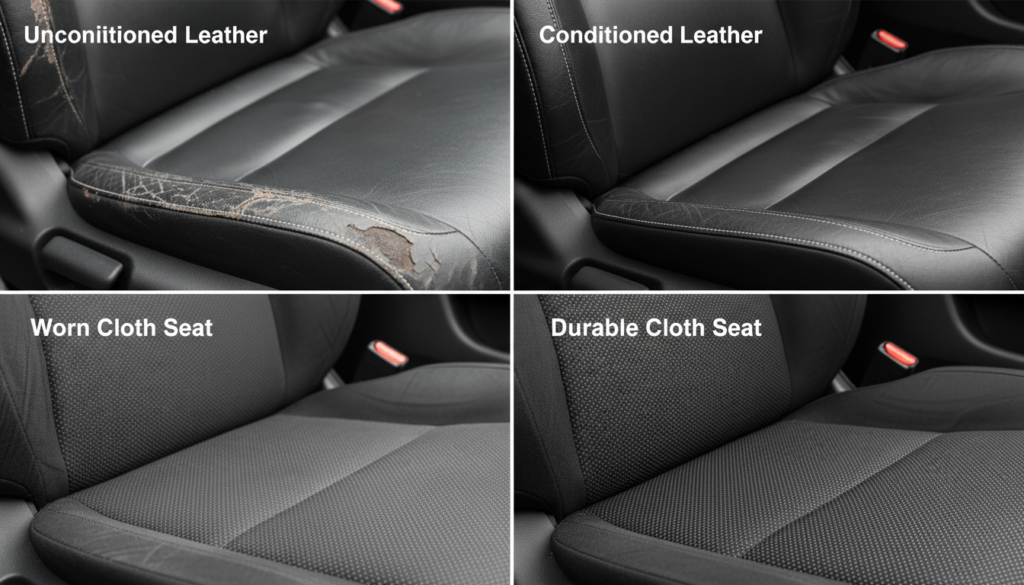
Honda uses leather-trimmed upholstery, meaning high-contact surfaces are trimmed in real leather while side panels use synthetic materials for durability.
In hot climates, leather can crack after 6–8 years without conditioning. Owners in warmer regions report faster wear if vehicles are parked outdoors daily. Regular seat conditioning twice per year significantly extends lifespan.
Professional leather repair for cracks or tears typically costs $300–$800 per seat panel. Full seat reupholstery can exceed $1,500. Proper conditioning costs less than $20 per year and prevents major repair expenses.
Can You Add Leather Seats to a Honda Civic?
Yes. Aftermarket kits are common.
A professional leather installation usually costs $1,500 to $2,000. Brands like Katzkin replace the entire cloth, not just the covers. In some cases, aftermarket leather can look better than factory EX-L leather from older generations.
But it would not increase resale value as much as a factory Touring trim.
Upgrading your Civic? See what wrapping costs for an Accord to understand customization expenses!
Is the Touring Trim Worth It for Leather Seats?
Touring also adds:
- Heated seats
- Power driver seat
- Premium audio
- Digital cluster (newer models)
If you value those features together, Touring makes sense. But upgrading only for leather rarely makes financial sense unless you are already close in price.
Do Leather Seats Increase the Resale Value of a Honda Civic?
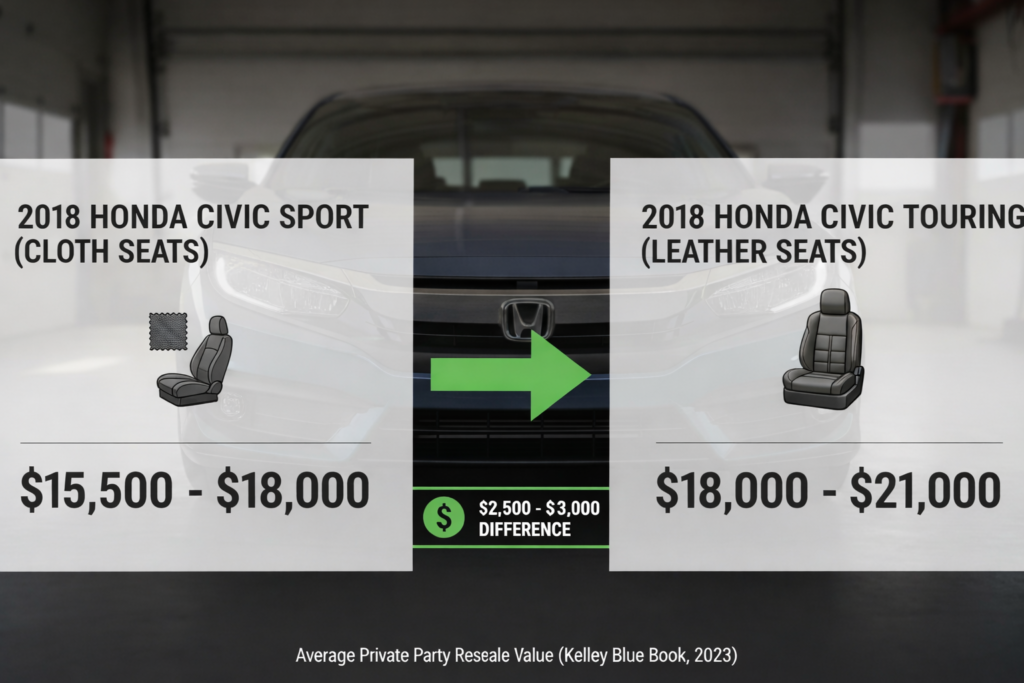
Yes, slightly. On the used market, leather Civics usually sell faster and for a few hundred dollars more than cloth versions of the same year and mileage. The difference is bigger in 2016+ Touring models.
But resale gain would not fully recover the original trim price difference. It helps it does not transform value. Based on used-market pricing trends from 2016–2024 listings, Touring models consistently show stronger resale demand.
For example, a 2018 Civic Touring typically sells for $1,200–$1,800 more than a similar-mileage 2018 Civic Sport with cloth seats. However, the original price gap was over $2,500, indicating that leather improves resale appeal but does not fully recoup the upgrade cost.
Biggest Mistakes Buyers Make:
- Assuming all Touring trims across all years have identical materials
- Confusing leather-trimmed with full leather seating
- Ignoring climate impact before choosing leather
- Overpaying for aftermarket leather, expecting a resale boost
Expert tip: Always verify the VIN build sheet instead of trusting dealership descriptions.
If resale value and durability matter more than appearance, cloth seats are often the smarter long-term choice in hot climates. Leather looks premium, but without maintenance, it ages faster than modern Honda cloth upholstery. Buyers often overestimate resale gains from leather.
FAQs:
Do Honda Civics have leather seats?
Yes. Leather seats are available on higher trims, such as Touring and Sport Touring, in most 2016 to 2026 models.
Does the Civic Touring come with leather seats?
Yes. Touring trims from 2016 onward include leather-trimmed seats as standard equipment.
Can you add leather seats to a Honda Civic?
Yes. Aftermarket leather can be professionally installed for $1,500 to $2,000, depending on quality.
Is Honda Civic leather real or synthetic?
Honda uses leather-trimmed seating, meaning real leather on key surfaces with synthetic side panels for durability.
Do all Honda Civic trims have leather seats?
No. Base trims like LX and Sport typically come with cloth seats, not leather.
Conclusion:
Leather seats in the Honda Civic depend entirely on trim level and model year. From 2016 to 2026, Touring and Sport Touring trims consistently offer leather, while lower trims remain cloth-focused to keep pricing competitive. If leather matters to you, verify the exact trim, not just the year. For buyers balancing comfort, resale value, and long-term durability, choosing the right trim makes more sense than relying on assumptions.