Do Honda Accords Have Timing Belts Or Chains? (Find Out 2026)
If you have ever stood at a mechanic’s counter and felt completely lost when they mentioned your Honda Accord’s timing system, you are not alone. Most car owners, even experienced ones, do not think about the timing belt or chain until something goes wrong. And by then, the damage can easily cost more than $3,000 to $5,000.
I have spent years researching Honda Accord maintenance, and the single most overlooked thing buyers ignore when purchasing a used Accord is whether it has a timing belt or a timing chain. That one detail changes your long-term maintenance cost significantly.
This guide will walk you through everything you need to know: which model years use which system, why it matters for your wallet, what can go wrong, and how to protect your engine no matter which Accord you own.
Why the Timing System Is More Important Than Most Owners Think
Your Honda Accord’s engine has hundreds of moving parts, but few are as critical as the timing system. Here is what it actually does:
Inside your engine, the crankshaft (bottom) and the camshaft (top) must spin in perfect coordination. The crankshaft drives the pistons up and down. The camshaft controls when the intake and exhaust valves open and close. If these two get even slightly out of sync, your engine loses power, misfires, or, in a worst-case scenario, destroys itself from the inside.
The timing belt or chain is what keeps these two shafts synchronized.
Think of it like a bicycle chain connecting the pedals to the rear wheel. If that chain breaks while you are going downhill, you lose all control. Similarly, if your timing system fails, your engine has no control over its own internal movement.
The key difference is this:
- A timing belt is made of rubber and must be replaced on schedule
- A timing chain is designed to last significantly longer than a timing belt and often lasts the life of the engine when oil changes are performed on schedule.
Choosing the wrong model year without knowing this can mean you are unknowingly buying into a $1,000+ maintenance job every 90,000 miles.
Timing Belt vs. Timing Chain: What Is Actually Different?
Before diving into specific years, it helps to understand what each system really means for a Honda Accord owner in practical terms.
Timing Belt vs Timing Chain Comparison
| Feature | Timing Belt | Timing Chain |
|---|---|---|
| Material | Reinforced Rubber | Metal |
| Replacement Interval | 90k–105k Miles | Usually Lifetime |
| Maintenance Cost | Higher | Lower |
| Failure Risk | Higher if neglected | Lower |
| Noise Level | Quieter | Slightly Noisier |
| Long-Term Ownership Cost | Higher | Lower |
Timing Belt: What You Need to Know
A timing belt is a reinforced rubber belt that runs along the outside of the engine. Because it is rubber, it degrades over time regardless of how carefully you drive. Heat, oil exposure, and normal wear all break it down from the inside, which means it can look completely fine on the outside and still be on the verge of failure.
Honda typically recommends replacing the timing belt every 90,000 to 105,000 miles, though many mechanics suggest inspecting it earlier if the car has been sitting unused, has been in extreme heat, or has an irregular oil change history.
What makes timing belts risky for Honda Accords specifically:
Nearly all Honda Accord engines, both 4-cylinder and V6, are interference engines. This is a technical term that means the pistons and valves share the same space inside the cylinders at different times. The timing system is what prevents them from colliding.
If the timing belt snaps on an interference engine, the pistons continue moving while the valves freeze in place. They collide. Valves bend. Pistons crack. In severe cases, the cylinder head is destroyed. This is not a repair; it is often an engine replacement.
Timing Chain: Why Most Owners Prefer It
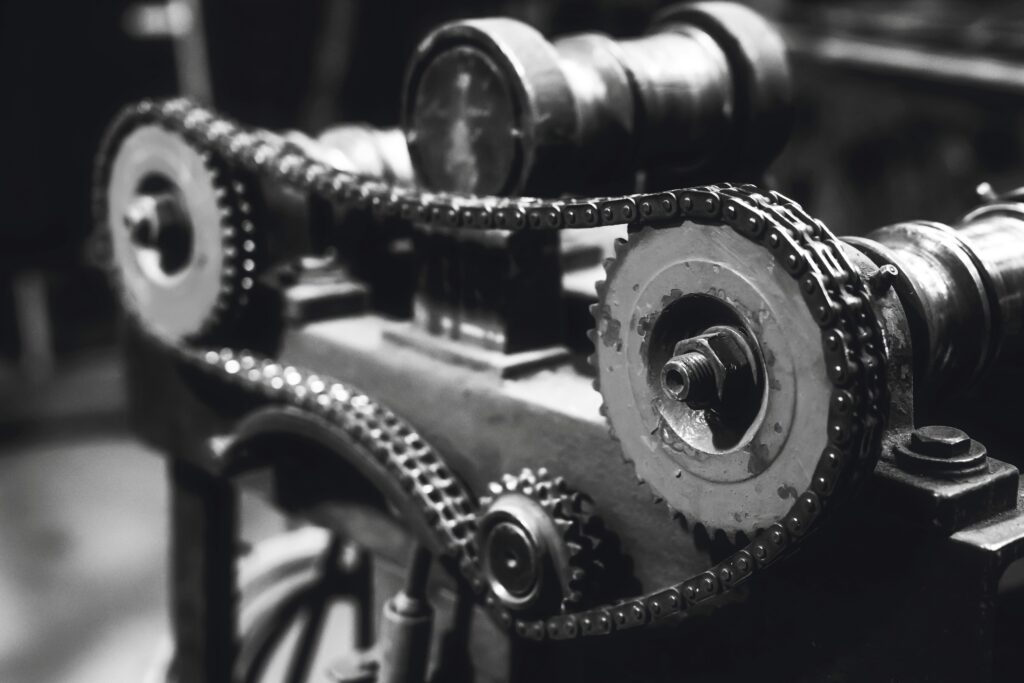
A timing chain is exactly what it sounds like: a metal chain, similar to a bicycle chain but more robust, that runs inside the engine submerged in oil. Because it is metal and lubricated continuously, it can last well over 200,000 miles with no scheduled replacement interval.
The trade-off is that chains can develop wear-related noise and stretch over time, particularly when oil changes are delayed. But the risk of sudden catastrophic failure is far lower than with a rubber belt.
For most everyday Honda Accord owners, a timing chain model simply means one less major maintenance expense to worry about over the life of the vehicle.
Which Honda Accord Years Have a Timing Belt?
Honda used timing belts across many Accord generations. The key years to know are:
All Engines: 1990 to 2002
Every Honda Accord engine from 1990 through 2002, both 4-cylinder and V6, came equipped with a timing belt. If you own or are considering buying an Accord from this era, timing belt replacement history is the first thing you should ask for.
V6 Engines: 2003 to 2017
Honda’s J-Series V6 engines (3.0L and 3.5L) continued using timing belts through the 2017 model year. This applies to:
- 2003 to 2007 Accord V6 (3.0L)
- 2008 to 2012 Accord V6 (3.5L)
- 2013 to 2017 Accord V6 (3.5L)
- V6 Hybrid models within these years
This is a detail many buyers miss. They see the 2015 Honda Accord and assume it is modern enough to have a chain, but if it has a V6, it still has a belt that needs replacement.
Why Timing Belt Service Matters
Delaying timing belt replacement is one of the most expensive maintenance mistakes Accord owners can make. If the belt fails on an interference engine, valves and pistons can collide, often resulting in thousands of dollars in engine repairs. Replacing the belt on schedule is significantly cheaper than repairing engine damage after a failure.
Which Honda Accord Years Have a Timing Chain?
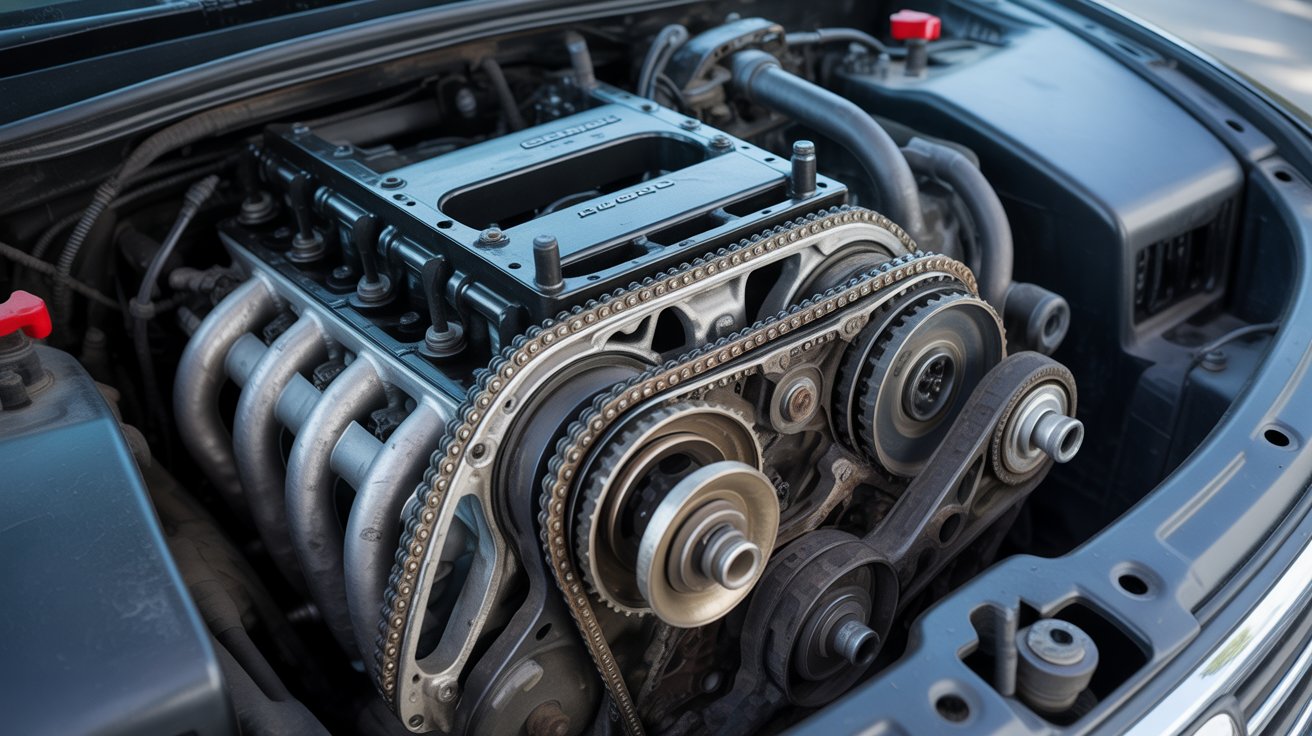
Honda began transitioning its 4-cylinder engines to timing chains in 2003, and by 2018, all Accord engines had made the switch.
4-Cylinder Engines: 2003 to Present
Honda’s K-Series 4-cylinder engines (2.4L) introduced in 2003 use a timing chain. This includes:
- 2003 to 2007 Accord 4-cylinder (2.4L)
- 2008 to 2012 Accord 4-cylinder (2.4L)
- 2013 to 2017 Accord 4-cylinder (2.4L)
- 2018 to present Accord (1.5T and 2.0T turbocharged engines)
All Engines: 2018 to Present
From 2018 onward, Honda redesigned the Accord lineup with turbocharged 4-cylinder engines only, eliminating the V6. Both the 1.5T and 2.0T use timing chains.
This makes any 2018 or newer Accord a safe choice from a timing system standpoint.
Complete Model Year Reference Table
| Year Range | Engine | Timing System | Notes |
| 1990 to 2002 | All 4-Cyl | Belt | Replace every 90,000 to 105,000 mi |
| 1990 to 2002 | All V6 | Belt | Replace every 90,000 to 105,000 mi |
| 2003 to 2012 | 4-Cyl (2.4L) | Chain | No replacement interval |
| 2003 to 2007 | V6 (3.0L) | Belt | Still common on the used market |
| 2008 to 2017 | V6 (3.5L) | Belt | Many are still on the road |
| 2013–2017 | 4-Cyl (2.4L) | Chain | Very reliable |
| 2018 to Present | 1.5T / 2.0T | Chain | All current models |
What Does Timing Belt Replacement Actually Cost?
One of the reasons owners delay timing belt service is that they underestimate the real cost of skipping it. Here is a realistic breakdown:
V6 Accord Timing Belt Service
Because the V6 engine is more compact and complex, the labor time is higher, and access is tighter.
- Parts (belt + tensioner + idler): $250 to $400
- Labor: $400 to $700
- With water pump: Add $150 to $250 in parts and $100 to $150 in labor
- Total realistic range: $750 to $1,200
Replacing the water pump at the same time is strongly recommended. Since the mechanic already has access to that area of the engine, adding the water pump adds relatively little labor cost, but skipping it means potentially opening the whole engine again in 30,000 to 40,000 miles.
Older 4-Cylinder Accord Timing Belt Service
- Parts: $150 to $250
- Labor: $300 to $500
- Total realistic range: $450 to $750
According to RepairPal, the average Honda Accord timing belt replacement falls between $760 and $1,170, depending on location and model.
Warning Signs That Your Timing System Needs Attention
Whether you have a belt or a chain, there are warning signs worth knowing. Timing system problems are just one part of Honda Accord ownership.
See our full guide on Honda Accord common maintenance issues for a complete picture.
Timing Belt Warning Signs
- A ticking or slapping sound from the front of the engine
- Engine misfires or rough idle without a clear cause
- Oil leaks near the timing cover, and oil accelerates belt degradation
- Approaching 90,000 miles without a replacement record
With timing belts, the most dangerous situation is when there are no symptoms. The belt can fail without warning, which is why mileage-based replacement is not optional; it is the entire point of the service interval.
Timing Chain Warning Signs
- Rattling noise during cold starts that fades as the engine warms up
- Check engine light with codes related to camshaft or crankshaft timing (P0341, P0016, etc.)
- Rough idle or hesitation accompanied by timing-related fault codes
- Oil consumption or low oil pressure, the chain relies entirely on oil for lubrication
The most important thing you can do to protect a timing chain is follow Honda’s recommended oil change intervals. Dirty or low oil is the primary cause of premature chain wear.
How to Check Which System Your Accord Has Before Buying?
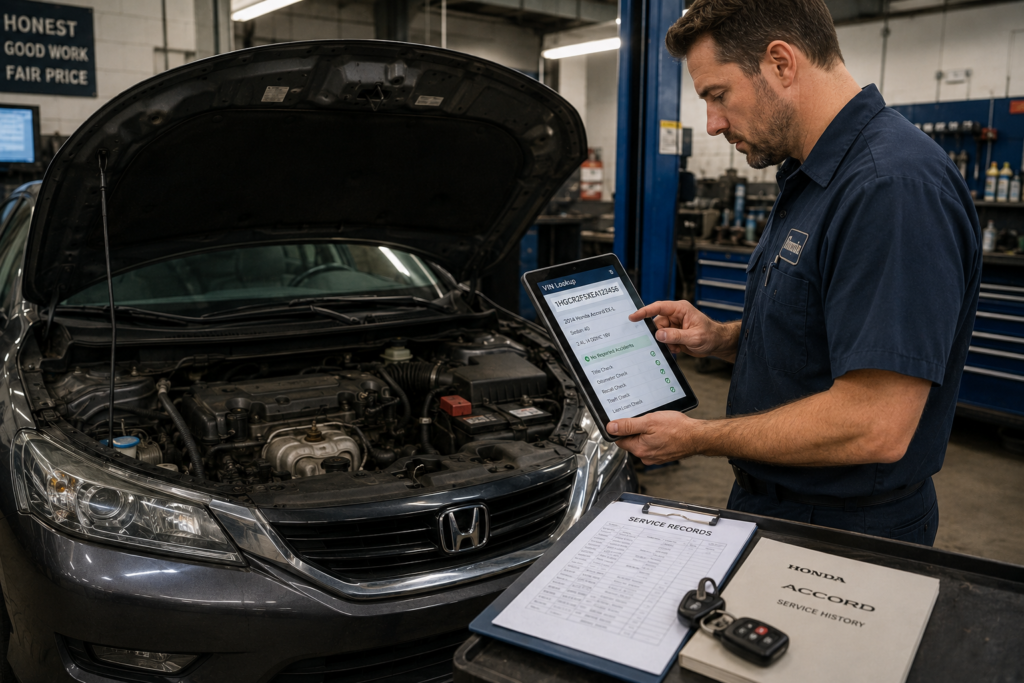
If you are shopping for a used Honda Accord, here is exactly how to verify the timing system before committing to a purchase:
- Look up the VIN using Honda’s official website or a service like Carfax to confirm the exact engine
- Ask for maintenance records and specifically look for any timing belt service entries
- Check the engine code K-series 4-cylinder engines (K24A, K24Z, etc.) all use chains; F-series older engines use belts; J-series V6 engines use belts through 2017
- If records are missing and it has a belt engine, factor the cost of a timing belt service into your offer price
- Ask a pre-purchase inspection mechanic to check the timing cover area for oil seepage, which can degrade a belt faster
For any V6 Accord between 2003 and 2017 that cannot prove its timing belt has been replaced, treat it as an immediate maintenance need, not a future one.
Which Honda Accord Years Are the Best for Long-Term, Low-Cost Ownership?
Based on the timing system alone, these are the most recommended years for owners who want fewer major maintenance surprises. Timing chains are only one part of reliability. Buyers should also consider transmission history, engine design, maintenance records, and known model-year issues before choosing an Accord.
Best choices for reliability and low timing-related costs:
- 2008 to 2012 Accord 4-cylinder (2.4L) Proven K24 engine, timing chain, widely available
- 2013 to 2017 Accord 4-cylinder (2.4L) Refined version of the same reliable platform
- 2018 to 2022 Accord (1.5T or 2.0T) Modern turbocharged engines, all chain-driven, no belt service needed
If you specifically want a V6 Accord for its power, the 2003 to 2012 V6 models can be excellent cars, but only if you verify timing belt service history and budget for it immediately if the records are unclear. Before choosing a model year, it also helps to know which Honda Accord years to avoid for other reliability reasons.
FAQs
Does a Honda Accord timing chain last the life of the engine?
In most cases, yes, provided the owner keeps up with regular oil changes. Timing chains are designed for the full service life of the engine and have no scheduled replacement interval in Honda’s maintenance guide.
Do all V6 Honda Accords use a timing belt?
Yes, all V6 Honda Accord engines from 1990 through the 2017 model year used timing belts. Honda eliminated the V6 from the Accord lineup starting in 2018, at which point all remaining engines use timing chains.
How often should I replace the timing belt on my Accord?
Honda recommends every 90,000 to 105,000 miles, but many mechanics suggest not waiting past 90,000 miles. If the car has been sitting unused for years, the belt should be inspected regardless of mileage, as rubber degrades with age.
Is a timing chain always better than a timing belt?
Not necessarily. Timing chains usually require less maintenance and often last longer, but both systems can provide excellent reliability when properly maintained. The biggest advantage of a chain-driven Accord is avoiding scheduled timing belt replacement costs.
Can I drive an Accord with a bad timing chain?
You should not. If your chain is showing symptoms like cold-start rattling or timing-related fault codes, continuing to drive it risks complete engine failure. Have it inspected immediately.
Will a broken timing belt always destroy the engine?
Not always, but the odds are not in your favor. Because Honda Accord engines are interference engines, the chance of serious valve or piston damage from a belt failure is high. It is not a risk worth taking.
What is the best way to protect my timing chain?
Follow Honda’s oil change schedule. Use the recommended oil viscosity. Check your oil level every few months between changes. Low or degraded oil is the number one cause of early timing chain wear.
Conclusion
Whether a Honda Accord uses a timing belt or a timing chain can have a major impact on long-term maintenance costs. Most 4-cylinder Accords built since 2003 and all Accord models from 2018 onward use timing chains, making them attractive choices for buyers seeking lower maintenance requirements. If your Accord uses a timing belt, replacing it on schedule is essential to avoid costly engine damage. Understanding your engine’s timing system helps you make smarter ownership and buying decisions.
Sources: Honda Owner’s Manual (2003 to 2024), RepairPal.com, Honda Service Bulletins, K-Series Parts compatibility documentation