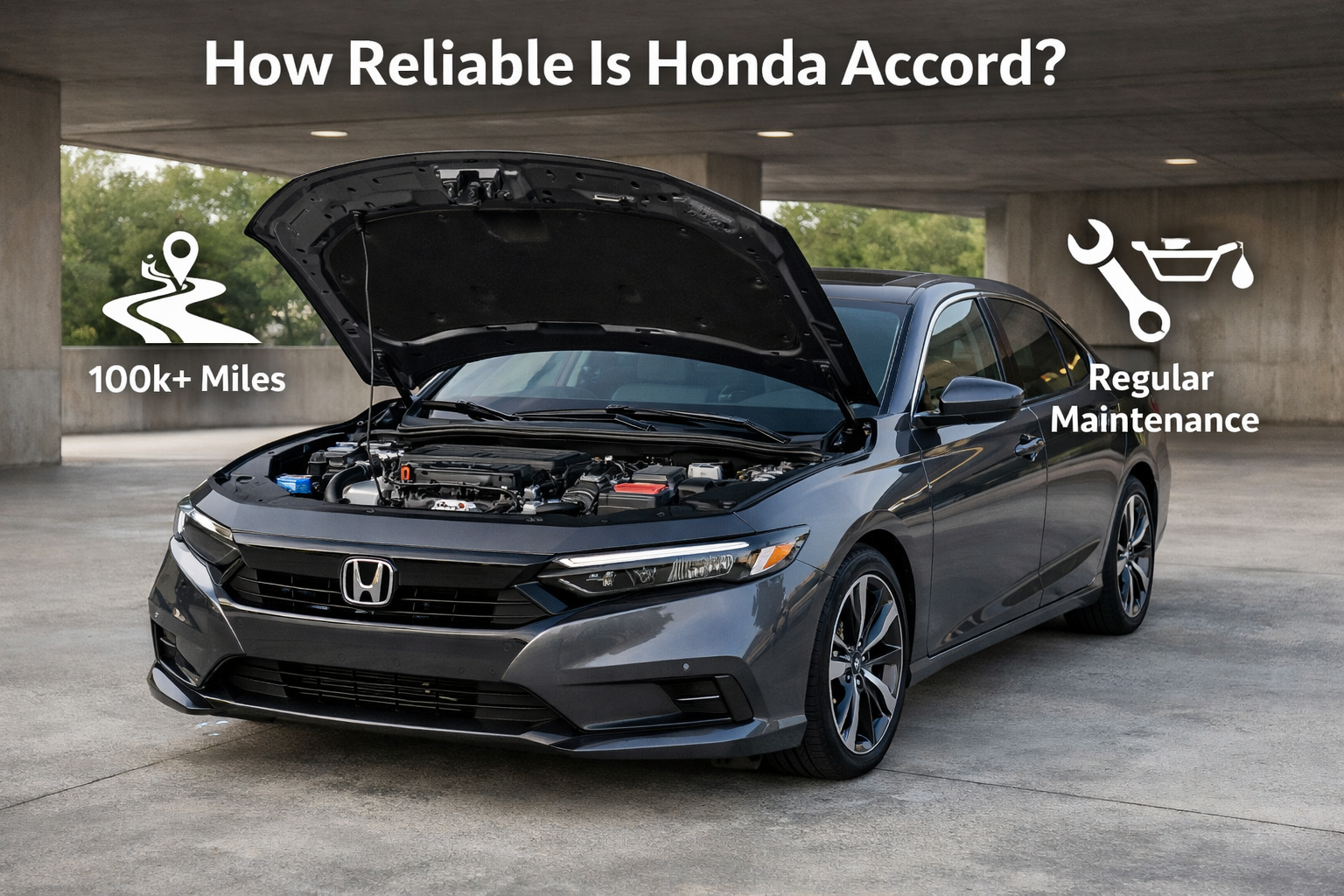
How Reliable Is Honda Accord? (Check Reliability)
The Honda Accord is considered very reliable. It has a strong engine, low repair frequency, and long lifespan. With regular maintenance, many Accords easily last over 200,000 miles, making it a dependable choice for daily driving.
In this guide, we break down real-world reliability, common issues, best and worst years, and what actually matters before you buy. If you want the truth beyond marketing claims, you are in the right place.
Quick Reliability Verdict
| Category | Rating |
|---|---|
| Engine Reliability | Excellent |
| Transmission Reliability | Very Good |
| Ownership Costs | Low |
| Longevity | Excellent |
| Overall Reliability | 9/10 |
For most buyers, the Honda Accord remains one of the safest used midsize sedan purchases when maintenance records are available.
Why Is the Honda Accord Considered So Reliable?
The Accord’s reliability comes from Honda’s cautious engineering approach. Engines, transmissions, and core systems are refined over years rather than rushed. That results in fewer surprises for owners.
Mechanics often note that Accords fail later than competitors, not sooner. Most issues are wear-related, not design flaws. This predictability separates the Accord from many rivals.
Accord owners consistently report that when issues do appear, they tend to be gradual and wear-related rather than sudden or catastrophic, making them easier to budget for.
How Do Honda Accord Reliability Ratings Compare?
Across J.D. Power, Consumer Reports, and RepairPal, the Honda Accord consistently scores above average for reliability. What matters more is the pattern: fewer early failures, lower long-term repair frequency, and predictable wear-related issues rather than sudden breakdowns.
Multiple sources agreeing show the Accord’s reliability is pattern-based, not marketing hype.
How Long Does a Honda Accord Really Last?
Most cars reach 200,000 miles; fewer do so affordably. Accords stand out because with consistent oil changes, transmission servicing, and cooling system care, many cross 250,000 miles without major engine work.
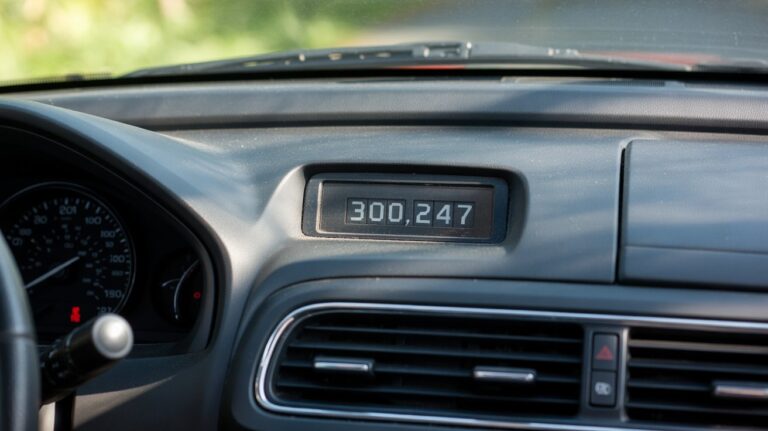
Maintenance habits matter more than mileage. Owners following service schedules often reach 300,000+ miles. Neglect is usually the main reason for early failures.
Two Accords from the same model year can age very differently based purely on maintenance habits, one hitting 300,000 miles trouble-free, another needing major work at 120,000 miles due to skipped service intervals.
According to many long-term owners, reaching 200,000 miles is common, while properly maintained examples often exceed 250,000 miles. The biggest factors are oil changes, transmission service, cooling system maintenance, and avoiding prolonged neglect.
You can also see our detailed mileage guide: How Many Miles Can A Honda Accord Get?
Which Honda Accord Years Are the Most Reliable?

Some years consistently outperform others:
- 2015 to 2017: Stable engines, conventional automatics
- 2020 to 2022: Turbo issues resolved, better tuning, improved safety
- 2006 to 2007: Durable non-turbo engineering
These years offer durability, reasonable ownership costs, and safer long-term performance.
Which Honda Accord Years Should You Avoid?
Some years show higher failure rates:
- 2008 to 2010: Automatic transmission issues, especially V6
- 2018 to 2019: Early 1.5T oil dilution concerns in cold climates
- Certain V6 years: Engine is strong, but paired transmissions were aker
Not every car in these years fails, but caution is justified.
Most buyers do not realize that not every Accord year is equal. Choosing the wrong engine or model year can turn a dependable car into an expensive headache.
For a detailed breakdown of problem years and known issues, read our guide on What Years To Avoid Honda Accord?
How Reliable Is Each Honda Accord Generation?
The 9th gen is safest long-term.
| Gen | Years | Summary |
| 8th | 2008 to 2012 | Strong engines, weak V6 transmissions |
| 9th | 2013 to 2017 | Very reliable overall |
| 10th | 2018 to 2022 | Early 1.5T issues, otherwise good |
| 11th | 2023–Present | Too new for data |
Which Honda Accord Engine Is Most Reliable?
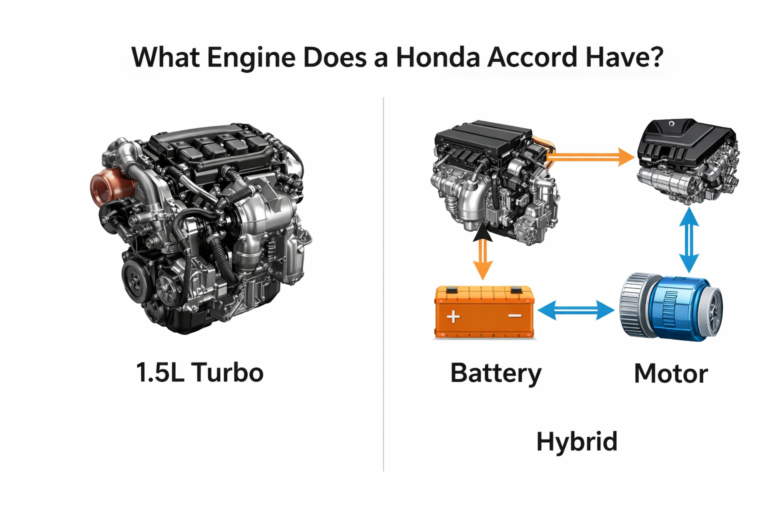
Honda engines are generally dependable:
- 2.0T: Durable turbo, avoids early oil dilution
- Hybrid: Low stress, reliable long-term
- V6: Strong, reliability depends on the transmission
- 1.5T: Performs well after 2020
Among Accord powertrains, the 2.0T and Hybrid variants have the strongest long-term track record, largely because they avoid the oil dilution concerns that affected early 1.5T engines in cold climates.
If you are comparing maintenance requirements, see our guide on Do Honda Accords Have Timing Belts Or Chains?
Is CVT or Automatic Better in the Honda Accord?
The answer depends on the model year and engine.
Honda used conventional automatic transmissions in older Accord generations, while many four-cylinder Accord models from 2013 onward use a continuously variable transmission (CVT). The Accord’s CVT generally has a better reputation than many competing CVTs, particularly when transmission fluid is changed at recommended intervals.
Traditional automatics often feel more responsive during acceleration, while CVTs prioritize fuel economy and smooth operation. Neither is automatically better; proper maintenance is far more important than transmission type.
For long-term reliability, regular transmission fluid service remains one of the most important maintenance items regardless of whether the Accord uses a CVT or a conventional automatic transmission.
What Problems Do Honda Accord Owners Report Most?
Problems are often year-specific, not brand-wide:
- 2008 to 2010: Transmission failures
- 2013 to 2015: Starter motor issues
- 2018 to 2019: 1.5T oil dilution
- 2020 to 2022: Infotainment glitches
What makes these issues manageable is that they are well-documented and year-specific, meaning a buyer who researches the model year before purchasing can anticipate and budget for them in advance.
How Much Do Honda Accord Repairs Actually Cost?
Repair costs are lower than those of most midsize sedans. According to RepairPal, the Honda Accord averages around $400 per year in maintenance costs, which is below the midsize sedan average. Brake and transmission service costs vary by location and model year, so checking with a local Toyota or Honda dealer for current labor rates is the most accurate way to estimate your specific ownership costs. Predictable failures, widely available parts, and mechanic familiarity keep costs manageable.
Drivers who frequently take short trips in cold weather may notice earlier oil dilution in pre-2020 1.5T engines. While not catastrophic, it can slightly increase maintenance frequency. For daily highway commuters or hybrid owners, this is not a concern, but it is worth considering for winter city driving
What Are Honda Accord Ownership Costs Per Year?
Long-term Accord ownership stays affordable because its most common failures follow a predictable schedule: brakes, belts, and fluids rather than engines or transmissions. Drivers who change oil every 5,000 miles and service transmission fluid every 30,000 to 45,000 miles typically avoid the expensive repairs that catch other owners off guard. Beyond 150,000 miles, a well-maintained Accord’s highest recurring costs are tires and brakes, not powertrain work.
Is the Honda Accord More Reliable Than the Camry or the Altima?
| Model | Reliability Level |
| Toyota Camry | Very High |
| Honda Accord | High |
| Nissan Altima | Average |
Across independent reliability sources, the Accord consistently ranks below the Camry but well above the Altima, a gap that holds steady across multiple model years and engine configurations.
What Should You Check on a Used Honda Accord?
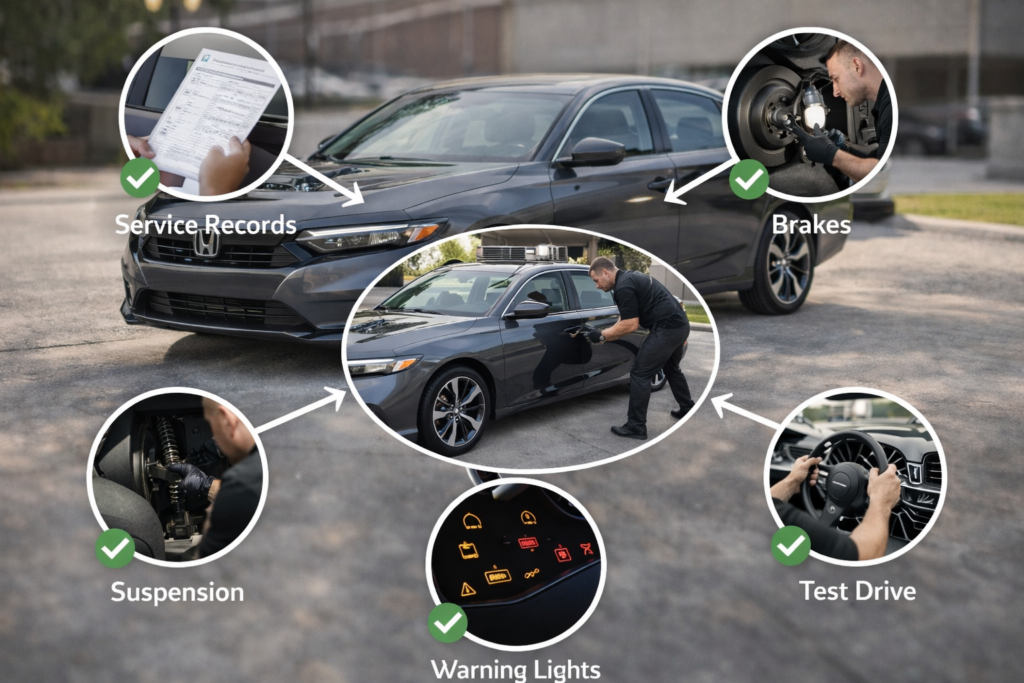
- Service and oil change records
- Transmission behavior during test drive
- Warning lights or stored fault codes
- Suspension noise and brake condition
- Tire wear consistency
- Signs of accident repairs
- Fluid leaks under the vehicle
- VIN history report
This ensures fewer surprises post-purchase.
Is the Honda Accord Hybrid Reliable Long Term?
Yes. Proven electric motors and durable batteries reduce engine strain. Brake wear is lower, and failure rates remain minimal. Many owners report trouble-free ownership beyond 200,000 miles.
Is the Honda Accord One of the Most Reliable Sedans?
Yes, but choose wisely. Conservative engineering, manageable repair costs, and proper maintenance deliver exceptional reliability.
If you want long-term ownership without luxury repair bills, the Accord remains one of the smartest midsize sedans. Among non-luxury midsize sedans, the Accord consistently sits near the top of reliability rankings alongside the Toyota Camry. What keeps it there is not just initial build quality but long-term durability, the ability to keep repair costs low and avoid major mechanical failures well past 150,000 miles. For buyers who want a practical, affordable sedan that holds up over years of real-world use, the Accord remains one of the strongest choices in its class.
FAQs:
Is the Honda Accord considered a reliable car?
Yes. The Accord consistently ranks above average for reliability across independent sources including Consumer Reports and RepairPal. Its strong track record comes from predictable, wear-based failures rather than design flaws, which keeps long-term ownership costs manageable.
Can a Honda Accord last over 200,000 miles?
Yes, and many go significantly further. Accords with consistent oil changes, transmission servicing, and cooling system maintenance regularly cross 200,000 miles without major engine work. Maintenance habits matter far more than the odometer number itself.
Which Honda Accord model years are the most reliable?
The 2013 to 2017 (9th generation) and 2020 to 2022 (10th generation, post-update) are widely considered the safest years, offering stable engines, resolved early turbo issues, and lower long-term repair frequency.
Are there Honda Accord years to avoid?
Yes. The 2008 to 2010 models had documented automatic transmission failures, especially in V6 trims. The 2018 to 2019 models with the 1.5T engine experienced oil dilution concerns in cold climates, though this was largely resolved by the 2020 model year.
What are common Honda Accord reliability issues?
The most documented issues are transmission wear in 2008 to 2010 V6 models, oil dilution in 2018 to 2019 1.5T engines in cold climates, starter motor issues in some 2013 to 2015 models, and infotainment glitches in 2020 to 2022 models. Most are year-specific, not brand-wide problems.
Conclusion:
The Honda Accord has earned its reliability reputation the hard way through consistent real-world performance across decades, not just marketing claims. But that reputation does not apply equally to every model year or engine. The 2013 to 2017 and 2020 to 2022 models are the safest bets for long-term ownership, while the 2008 to 2010 V6 automatics and early 2018 to 2019 1.5T engines carry known risks worth factoring into your decision.
What makes the Accord stand out in its class is not that it never has problems; it is that its problems are predictable, well-documented, and affordable to fix. For most buyers, that combination of durability, manageable ownership costs, and strong resale value makes it one of the smartest midsize sedan purchases available today.
Before you buy, check the specific model year against known issues, pull a vehicle history report, and confirm service records are available. Those three steps alone will separate a great Accord purchase from an expensive one.
Sources
- Honda owner manuals and maintenance schedules
- RepairPal reliability statistics
- Consumer Reports reliability studies
- J.D. Power dependability studies
- NHTSA complaint database
- Manufacturer service information