What Engine Does a Honda Civic Have? (Civic Engine Guide)
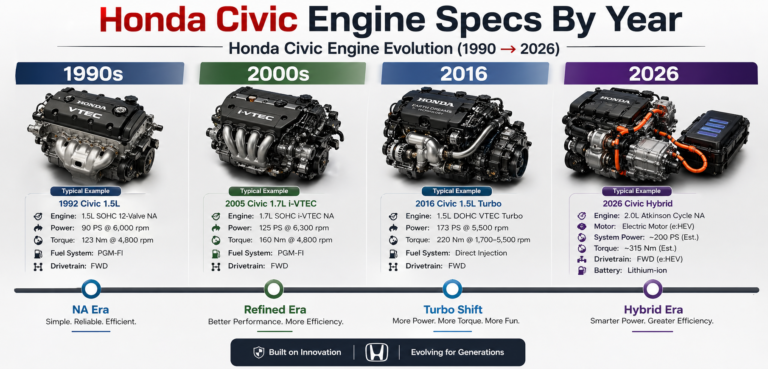
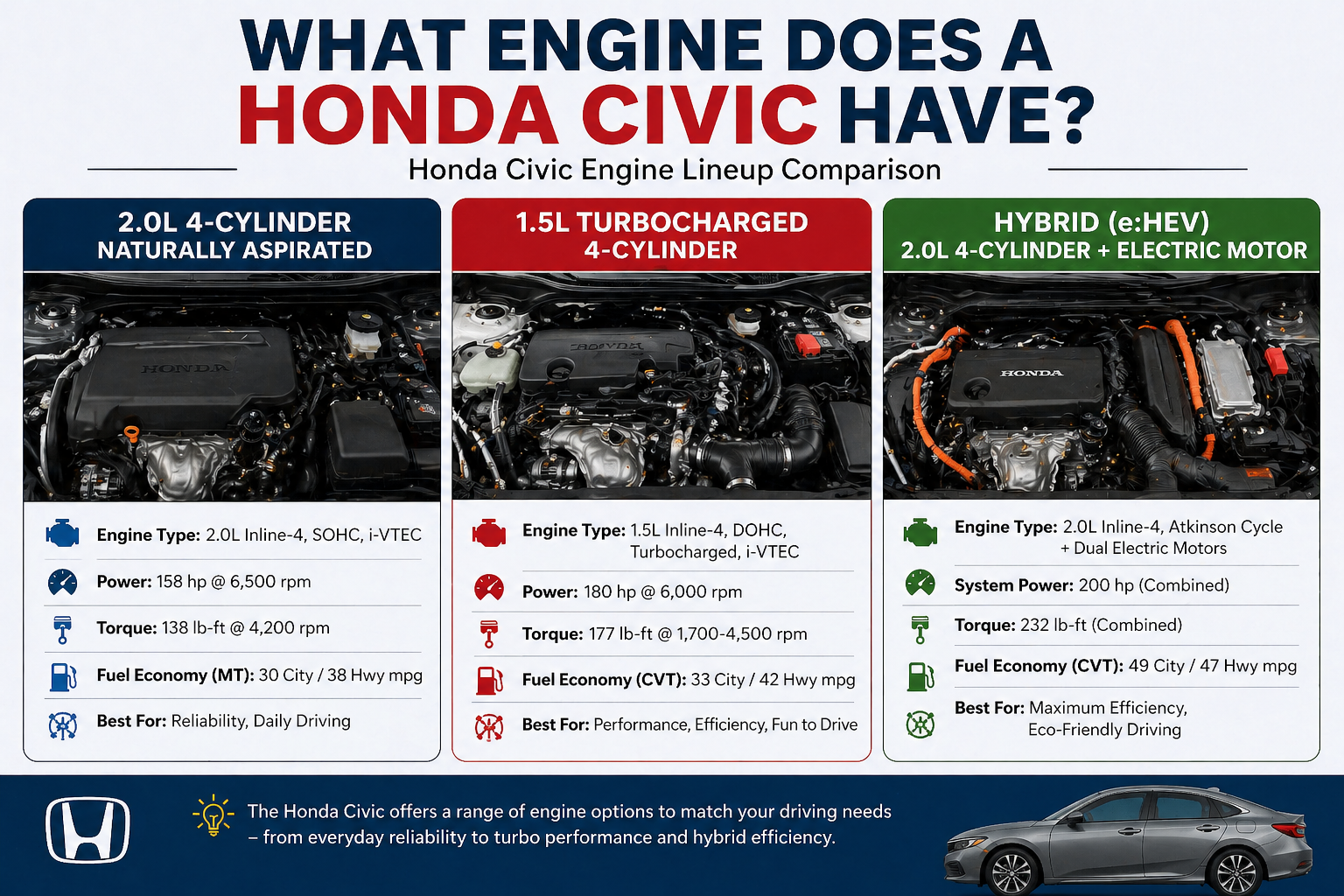
A Honda Civic has a 2.0L naturally aspirated engine, a 1.5L turbo engine, or a hybrid system, depending on the model year and trim. In most models, newer versions also offer a hybrid system. The exact engine depends on the model year, trim level, and market availability.
In this guide, you will get a clear, no-nonsense answer along with real insights that actually help you understand what you are getting and what engine does a Honda Civic have?.
What Engine Comes in a Honda Civic?
Most Honda Civics come with either a 2.0L engine or a 1.5L turbocharged engine, depending on trim and year. Newer models (2024 to 2026) also introduce a 2.0L hybrid system in some markets.
On highways, engine differences become more noticeable compared to city driving. In real ownership, most drivers don’t feel engine differences in normal city use.
Also Read: What Engine Does a Honda Accord Have?
Official Honda Civic Engine Information
Honda officially confirms that the Civic lineup includes a range of 4-cylinder engines depending on trim and model year. These include naturally aspirated, turbocharged, and hybrid systems designed for different driving needs.
According to Honda’s official specifications, engine choices focus on balancing fuel efficiency, performance, and long-term durability rather than maximum power output.
Honda Civic Official Specifications.
What Are the Engine Options in a Honda Civic?
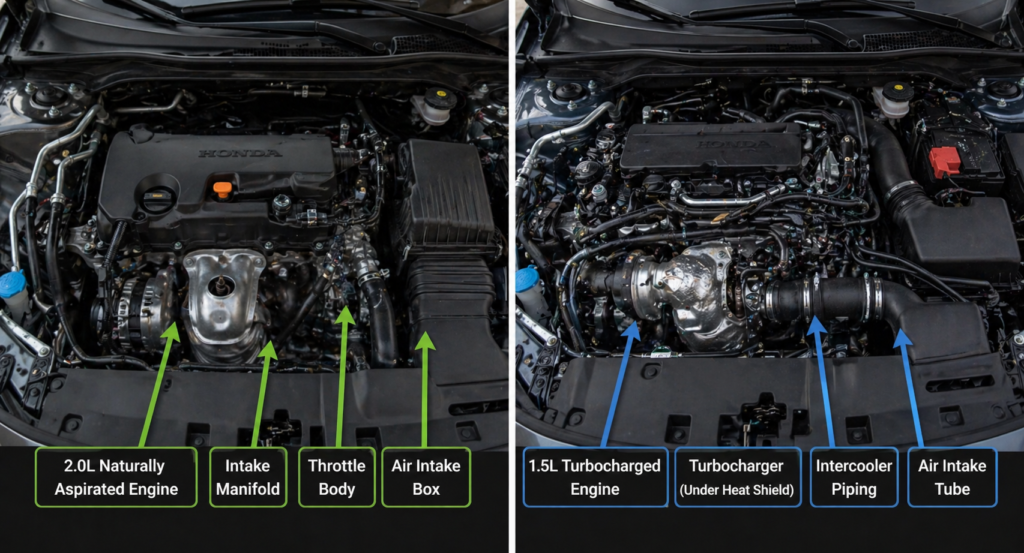
Here is a quick breakdown:
| Engine Type | Power | Used In |
| 2.0L NA 4-cylinder | 158 hp | Base trims (LX, Sport) |
| 1.5L Turbo 4-cylinder | 174 to 180 hp | EX, Touring |
| 2.0L Turbo (Type R) | 315 hp | Performance model |
| 2.0L Hybrid | 180 to 200 hp combined | Newer models (2024+) |
This mix gives buyers options between reliability, performance, and fuel economy.
Real-world MPG:
- 2.0L: 28 to 34 mpg
- 1.5L turbo: 30 to 38 mpg
- Hybrid: 45 to 50 mpg
In real usage, driving style affects fuel economy more than engine type.
What Is the 2.0L Engine in the Civic?
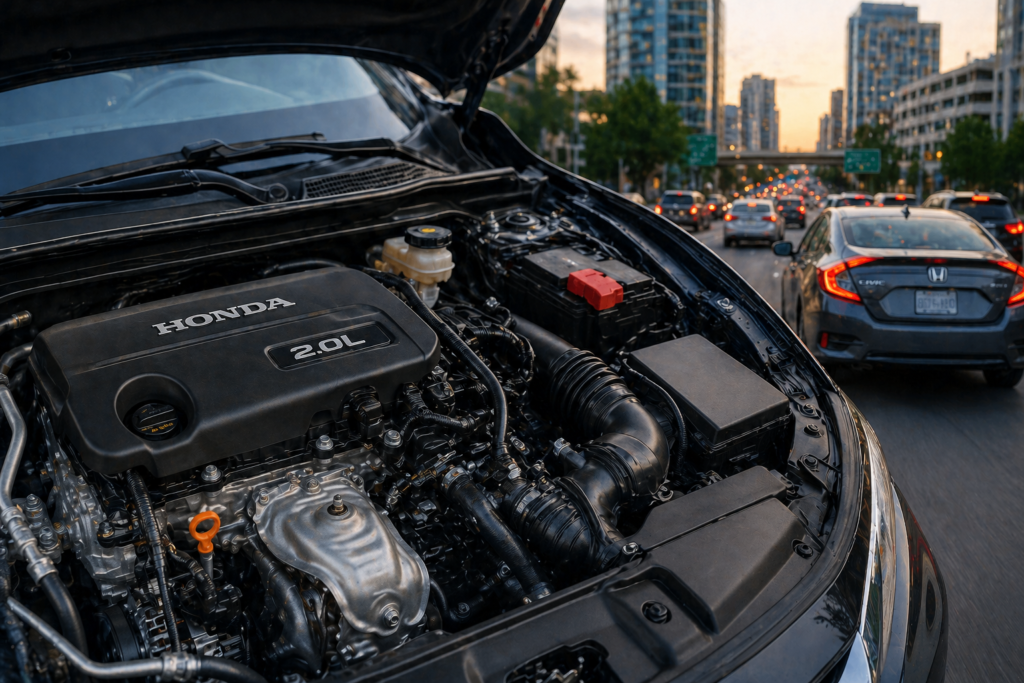
- The 2.0L engine is built for smooth daily driving with fewer mechanical complications.
- Around 158 horsepower, focused on smooth daily driving.
- It is designed more for smooth daily use than performance
This engine is ideal if you want a no-stress car that just works.
What Is the 1.5L Turbo Engine?
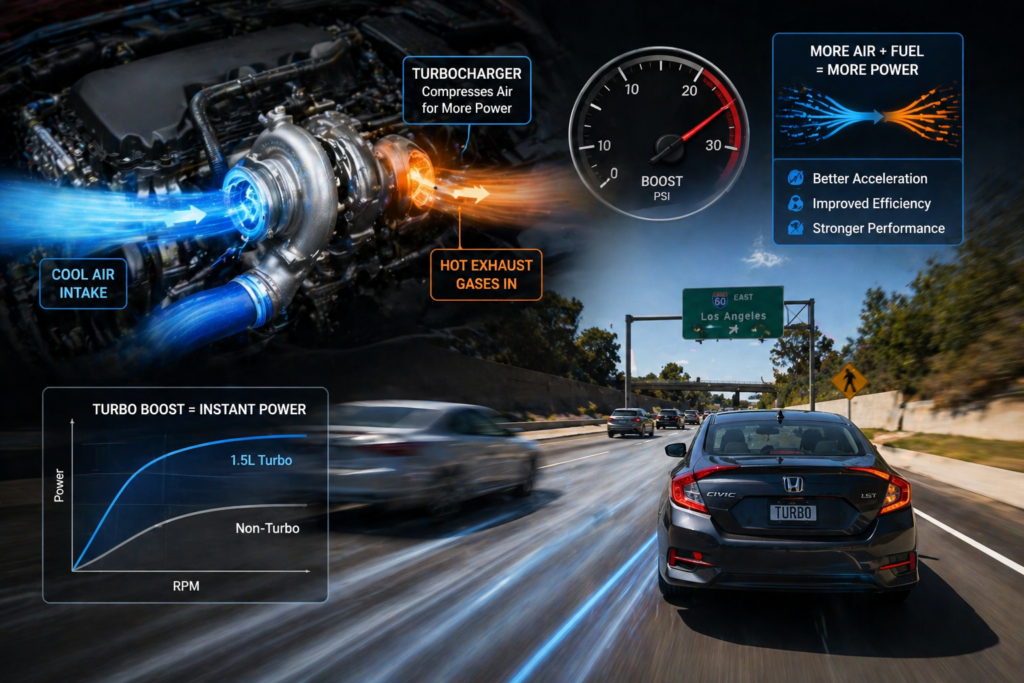
- The 1.5L turbo delivers stronger acceleration, especially during highway driving and overtaking.
- Produces around 174 to 180 horsepower.
- Better acceleration but slightly more complex.
It feels quicker than the 2.0L, especially during highway merges. It feels more responsive, but it also demands slightly more attention in long-term maintenance. The 1.5L turbo (L15B7) and 2.0L (K20C2) engines are widely documented in Honda’s technical releases and automotive engineering databases.
What Engine Does the Civic Type R Have?
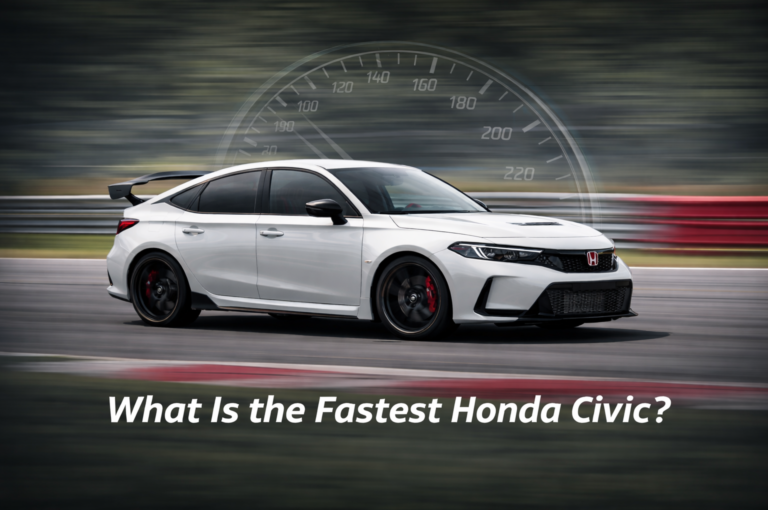
- 2.0L turbocharged engine (high-performance setup).
- Around 315 horsepower.
- Built for speed, not fuel economy.
This engine is built for track-level performance, not daily comfort. Unlike standard Civics, this engine is tuned for performance driving rather than comfort or fuel economy.
What Engines Do Different Civic Years Have?
What engine does a Honda Civic have in all models? Engine options changed over time, so the year matters a lot:
| Model Years | Engine Options |
| 2016 to 2021 | 2.0L NA, 1.5L Turbo |
| 2022 to 2024 | Updated 2.0L, improved 1.5L Turbo |
| 2025 to 2026 | 2.0L NA, Hybrid replacing some turbo trims |
Real-world engine configurations and specifications are consistent with Honda’s official engineering data and verified automotive reviews. 2.0L (K20C2) is tuned for durability and daily use, while 1.5L (L15B7) focuses on efficiency and responsiveness. Older Civics (pre-2015) mainly used VTEC engines without turbo, which were simpler but less powerful.
The 2.0L engine (K20C2) is known for durability. 1.5L turbo (L15B7) focuses on efficiency and power. If you are comparing Civic vs Accord engines, the difference becomes more noticeable.
Honda engineering and performance details
Which Is Better: 1.5L Turbo or 2.0L?
The 2.0L is more predictable and easier to live with long term.
The 1.5L turbo feels quicker and more engaging when you push it.
In everyday driving, the difference is smaller than most people expect.
Which Honda Civic Engine Is Most Reliable?
The 2.0L naturally aspirated engine is the most reliable overall.
It has fewer parts, no turbo, and less stress on internal components. Many owners report fewer issues over long mileage. The 1.5L turbo is still good, but it has had minor concerns like oil dilution in older models. The 2.0L engine has a simpler design, which reduces long-term wear and makes it easier to maintain over time.
What Problems Do Civic Engines Have?
- Early 1.5L turbo models had oil dilution issues, mostly fixed after 2019.
- Turbo engines may require more maintenance over long use.
- Carbon buildup can happen if oil changes are delayed.
Most of these issues only appear when maintenance is neglected over time. Most issues appear only when maintenance is ignored over time.
How Does Each Civic Engine Feel to Drive?
In city driving, the 2.0L feels calm but a bit relaxed during initial acceleration. The 1.5L turbo kicks in stronger after a short delay (turbo lag), which makes it feel quicker.
On highways, the turbo clearly feels more powerful during overtakes and merging. This is where specs do not tell the full story; real driving feel matters more than numbers.
Which Honda Civic Engine Should You Choose?
- If you plan to keep the car 8 to 10 years, go with the 2.0L
- If you enjoy quick acceleration, your driving habits matter more than engine specs when making the decision.
- If fuel cost matters most, a hybrid is the smartest option
Most people do not need the turbo, but after driving it once, the difference becomes obvious.
Does the Honda Civic Have a Hybrid Engine?
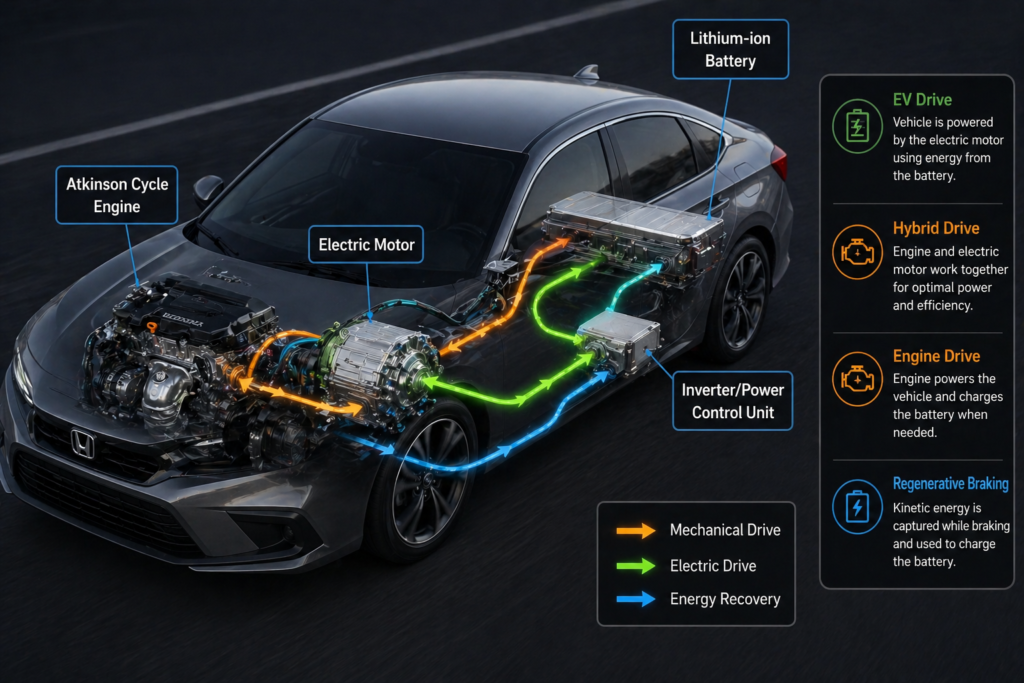
Yes, newer Civic models (especially 2024 to 2026) offer a hybrid version.
The hybrid version feels closer to electric-assisted driving than traditional engine behavior. It uses a 2.0L engine with electric motors to improve fuel economy. The focus is on smooth driving and better mileage, not performance. This is becoming a major shift as Honda moves toward more efficient engines. Compared to turbo and NA engines, it focuses more on smoothness than acceleration.
Does the Honda Civic Have a V6 Engine?
No, the Honda Civic has never come with a V6 engine.
- All Civics use 4-cylinder engines
- Even performance models rely on turbocharged 4-cylinders
If you want a V6, you have to look at larger cars like the Accord.
How Long Do Honda Civic Engines Last?
A well-maintained Civic engine can last a long time.
- Average lifespan 200,000 to 300,000 miles
- Regular oil changes are key
- Simpler engines (2.0L) tend to last longer
Real-world examples show many Civics crossing 250k miles without major issues, which is why they are known for reliability.
Read Guide: How Many Miles Can A Honda Civic Last?
FAQs:
Does the Honda Civic have a turbo engine?
Many Civic trims come with a 1.5L turbocharged engine for better performance and acceleration.
Is the Honda Civic engine reliable?
Civic engines, especially the 2.0L, are known for long life and low maintenance needs.
What engine is in the latest Honda Civic?
The latest models offer a 2.0L engine, 1.5L turbo, and a new hybrid powertrain in select trims.
Which Civic engine is best for daily driving?
The 2.0L engine is best for daily use because it’s simple, smooth, and cost-effective.
Does the Honda Civic have a V6 engine?
No, the Civic has never used a V6 engine; all models come with 4-cylinder engines.
Conclusion:
The Honda Civic keeps things simple but smart when it comes to engines. You get a balance of reliability, performance, and efficiency depending on the option you choose. For most drivers, the 2.0L engine is more than enough, while the turbo and hybrid options add extra flexibility. The key is understanding your driving needs before choosing.
Choosing the right engine comes down to how and where you drive, not just performance numbers. Most people choose based on hype, but real-world driving needs matter more than specs. Specs matter, but real-world driving habits decide the real experience.