What Years To Avoid Honda Accord? (Ultimate Guide 2026)
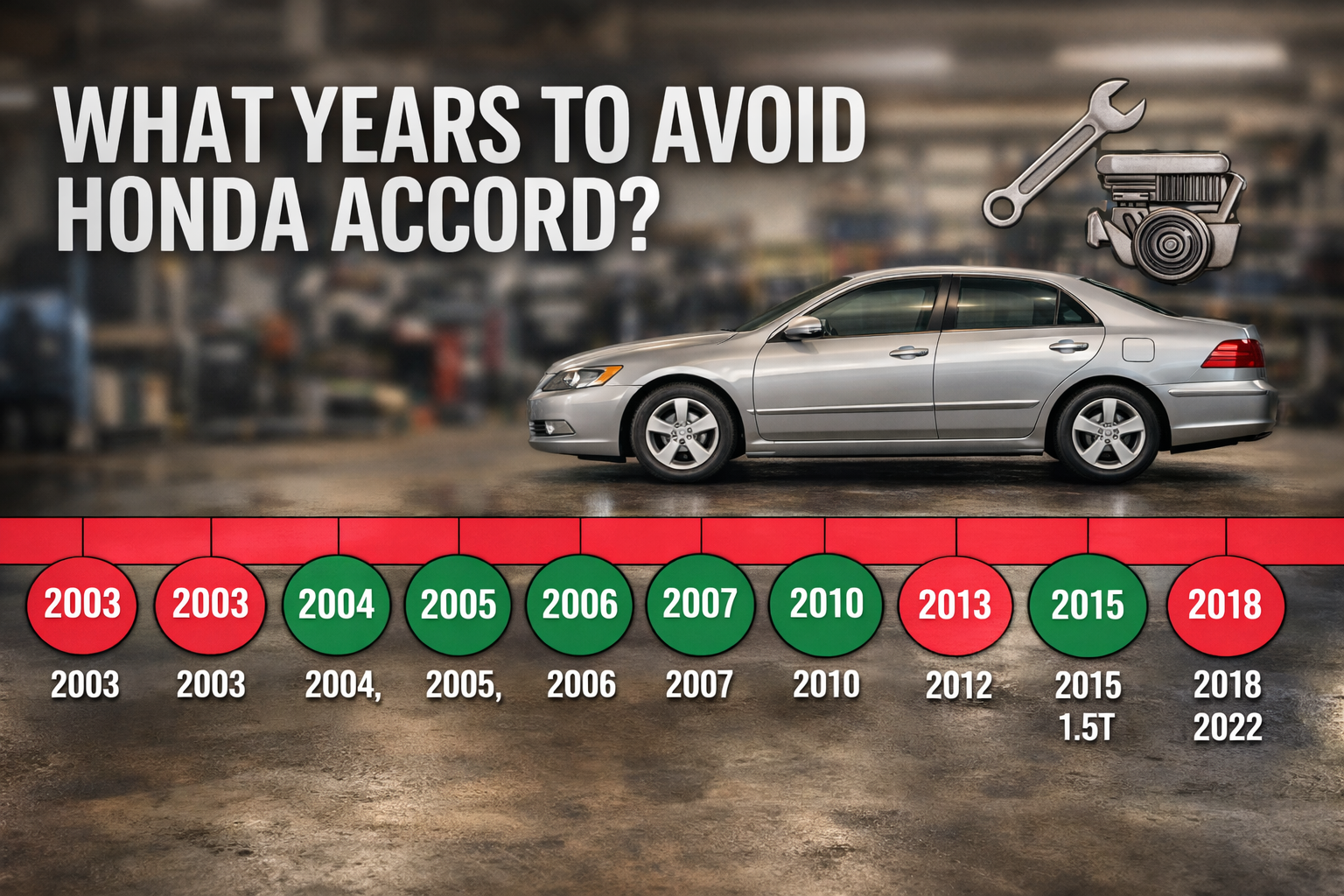
Buying a used Honda Accord can save money but only if you choose the right year. Some models, like 2003, 2008 to 2009, 2013, and certain 2018 cars, developed costly engine or transmission problems that frustrated owners. Based on long-term owner complaints, independent repair shop data, and automotive service records
This guide shows you exactly which years to avoid and how to pick a safe, dependable Accord that can last over 200,000 miles.
What Are the Worst Honda Accord Model Years?
Some Honda Accord years developed patterns of engine and transmission problems that ended up costing owners far more than expected. Compared to other Accord years, these models show up far more often in owner complaints and repair shop reports.
Worst Honda Accord Years Overview:
| Model Year | Main Problems | Why They are Risky |
| 1998 to 2002 | Automatic transmission failure | Early failure, expensive rebuilds |
| 2003 | Transmission + electrical issues | High repair frequency |
| 2008 to 2009 | Excessive oil consumption | Engine wear over time |
| 2013 | CVT early reliability complaints | First-year redesign issues |
| 2018 (1.5T) | Oil dilution problem | Long-term engine damage risk |
Not every car from these years will fail, but the risk is clearly higher especially when service records are incomplete or missing.
This assessment is based on long-term owner complaints, repair frequency patterns, and known design issues reported by independent mechanics and automotive service databases.
Why Is the 2003 Honda Accord Unreliable?
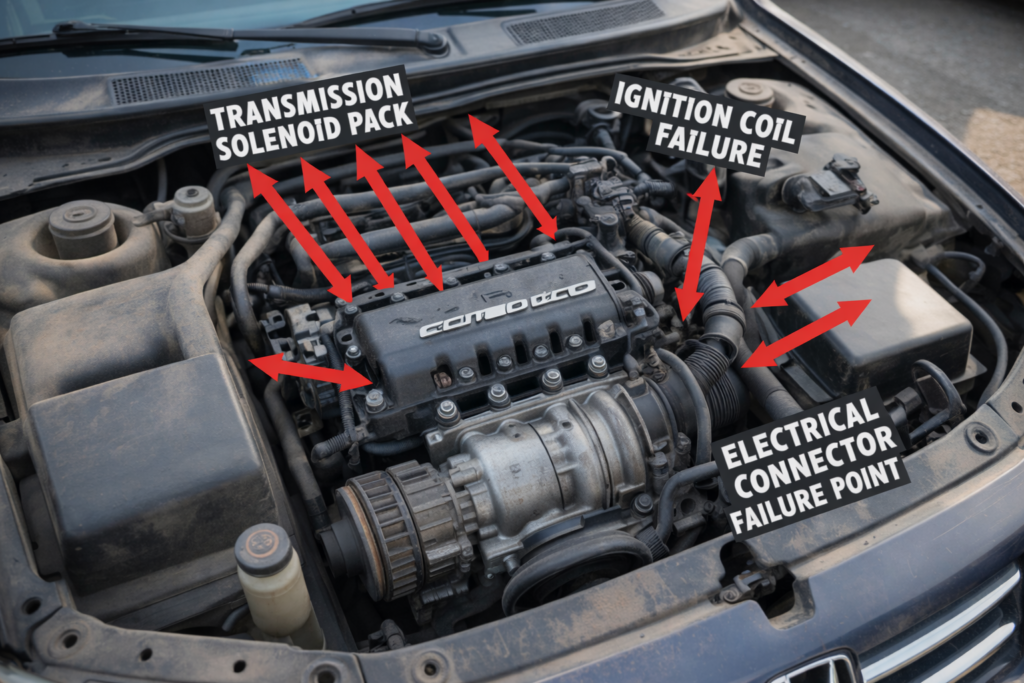
The 2003 Accord became a problem year because owners kept facing early transmission failures and frustrating electrical issues that were expensive to fix.
Common 2003 Accord Problems:
- Automatic transmission failures happened earlier than expected
- Electrical system glitches caused warning lights and sensor issues
- Repair costs were high compared to newer models
This year is known more for repairs than reliability.
What Problems Do 2008 to 2009 Accord Models Have?
These model years are widely known among mechanics for recurring engine-related complaints.
Known Issues in 2008 to 2009 Accords:
- Excessive oil consumption between oil changes
- Engine wear if oil levels were ignored
- Costly engine repairs over time
Regular oil checks help, but they do not fully eliminate the underlying engine design issue.
These issues do not affect every vehicle, but they appear often enough in repair records to raise long-term ownership risk.
Is the 2013 Honda Accord a Bad Year to Buy?
The 2013 Accord is not a terrible car, but it has some first-year redesign risks. Honda introduced new systems, including early CVT setups, which caused mixed reliability reports.
Many owners have trouble-free cars, but buyers should check transmission performance and service history carefully before purchasing.
What Went Wrong With the 2018 Accord 1.5T?
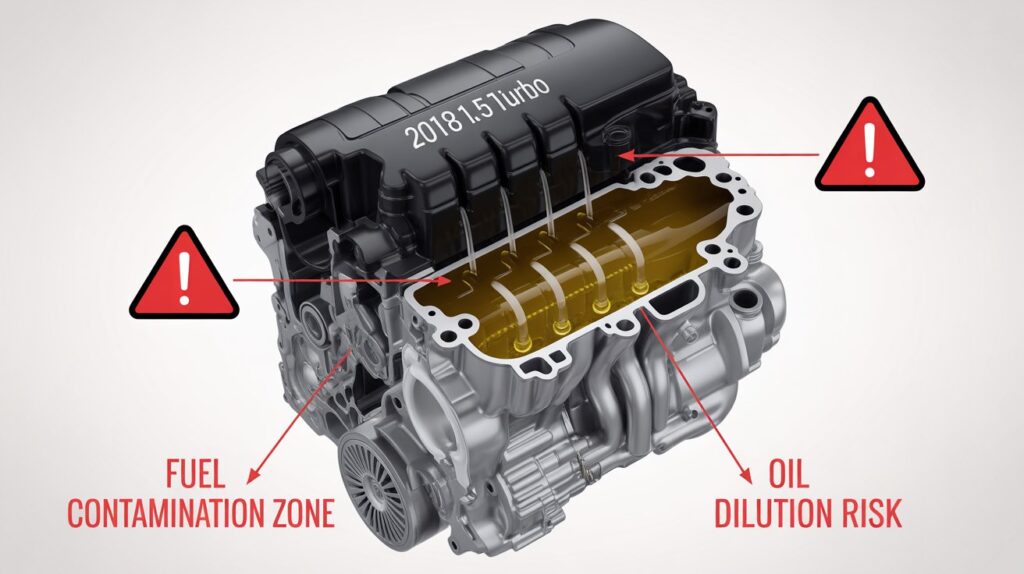
The 1.5L turbo engine had a widely reported oil dilution issue.
2018 Accord 1.5T Problems:
- Fuel mixed with engine oil in cold climates
- Reduced oil lubrication over time
- Long-term engine wear concerns
Honda released updates, but many owners still report concerns after long-term use.
Which Honda Accord Years Have Transmission Issues?
Transmission reliability varies by generation and transmission type.
Accord Transmission Problem Years:
| Model Year | Transmission Type | Issue |
| 1998 to 2002 | Automatic | Early failure |
| 2003 | Automatic | Shifting problems |
| 2013 | CVT | Hesitation complaints |
| 2018 | CVT | Software-related issues |
Manual transmissions are generally more reliable.
Which Accord Models Have Engine Problems?
Engine issues are limited to specific years and engine designs.
Engine problems in Honda Accords are not random. They are tied to specific model years and engine designs. The 2008 to 2009 4-cylinder models are known for oil burning, the 2018 1.5T suffers from oil dilution, and older V6 models (1999 to 2002) faced engine stress due to weak transmissions. Regular maintenance helps, but it cannot fully fix design flaws.
Proper maintenance reduces risk but does not erase design flaws.
Do Any Honda Accord Years Burn Excess Oil?
Yes, some Accords are known to burn more oil than normal.
Oil Consumption Problem Years:
- 2008 Accord 4-cylinder
- 2009 Accord 4-cylinder
Owners must monitor oil levels closely to avoid engine damage.
Are CVT Honda Accords Less Reliable?
CVTs offer smooth driving and better fuel economy, but Honda’s early CVT designs faced real reliability challenges. Some owners reported hesitation and long-term durability concerns.
Later CVTs improved, but they still require strict fluid maintenance to stay reliable.
Which Honda Accord Years Are Safe to Buy Used?
A few Accord years consistently stand out for long-term reliability and lower repair complaints.
Compared to problem years, these models show fewer recurring failures and lower average repair costs after 100,000 miles.
Safe Honda Accord Years to Buy (Used):
- 2004 to 2007: These years are known for proven engines and fewer major failures compared to earlier 2000s models.
- 2010 to 2012: Honda fixed several reliability issues here, making these years more dependable for long-term ownership.
- 2015 to 2017: Strong engine performance, better safety features, and lower complaint rates after high mileage.
- 2020 to 2022: Updated technology, improved transmissions, and fewer reported problems so far.
Real-world expert tip:
Many mechanics recommend focusing more on maintenance history than mileage. A well-maintained 2012 Accord often outlasts a neglected newer model service records matter more than model year alone.
What Is the Most Reliable Honda Accord Year?
The 2015 Honda Accord is often considered the most reliable. It combines a proven engine, fewer recalls, and strong owner satisfaction. With proper maintenance, it easily reaches high mileage.
Is a Used Honda Accord Worth Buying Today?
Yes, a used Honda Accord is still a smart buy if you choose the right year. Reliability, fuel efficiency, and parts availability make it affordable long-term.
Avoid known problem years and always check service records before buying.
Cosmetic condition can change resale value more than most buyers expect.
Also Read: How Much Does It Cost To Wrap A Honda Accord?
Which Accord Engines Last the Longest?
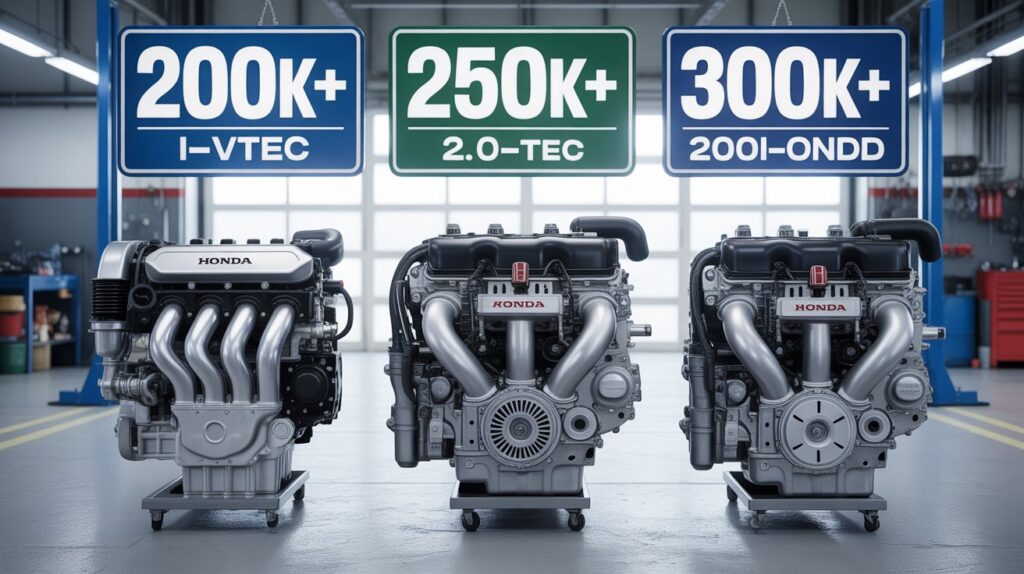
Some Honda engines have an excellent long-term reputation.
Long-Lasting Accord Engines:
- 2.4L naturally aspirated 4-cylinder
- 2.0L naturally aspirated engines
- Older non-turbo engines with timing chains
These engines often exceed 200,000 miles with routine care.
Engine lifespan also depends on one critical detail most buyers ignore.
Some Honda Accord engines last longer partly because of their timing setup. If you are unsure whether Accords use timing belts or timing chains, this detailed breakdown explains which engines are cheaper to maintain long term.
Are V6 Accords More Reliable Than 4-Cylinders?
V6 Accords offer more power, but they cost more to maintain. Timing belt replacements and higher fuel use add expense.
Four-cylinder Accords are cheaper to own and often last just as long.
How Do Honda Accord Generations Compare?
Each generation improved safety, comfort, and efficiency.
Honda Accord Generations Comparison:
| Generation | Strength |
| 7th (2003 to 2007) | Simple, durable |
| 8th (2008 to 2012) | Spacious, comfortable |
| 9th (2013 to 2017) | Balanced reliability |
| 10th (2018 to 2022) | Tech-focused, efficient |
Which Accord Years Cost the Most to Repair?
Repair costs rise with complexity and known defects.
High Repair Cost Accord Years:
- 2003, Transmission Failures
- 2008 to 2009, Engine oil issues
- 2018, Turbo engine complexity
What Should You Check Before Buying a Used Accord?
Buying smart prevents regret.
Used Accord Inspection Checklist:
- Full service and oil change history
- Transmission performance
- Engine oil consumption signs
- Recall completion status
- Clean accident report
A pre-purchase inspection is always worth the cost.
Battery health is often overlooked but can lead to surprise expenses.
Also Read: How Long Do Honda Civic Batteries Last?
While this guide focuses on Accords, battery lifespan questions are common across Honda models. This guide may helps buyers spot early warning signs before purchase.
Should You Avoid These Honda Accord Years Completely?
Not necessarily. Some Honda Accords from these years run fine, but the risk is higher when maintenance history is missing. These models should only be considered with full service records and a professional pre-purchase inspection.
FAQ’s:
Are some Honda Accord years really risky to buy used?
Yes, years like 2003, 2008 to 2009, 2013, and some 2018 models had more engine and transmission issues.
Can a Honda Accord last over 200,000 miles?
Yes, models from reliable years often exceed 200,000 miles with regular maintenance and service checks.
Which Honda Accord years are safe to buy used?
2004 to 2007, 2010 to 2012, 2015 to 2017, and 2020 to 2022 are generally reliable with fewer complaints.
What went wrong with the 2018 Accord 1.5T?
Oil dilution occurred when fuel mixed with engine oil, especially in cold climates.
What should you check before buying a used Accord?
Check service history, oil levels, transmission performance, recall updates, and accident records.
Conclusion:
Even with known problem years, Honda Accords can be excellent long-term cars if you choose wisely. Focus on proven, reliable years, check full service records, and get a pre-purchase inspection from a trusted mechanic. Avoid first-year redesigns and high-risk engines, and your used Accord can remain a dependable, fuel-efficient, and affordable sedan for years. Choosing smart today saves you thousands tomorrow.