Is The Honda Civic Reliable? (Review Before Purchase)
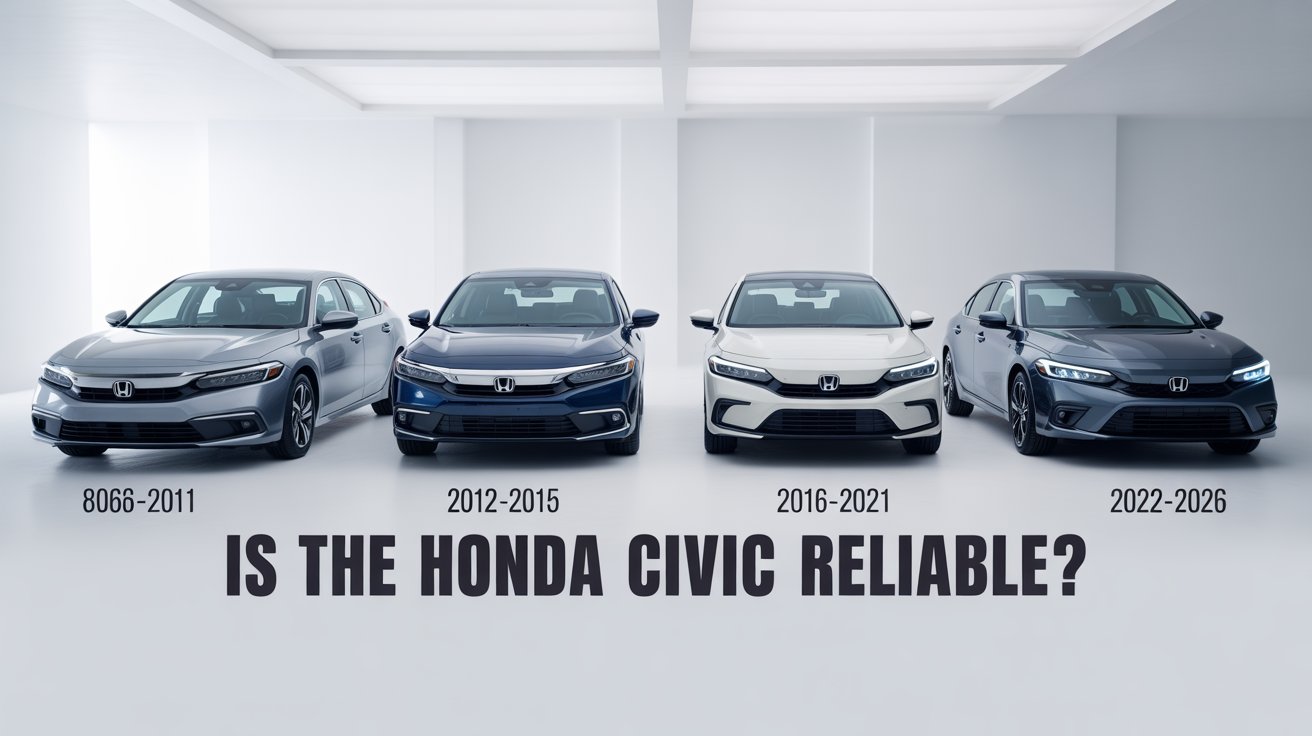
The Honda Civic has built a reputation over the decades as a durable and practical compact car. But reliability depends heavily on model year, engine type, and maintenance habits. From older 2006 models to the latest 2026 releases, the Civic generally performs well, though some generations faced specific issues that buyers should know about.
In this guide, you will explore is the Honda Civic reliable, understand generation-specific strengths and weaknesses to ensure a smart, long-term purchase.
How Reliable Is the Honda Civic Overall?
The Civic is widely regarded as one of the most reliable compact cars, especially when properly maintained. Reliability ratings from RepairPal and Consumer Reports consistently place the Civic above average in long-term dependability. According to reliability data from RepairPal, the Honda Civic scores 4.5 out of 5.0, ranking 3rd out of 36 compact cars, with an average annual repair cost of about $368, which is lower than the segment average. Independent testing by Consumer Reports also consistently ranks recent Civic generations above average for predicted reliability. Early turbo engines had minor issues, but NA engines remain extremely durable.
Key Insights:
- Average lifespan: 200k–300k miles for naturally aspirated engines
- Major reliability sources: engine, transmission, electronics
- Common repairs are generally inexpensive compared to luxury or larger vehicles
Which Honda Civic Years Are the Most Reliable?
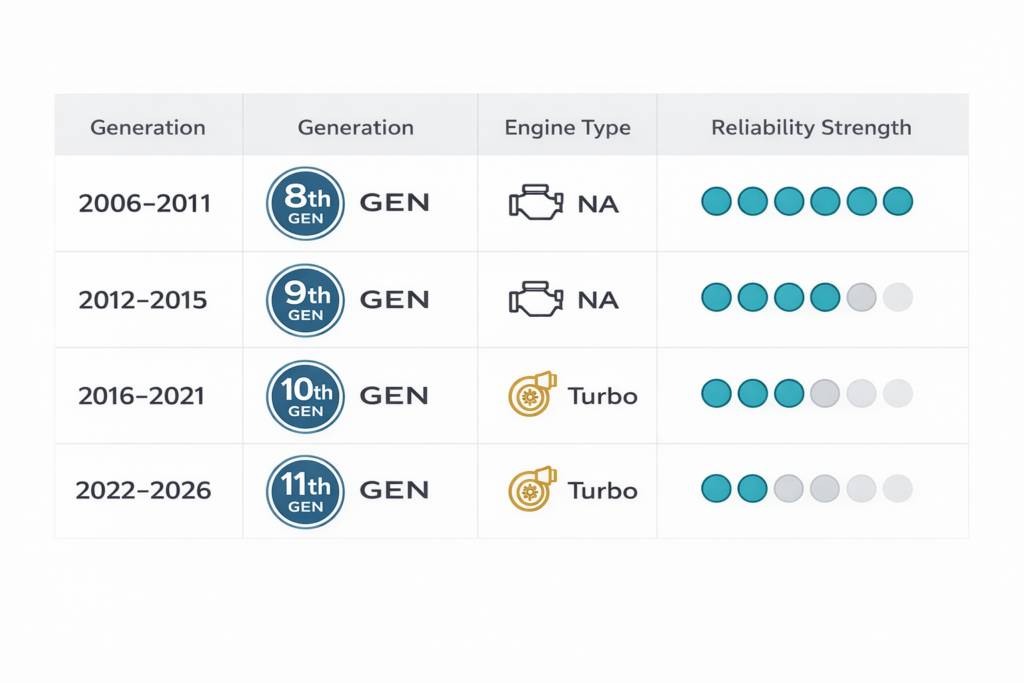
Some generations outshine others in real-world durability. The 2006-2011 and 2012–2015 models remain favourites among reliability-conscious buyers. The latest 2022 to 2026 Civics incorporate better CVT calibration and electronics, improving long-term consistency.
Most Reliable Civic Years by Generation:
| Generation | Years | Engine Type | Notes on Reliability |
| 8th Gen | 2006 to 2011 | 1.8L NA | Minimal issues, simple maintenance |
| 9th Gen | 2012 to 2015 | 1.8L NA, 2.0L NA | CVT introduced, good durability |
| 10th Gen | 2016 to 2021 | 1.5L Turbo, 2.0L NA | Early turbo had oil dilution, later corrected |
| 11th Gen | 2022 to 2026 | 2.0L NA, 1.5L Turbo | CVT improved, electronics more robust |
Tip: These tables show which years are most likely to last with minimal issues.
Which Honda Civic Years Should You Avoid?
While the Civic is generally strong, some model years had recurring issues.
Key Problem Years:
- 2016 to 2018 (10th Gen 1.5L Turbo) – fuel/oil dilution in colder climates
- 2017 to 2018 – infotainment glitches and AC condenser failures
- 2006 early 8th Gen – occasional engine block cracks
Tip: Buyers of these years should check the maintenance history and verify software updates or warranty repairs. Many issues are mitigated by proactive service, making the car still usable if inspected carefully.
Recall vs Design Issue: Important Distinction
Not all reported Civic problems indicate long-term reliability failure. Some issues, such as AC condenser defects and software-related oil dilution updates, were addressed through recalls or service bulletins. A recall typically means the manufacturer has corrected the issue at no cost, reducing long-term ownership risk. Buyers should verify whether recall repairs were completed rather than avoiding the model year entirely.
Is the Honda Civic CVT Transmission Reliable Long Term?
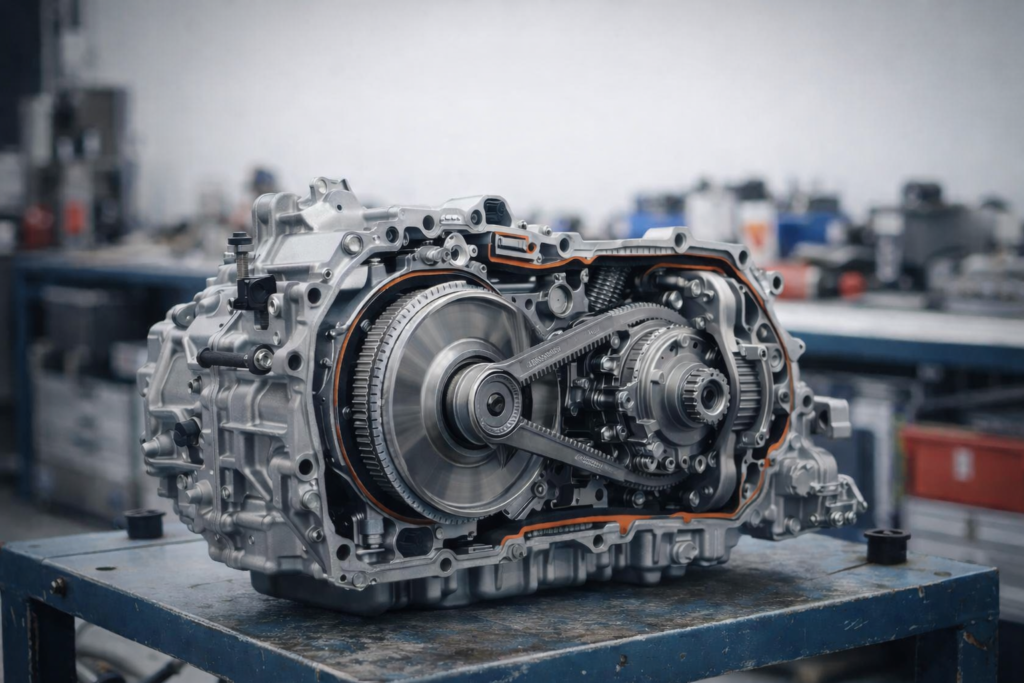
Honda’s CVT is often criticised but proves reliable when maintained. Regular fluid changes every 30 to 40k miles dramatically increase lifespan.
Real-World Insights:
- CVTs last 150k–200k miles under proper service
- Skipping maintenance drastically increases failure risk
- From early 2016 to 2018, units had minor shift hesitation, now corrected via software updates
Owner Tip: Consistent service is key. Many Civics with properly maintained CVTs run past 200k miles without major issues.
Is the 1.5L Turbo Engine as Reliable as the 2.0L?
The 1.5L turbo adds performance but is more maintenance-sensitive than the 2.0L naturally aspirated engine. Older turbo units (2016–2018) faced oil dilution in cold climates, whereas the 2.0L NA remained largely trouble-free across all conditions.
Bullet Points:
- 2.0L NA: Extremely durable, 250k+ miles typical
- 1.5L Turbo: High efficiency, minor cold-climate issues
- Long highway driving mitigates turbo wear
Tip: Turbo engines require consistent oil changes and monitoring, but with care, they are long-lasting.
What Are the Most Common Honda Civic Problems?
While most owners enjoy trouble-free use, common repairs include:
- 10th Gen AC condenser failures
- 1.5L turbo oil dilution (2016 to 2018)
- Infotainment system glitches (2017–2020)
- CVT maintenance neglect
- Suspension wear (90k–120k miles typical)
Mechanical reason:
- Naturally aspirated engines
- Fewer turbo units historically
- Conservative CVT tuning
Note: These issues rarely compromise core engine or transmission durability. With timely maintenance, most Civics remain reliable past 200k miles.
Also Read: How Long Do Honda Brake Pads Last?
How Much Does It Cost to Maintain a Honda Civic for 5 to 10 Years?
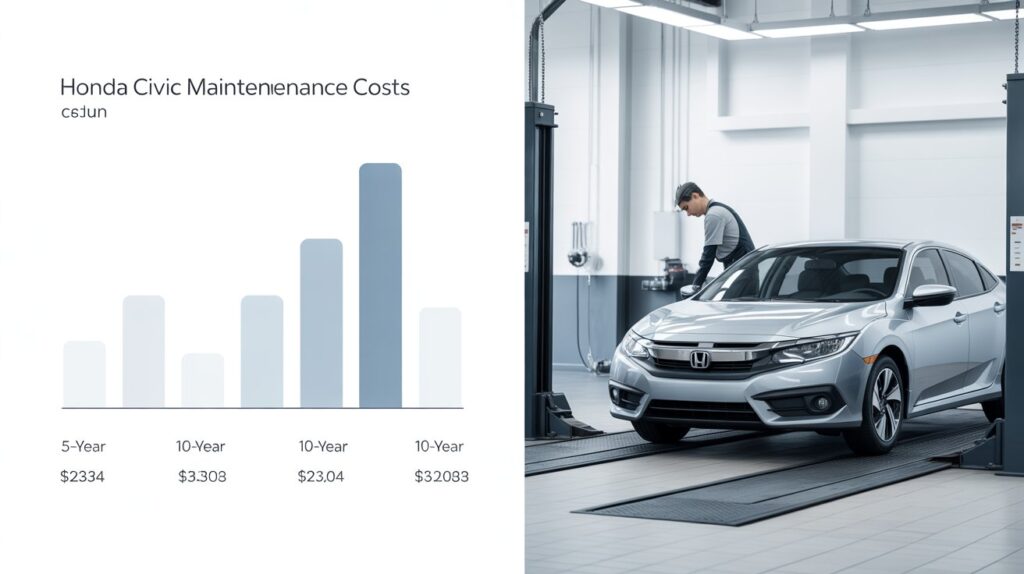
Maintenance is one of the Civic’s strongest points. The average 5-year cost is around $3,500 to $4,500, including routine maintenance and minor repairs. Over 10 years, expect $7,500 to $9,000, depending on engine and driving style.
Estimated Maintenance Costs by Generation:
| Generation | 5-Year Cost | 10-Year Cost | Notes |
| 8th Gen | $3,000 | $7,000 | Mostly routine maintenance |
| 9th Gen | $3,500 | $8,000 | CVT fluid changes add a slight cost |
| 10th Gen | $4,500 | $9,000 | Turbo and electronics increase cost |
| 11th Gen | $4,200 | $8,500 | Improved reliability offsets electronics cost |
Tip: Cost is manageable and often lower than competitors’, making the Civic a practical choice.
Can a Honda Civic Last 200,000 to 300,000 Miles?
Yes. High-mileage Civics are common, especially 2.0L NA models. Turbo engines can also exceed 200k miles if serviced diligently.
Key Factors:
- Regular oil changes
- CVT service
- Monitoring electronics
Real-World Example: High-mileage ownership reports from Civic forums and fleet users show that properly maintained 2.0L naturally aspirated engines frequently surpass 220,000 miles without internal engine repairs, highlighting long-term durability when oil service intervals are respected.
How Does Honda Civic Reliability Compare to Toyota Corolla?
Compared with the Toyota Corolla, the Civic offers slightly more performance-oriented engineering. Historically, the Corolla relied more consistently on naturally aspirated engines and conservative CVT tuning, which reduced complexity and long-term variability. The Civic introduced turbocharged engines earlier in the segment, adding performance but increasing sensitivity to maintenance. As a result, the Corolla has slightly fewer reported engine-related complaints, while the Civic balances durability with stronger driving dynamics.
Civic vs Corolla Reliability Overview:
| Feature | Honda Civic | Toyota Corolla |
| Engine Durability | 200k to 300k mi | 220k to 300k mi |
| Common Issues | Turbo oil dilution, CVT | Minor electronics |
| Maintenance Cost (10 yrs) | $7,500 to $9,000 | $7,000 to $8,500 |
| Driving Experience | Sporty, agile | Comfort-focused |
| Resale Value | High | High |
If you are comparing reliability across Honda models, the Accord has a slightly different long-term ownership profile.
Read Guide: How Reliable Is Honda Accord?
Who Should Avoid Buying a Honda Civic?
Buyers who rarely maintain their vehicle, live in extremely cold climates with early turbo Civics, or want a completely luxury-grade interior may want to consider alternatives. Civics reward careful owners, not neglectful ones.
Is the Honda Civic a Smart Long-Term Buy?
Overall, the Civic remains one of the best compact cars for reliability, efficiency, and resale. With proper maintenance, any generation from 2006 to 2026 can be a long-term investment. Turbo owners should monitor oil dilution and CVT service, but for most buyers, the Civic is a safe, durable, and engaging choice.
Also Read: How Long Do Honda Civic Batteries Last?
Which Honda Civic Generation Should You Buy?
Best for Maximum Longevity (Low Risk):
8th Gen (2006 to 2011) 1.8L NA – Simple engineering, minimal electronics.
Best Balance of Value & Modern Features:
9th Gen (2012 to 2015) – Reliable engines with improved interior refinement.
Best Performance & Efficiency Mix:
10th Gen (2019 to 2021 updated models) – Oil dilution updates resolved earlier concerns.
Best Overall Modern Option:
11th Gen (2022 to 2026) – Improved CVT tuning, refined electronics, strong reliability track record so far.
Avoid If You Want Zero Risk:
Early 2016 to 2018 1.5L Turbo models without verified software updates.
FAQs:
Is the Honda Civic reliable overall?
Yes, most Honda Civics are highly reliable when properly maintained.
Can a 1.5L turbo Civic last long?
Yes, with regular oil and CVT maintenance, it can exceed 200k miles.
Do older Civics have frequent major issues?
No, 8th and 9th-generation Civics rarely face serious engine or transmission failures.
Is the CVT transmission durable in the Civic?
Yes, CVTs last 150k to 200k miles if fluid changes are performed on schedule.
Are Civics cheaper to maintain than competitors?
Yes, Honda Civics have lower maintenance costs than most compact rivals, such as the Toyota Corolla, with 10-year expenses averaging $7,500 to $9,000.
Conclusion:
The Honda Civic remains a top choice for reliable, long-lasting compact cars. Generations from 2006 to 2026 show strong durability, manageable maintenance, and high resale value. Proper care of turbo engines and CVTs ensures longevity, making the Civic a safe, smart investment for buyers seeking dependable daily transportation. Real-world examples and practical maintenance tips highlight why Civics consistently outperform many competitors in their segment.