What Years To Avoid Honda Accord? (Ultimate Guide 2026)
Buying a used Honda Accord should be one of the smartest financial decisions you make. Accords are known for lasting well past 200,000 miles, holding their value better than most sedans, and being cheap to maintain when you pick the right year.
The problem is that not all Accord years are created equal. A handful of model years developed serious, documented problems that cost owners thousands of dollars in unexpected repairs. Some of these issues were transmission failures that showed up before 100,000 miles. Others were engine problems that Honda knew about but took years to properly address.
To create this guide, I reviewed owner complaint databases, reliability reports, manufacturer service information, and long-term ownership discussions to identify Honda Accord model years that consistently show higher rates of reported problems.
The Short Answer: Honda Accord Years To Avoid
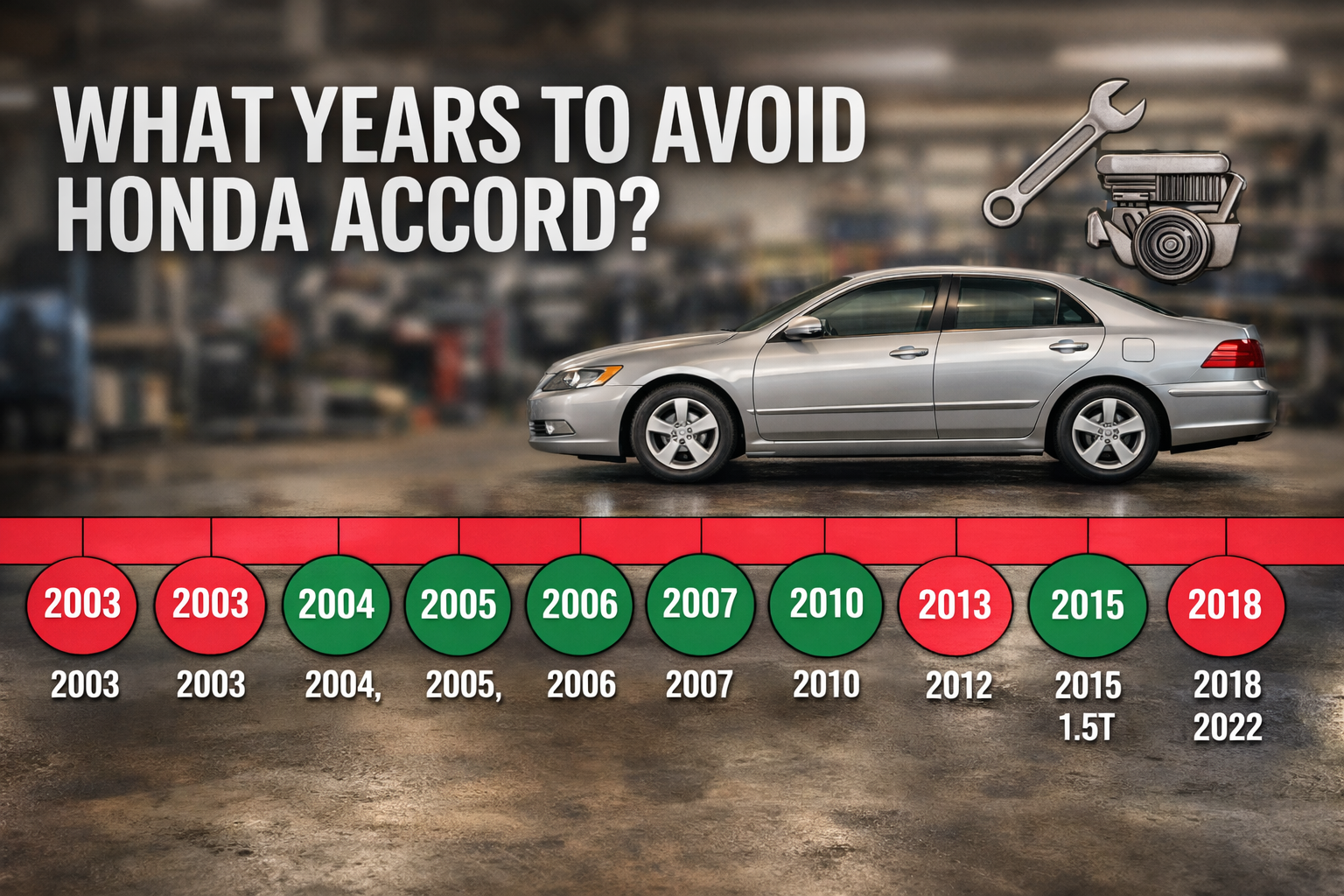
If you are in a hurry, here are the years that show up most consistently in owner complaints and repair records:
- 1998 to 2002 Automatic transmission failures
- 2003 Transmission and electrical problems
- 2008 to 2009: Excessive oil consumption
- 2013 First-year redesign reliability risks
- 2018 (1.5T engine specifically) Oil dilution problems
Every one of these issues is documented across thousands of owner reports and repair shop records. They are not random failures; they are patterns tied to specific design decisions Honda made in those years.
Now, let us go through each one in detail so you understand exactly what went wrong and how serious the risk actually is.
Quick Recommendation
If you want the safest used Honda Accord purchase, focus on 2010 to 2012, 2015 to 2017, or 2020 to 2022 models. These years generally have fewer commonly reported issues and a stronger reliability record than the problem years discussed below.
1998 to 2002 Honda Accord Transmission Problems That Defined a Generation
The late-1990s and early-2000s Accords are remembered fondly for their styling and ride quality, but beneath that reputation lies one of the most well-documented transmission failure patterns in Honda’s history.
The automatic transmissions in these models, particularly the V6 versions, developed a habit of failing far earlier than they should. Owners reported hard shifts, slipping between gears, and complete transmission failure in vehicles that had not even reached 100,000 miles. For a Honda, that is considered premature by a significant margin.
What made it worse: Honda’s official service intervals for transmission fluid were too long for how these transmissions actually behaved in real-world conditions. Many owners followed the schedule exactly and still ended up with failed transmissions.
The real cost: A transmission rebuild or replacement on these models ran between $2,500 and $4,000 at the time, and parts and labor costs have only gone up since then.
What to do if you own one: If the transmission fluid has not been changed every 30,000 miles, rather than Honda’s longer recommended interval, treat the transmission as a high-risk component. Budget for it accordingly, and have a transmission specialist inspect it before purchasing.
2003 Honda Accord: A Troubled Transition Year
The 2003 Accord was a redesign year, and like many first-year redesigns in the automotive world, it carried over some problems from the previous generation while introducing new ones.
The automatic transmission issues that plagued the late 1990s models did not disappear in 2003. Owners continued to report shifting problems, hesitation, and early failure. On top of that, the 2003 model developed electrical gremlins that sent owners chasing phantom warning lights and sensor errors that were expensive to diagnose.
The pattern that stands out: Repair shops report seeing 2003 Accords more frequently than surrounding years for both transmission and electrical work. That kind of repeat-visit pattern is a clear signal of underlying design issues rather than random bad luck.
What to look for when buying: Any 2003 Accord with an unclear transmission service history should be approached with serious caution. The electrical issues are less predictable, which actually makes them harder to budget for than the transmission.
Verdict: The 2003 is not an impossible car to own, but it requires full service documentation and a pre-purchase inspection by a mechanic familiar with this generation. Without both, the risk is simply too high.
2008 to 2009 Honda Accord: The Oil Consumption Problem
These are probably the most frustrating years on this list, because the 2008 to 2009 Accords are otherwise genuinely good cars. The 8th-generation Accord was a significant improvement in comfort, interior quality, and overall refinement. But the 4-cylinder engine in these specific years developed an oil consumption problem that affected a meaningful number of vehicles.
What actually happens: The engine consumes oil faster than normal between oil changes. In mild cases, this means checking the oil more frequently. In neglected cases, many owners had no idea this was happening. The engine ran low on oil repeatedly, causing accelerated internal wear that shortened engine life significantly.
The real-world consequence: Engines that should last 200,000 miles were showing signs of significant wear by 130,000 to 150,000 miles in cases where the oil consumption went unnoticed.
Honda did acknowledge the issue and extended warranty coverage on some affected vehicles, but that coverage has long since expired for most cars still on the road today.
What to check before buying: Ask for oil change records going back as far as possible. If the previous owner was changing oil at the standard interval without checking levels in between, there is a real chance the engine experienced low-oil conditions repeatedly. A compression test during a pre-purchase inspection will reveal whether significant internal wear has already occurred.
2013 Honda Accord First-Year Redesign Risks
The 2013 Accord represented Honda’s ninth generation, and it brought meaningful improvements in fuel efficiency, technology, and interior design. It is not a bad car. But it carries the risk that comes with any first-year redesign. Honda was still working out reliability issues with new systems, particularly around the continuously variable transmission.
The CVT concern: Early CVT units in the 2013 Accord drew complaints about hesitation during acceleration and long-term durability questions. Later production years of the same generation improved on these issues, which is why the 2015 to 2017 models are significantly more recommended than the 2013 models.
How to think about this: The 2013 is not in the same risk category as the 2003 or the 2008 to 2009 oil burners. The transmission concerns were real but not universal. If you find a well-maintained 2013 with full service history and the CVT has been serviced properly, it can be a reasonable buy, just at a lower price than a comparable 2015 or 2016.
2018 Honda Accord 1.5T: The Oil Dilution Issue
This one matters especially because the 2018 Accords are popular used car purchases right now. They look modern, they are feature-rich, and the turbocharged engines were a significant engineering change for the Accord. But the 1.5L turbocharged engine that debuted in 2018 came with a documented problem that Honda has never fully resolved for affected vehicles.
What oil dilution means: In cold weather conditions, fuel from the combustion process makes its way into the engine oil. This thinned the oil, reduced its ability to lubricate internal engine components, and, in vehicles that were not catching this during routine oil checks, caused accelerated engine wear over time.
Who was most affected: Owners in colder climates, particularly those who took frequent short trips that did not allow the engine to fully warm up, reported the highest rate of oil dilution. Owners in warmer climates with longer regular drives were less likely to experience severe cases.
Honda’s response: Honda released software updates intended to address the problem. Independent mechanics and affected owners report mixed results; some found the update helped significantly, while others saw little improvement.
What this means for buyers: If you are considering a 2018 Accord with the 1.5T engine, ask specifically whether the oil dilution software update was applied. Check the oil on the dipstick yourself if it smells faintly of fuel or the level appears higher than expected; that is a direct sign of dilution occurring.
The 2018 Accord with the 2.0T engine does not share this specific problem and is a much safer choice from an engine standpoint. If you are researching long-term ownership, see our guide on How Reliable Is Honda Accord?
Which Honda Accord Years Are Safe To Buy?
Now that you know what to avoid, here is where the genuinely good options are:
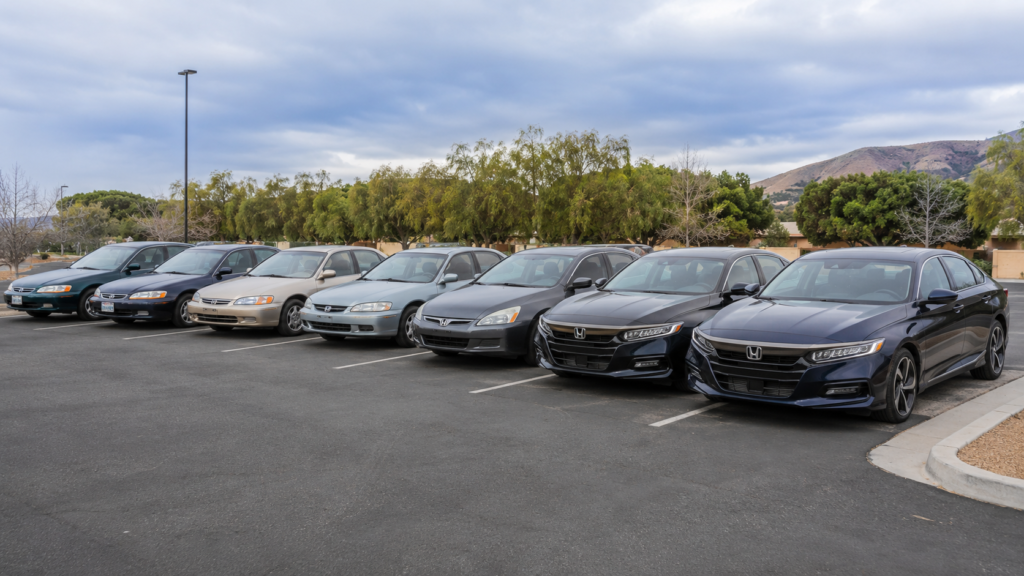
2004 to 2007 The Reliable Middle Ground
Honda resolved the transmission issues that troubled early 2000s models, and these years benefited from a proven, simple engine lineup without the oil consumption problems that surfaced in 2008. The 2.4L 4-cylinder in these years is widely regarded as one of Honda’s most dependable engines. Many examples are still running reliably with well over 200,000 miles on them.
2010 to 2012 The Sweet Spot of the 8th Generation
Honda addressed the oil consumption concerns that affected 2008 and 2009 models, making the 2010 to 2012 models significantly more reliable within the same generation. You get the spacious, comfortable 8th-generation Accord without the engine risk. The 2.4L K24 engine has an excellent long-term track record.
2015 to 2017 Best of the 9th Generation
By 2015, Honda had resolved the first-year CVT concerns from 2013. These three years represent the most refined and reliable version of the 9th-generation Accord. Owner satisfaction scores are high, recall rates are low, and independent mechanics consistently recommend these years as reliable used purchases.
2020 to 2022 The Modern Choice
The 10th-generation Accord matured significantly by 2020. The oil dilution concerns that affected some 2018 and 2019 vehicles had been better addressed, and the overall platform was more settled and reliable. These are the most technologically advanced Accords with the best safety features, though they carry a higher used price to match.
Honda Accord Reliability By Generation At a Glance
| Generation | Years | Reliability | Notes |
|---|---|---|---|
| 6th Gen | 1998 to 2002 | HIGH RISK | Transmission failures |
| 7th Gen | 2003 to 2007 | CAUTION | Avoid 2003, buy 2004 to 2007 |
| 8th Gen | 2008 to 2012 | CAUTION | Avoid 2008 to 2009, buy 2010 to 2012 |
| 9th Gen | 2013 to 2017 | CAUTION | Avoid 2013, buy 2015 to 2017 |
| 10th Gen | 2018 to 2022 | CAUTION | Avoid 2018 1.5T, buy 2020 to 2022 |
Transmission Problems By Year: What The Data Shows
Transmission reliability is one of the most important factors in long-term Accord ownership cost. Here is how the major transmission types stack up:
| Years | Transmission | Issue | Risk Level |
|---|---|---|---|
| 1998 to 2002 | Automatic (V6) | Early failure | High |
| 2003 | Automatic | Shifting problems | High |
| 2013 | CVT | Hesitation, durability | Medium |
| 2018 to 2019 | CVT | Software issues | Medium |
| 2004 to 2007 | Automatic | Generally reliable | Low |
| 2010 to 2012 | Automatic | Generally reliable | Low |
| 2015 to 2017 | CVT (improved) | Much better | Low |
Manual transmissions across all Accord generations have a significantly better reliability record than automatics or CVTs.
Also Read: Do Honda Accords Have Timing Belts Or Chains?
Which Honda Accord Engines Last the Longest?
Engine longevity in the Accord comes down to design simplicity and whether the engine has any known recurring defects.
The 2.4L naturally aspirated 4-cylinder found in 2003 through 2017 4-cylinder Accords is the most proven engine Honda put in this car. In the K24 form used from 2003 onward, it regularly reaches 200,000 to 250,000 miles with standard maintenance. There are no major design flaws to work around, and parts are widely available and affordable.
The older V6 engines (3.0L and 3.5L) are also capable of high mileage, but they require timing belt replacement every 90,000 to 105,000 miles, which adds to long-term ownership costs. Understanding whether your Accord has a timing belt or timing chain is one of the most important things to check before purchasing it. See our detailed guide on Do Honda Accords Have Timing Belts or Chains?
The 1.5T turbocharged engine from 2018 onward is more efficient but more complex. When the oil dilution issue is not a factor, it performs well. But it requires more careful attention to oil condition than the naturally aspirated engines.
Pre-Purchase Checklist: What To Inspect Before Buying
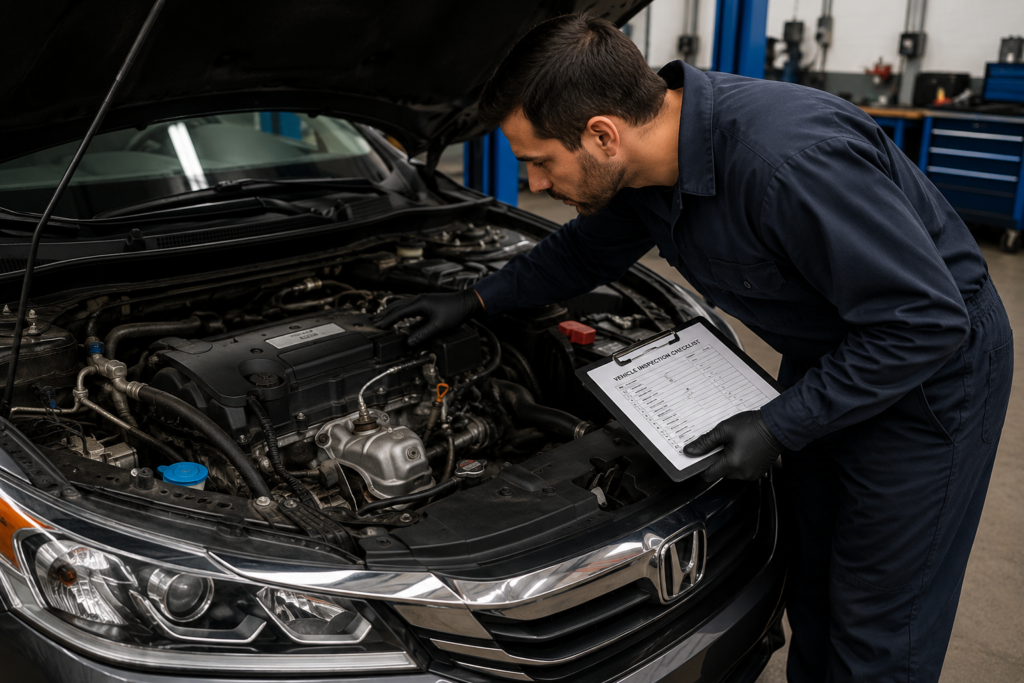
Use this checklist for any used Accord purchase, paying extra attention to the items flagged for problem years:
- Full service history, oil change records going back as far as available
- Transmission fluid condition and service record, especially for 1998 to 2003 and 2013 models
- Oil level and condition check, look and smell for fuel contamination on the 2018 1.5T
- The compression test is especially important for the 2008 to 2009 4-cylinder models
- Recall completion status check at NHTSA.gov using the VIN
- Timing belt replacement record required for any V6 model or pre-2003 4-cylinder
- Pre-purchase inspection by an independent mechanic is always worth the $100 to $150 cost
The single most important thing an independent mechanic told me during research for this guide was this: maintenance history matters more than mileage. A 150,000-mile Accord with complete service records is almost always a better buy than an 80,000-mile example with no paperwork.
Buyers should also understand common maintenance requirements before purchasing. Our guide on Honda Accord Common Maintenance Issues explains the repairs owners are most likely to encounter over time.
Is a Used Honda Accord Worth Buying in 2025?
Yes, but only if you choose carefully. The Honda Accord’s reputation for longevity is well-earned across most of its model years. The problem years on this list are specific exceptions to an otherwise strong reliability record.
Avoid the known problem years, prioritize full service documentation over low mileage, and always get a pre-purchase inspection. Do that, and a used Honda Accord remains one of the best value propositions in the used car market today.
FAQs
Are the Honda Accord years listed here definitely going to have problems?
Not every car from these years will fail. These years show higher-than-normal rates of specific problems across a large sample of vehicles. The risk is elevated, not guaranteed, which is why full service history and a pre-purchase inspection matter even more for these specific years.
Can a Honda Accord from a problem year last 200,000 miles?
Yes, some do. The oil-burning 2008 to 2009 models, for example, can reach high mileage if the previous owner checked oil levels regularly and caught low-oil conditions early. The transmission-prone models can survive if the fluid is changed frequently. It is possible, but you are taking on more risk and need to verify maintenance history more carefully.
Which is the single best Honda Accord year to buy used right now?
The 2016 or 2017 Accord 4-cylinder is my top recommendation for most buyers. It represents a fully mature version of the 9th generation. The first-year CVT concerns from 2013 are long resolved, there are no oil consumption or dilution issues, and the 2.4L engine is proven. It is also old enough to have dropped from peak pricing, but recent enough to have modern safety features.
Is the V6 Accord more reliable than the 4-cylinder?
The V6 produces more power and can be just as long-lasting, but it comes with higher maintenance costs due to timing belt requirements. For pure reliability and lower long-term cost, the 4-cylinder is the better choice for most buyers.
What is the biggest mistake people make when buying a used Accord?
Prioritizing low mileage over service history. A well-maintained 130,000-mile Accord from a reliable year will consistently outperform a 70,000-mile example from a problem year with missing records.
Does the 2018 Accord oil dilution issue affect all 1.5T engines?
No. The issue was most severe in cold climates and for owners who frequently took short trips. However, because you cannot know how the previous owner drove the car, it is a risk factor that deserves direct investigation before any 2018 1.5T purchase.
Conclusion:
The Honda Accord is still one of the most dependable used car purchases available if you know which years to choose. The problem years on this list are specific, documented, and avoidable. The safe years offer proven reliability, affordable maintenance, and the kind of longevity that makes the Accord’s reputation deserved.
Do your homework, check the service records, and get that pre-purchase inspection. A few hours of research now can save you thousands of dollars in repairs later.
National Highway Traffic Safety Administration (NHTSA) complaint database, Honda service information and owner documentation, RepairPal reliability data, CarComplaints owner-reported issue database, Manufacturer recall information, Independent mechanic and service industry references