Honda Accord Air Conditioner Not Working? (Check AC Now)
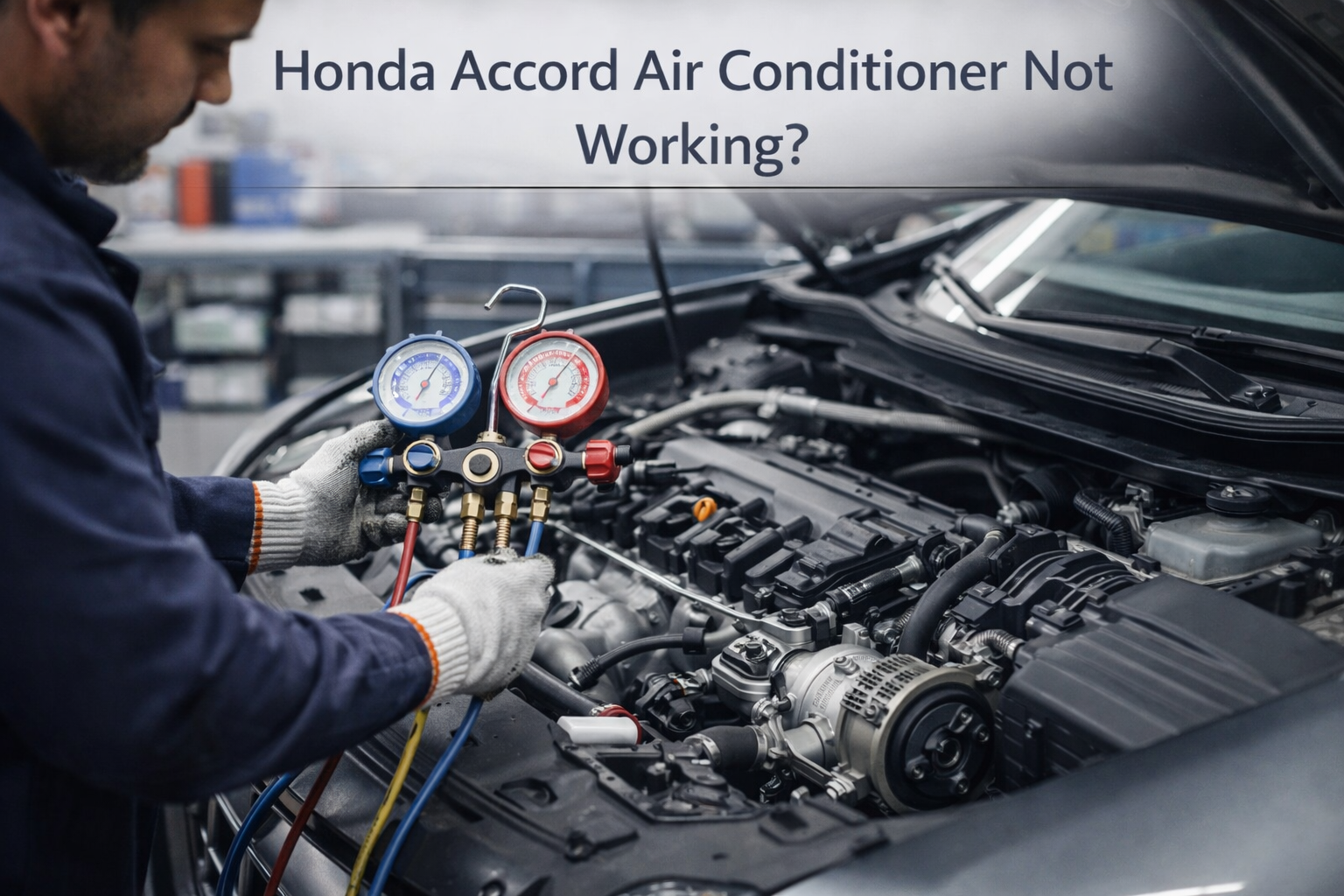
Honda Accord Air Conditioner Not Working? If your Honda Accord AC suddenly stops cooling, the cause is usually something simple, such as low refrigerant, a weak compressor, or an airflow restriction. Older Accords (2003 to 2012) often develop compressor wear, while newer models like 2018 to 2020 have reported condenser issues. Diagnosing the exact symptom first helps narrow down the real problem faster.
This guide walks through the most common causes, practical fixes, and simple maintenance tips that help keep the Honda Accord AC system working reliably.
How Do You Identify a Honda Accord AC Problem by Symptoms?
Before replacing any parts, the first step is to identify the exact symptom. In many Honda Accord cases, the way the AC behaves can quickly point to the real issue. For example, cooling that disappears in traffic usually indicates an airflow problem, while weak cooling often suggests low refrigerant.
| AC Symptom | Most Likely Cause |
| AC works while driving, but not at idle | Weak condenser fan |
| The AC blows warm air | Low refrigerant or compressor issue |
| The AC airflow is very weak | Dirty cabin air filter |
| AC turns on and off repeatedly | Pressure or refrigerant problem |
| No air from vents | Blower motor failure |
Why Is My Honda Accord AC Blowing Warm Air?
Warm air usually means the AC system cannot circulate refrigerant properly. This can happen when refrigerant levels drop, the compressor fails to engage, or the condenser cannot release heat.
Many drivers notice this during hot weather or while idling in traffic. The AC may start cold and then gradually warm as the system pressure changes.
Common reasons include:
- Low refrigerant from a slow leak
- AC compressor clutch not engaging
- Blocked or damaged condenser
- Weak condenser cooling fan
When refrigerant pressure drops, the system stops cooling effectively, which is why warm air is often the first sign of an AC issue.
Read Guide: Do Honda Accords Have Timing Belts Or Chains?
Why Does My Honda Accord AC Work Intermittently?
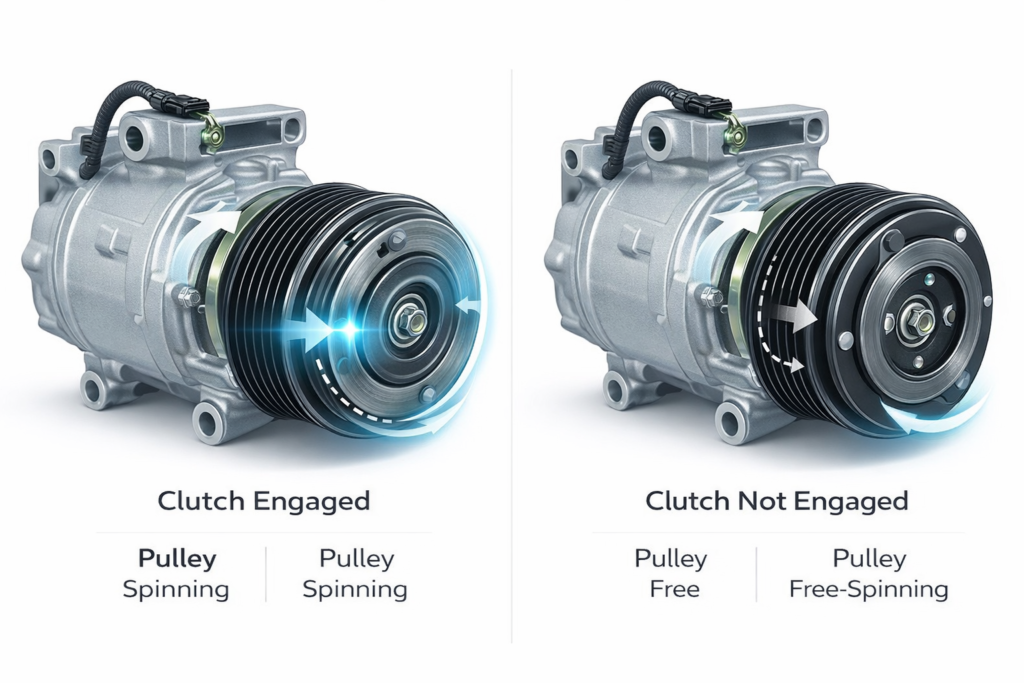
Intermittent cooling usually points to a pressure or electrical issue. The AC might blow cold air for a few minutes and then suddenly stop.
This often happens when the compressor clutch cycles on and off because of unstable refrigerant pressure or a failing relay.
Typical causes include:
- Low refrigerant is causing pressure fluctuations
- Failing AC relay
- Compressor clutch overheating
- Faulty pressure switch
Many Accord owners notice this on long drives where the AC starts working again after the engine speed changes.
Why Is My Honda Accord AC Not Blowing Air?
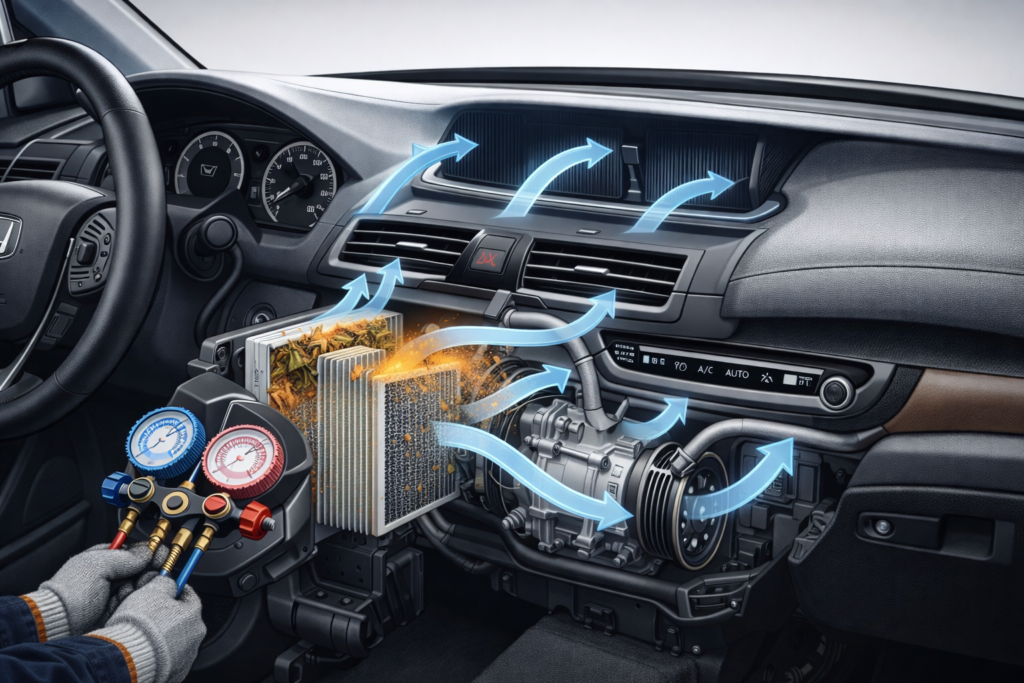
If no air comes from the vents, the cooling system may be fine, but the airflow system is failing. This usually involves the blower motor or cabin air filter.
Drivers sometimes mistake this for an AC failure, but the issue is actually air circulation inside the cabin.
Common airflow problems:
- Failed blower motor
- Blower motor resistor failure
- Completely clogged cabin air filter
- HVAC control module fault
When the blower motor stops working, the AC may still produce cold air inside the evaporator, but none reaches the cabin vents.
Could Low Refrigerant Cause Honda Accord AC Failure?
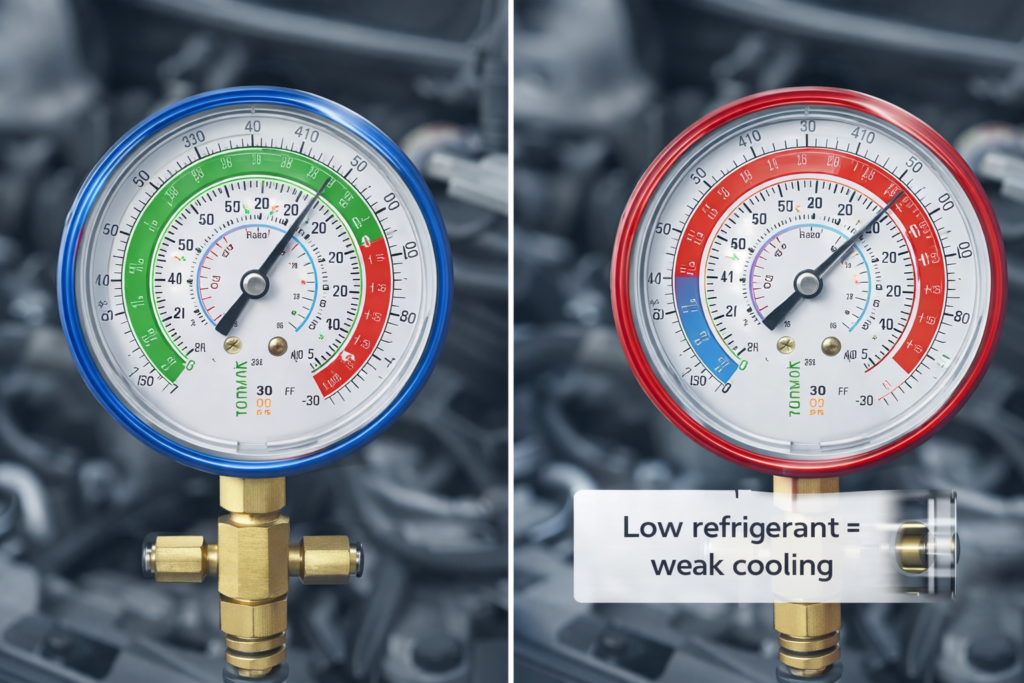
Yes. Low refrigerant is one of the most common causes of AC problems in the Accord.
Over time, small leaks can allow refrigerant to escape. Small refrigerant leaks can slowly reduce cooling performance over time. Which eventually reduces cooling performance.
Signs of Low Refrigerant:
- AC cools weakly during hot weather
- Cooling improves while driving
- Compressor cycles on and off frequently
- Hissing sound near the AC lines
When the refrigerant drops too low, the system may shut down to protect the compressor from damage.
Sometimes the culprit is not the refrigerant; it could be a clogged cabin filter silently blocking airflow.
Also Read: How to Change the Cabin Air Filter in a Honda Accord?
Is a Bad Compressor Stopping the AC From Working?
The compressor is the heart of the air conditioning system. In professional diagnostics, technicians usually confirm compressor failure by checking clutch engagement and refrigerant pressure before replacing the unit. If it fails, the refrigerant cannot circulate, and cooling stops completely.
In many Honda Accord models, the compressor clutch fails before the entire compressor assembly breaks.
Common Compressor Failure Signs:
- Loud clicking noise when the AC turns on
- Compressor clutch not spinning
- AC works briefly, then shuts off
- Metallic grinding sound from the engine bay
A worn compressor often appears in high-mileage Accords above 120,000 miles, especially if refrigerant maintenance was ignored.
Can a Faulty Condenser Make the AC Stop Cooling?
Yes. The condenser releases heat from the refrigerant. If it becomes damaged or blocked, the AC cannot cool properly.
Road debris, dirt buildup, or small leaks in the condenser can reduce cooling efficiency significantly.
| Condenser Problem | What Happens |
| Blocked condenser fins | Air cannot remove heat from the refrigerant |
| Condenser leak | Refrigerant slowly escapes |
| Internal blockage | Refrigerant flow becomes restricted |
| Damaged cooling fins | Heat transfer becomes inefficient |
A failing condenser often causes weak cooling during hot weather but may still work during cooler evenings.
Could a Blown Fuse or Relay Disable the AC System?
Yes. The AC system depends on electrical power to run the compressor clutch and cooling fans.
A blown fuse or faulty relay can instantly stop the entire AC system from working.
Electrical Components That Can Disable the AC:
- AC compressor relay
- HVAC control fuse
- Cooling fan relay
- Climate control module
Electrical failures usually happen without warning, while refrigerant problems tend to develop slowly as pressure drops in the system.
Can a Dirty Cabin Air Filter Reduce AC Cooling?
Yes. A clogged cabin air filter restricts airflow through the evaporator.
When airflow drops, the AC may still produce cold air, but it cannot circulate properly through the cabin vents.
Symptoms of a Clogged Cabin Filter
- Weak airflow from vents
- Musty smell inside the cabin
- AC takes longer to cool the interior
- Fan noise increases at higher speeds
Most manufacturers recommend replacing the cabin air filter every 12,000 to 15,000 miles.
Is a Failed Condenser Fan Causing the AC Problem?
The condenser fan cools the refrigerant when the car is stopped or moving slowly. If this fan fails, the AC may work while driving, but stop cooling in traffic.
Signs of Condenser Fan Failure
- AC works on the highway but not at idle
- Engine temperature rises in traffic
- Cooling improves once the car starts moving
Older Accord models sometimes develop condenser fan issues as the electric fan motor ages and loses efficiency.
How Do You Diagnose a Honda Accord AC Problem?
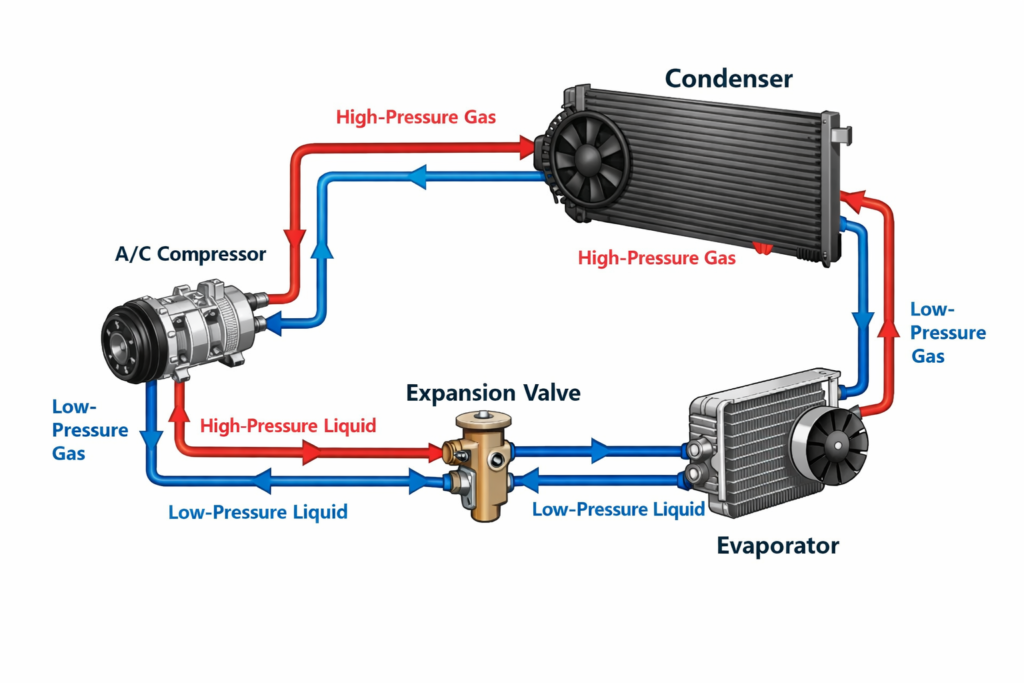
Proper diagnosis follows a step-by-step process similar to what mechanics use in repair shops.
Instead of guessing the cause, technicians usually check refrigerant pressure and compressor operation first.
| Diagnostic Step | What It Checks |
| Compressor clutch inspection | Determines if the compressor engages |
| Refrigerant pressure test | Detects low refrigerant or leaks |
| Condenser fan test | Confirms cooling airflow |
| Fuse and relay inspection | Identifies electrical failure |
| HVAC system scan | Detects control module errors |
This process quickly isolates whether the issue is mechanical, electrical, or refrigerant-related.
Do Certain Honda Accord Model Years Have AC Problems?
Yes. Some model years experienced more frequent AC complaints than others.
| Model Years | Common AC Issue |
| 2003 to 2007 | Compressor wear and clutch failure |
| 2008 to 2012 | Weak condenser cooling |
| 2013 to 2017 | Pressure switch and sensor issues |
| 2018 to 2020 | Condenser leaks reported by owners |
| 2021 to 2026 | Mostly refrigerant maintenance-related |
Later models improved AC durability, but regular maintenance still plays a major role in reliability.
RepairPal on 2018 Honda Accord AC problems.
How Much Does It Cost to Fix a Honda Accord AC?
Repair cost depends on which component fails. A simple recharge is inexpensive, while compressor replacement can be costly.
| Repair Type | Average Cost |
| AC refrigerant recharge | $120 to $250 |
| Compressor replacement | $900 to $1500 |
| Condenser replacement | $500 to $900 |
| Blower motor repair | $300 to $600 |
| AC relay or fuse | $20 to $80 |
Most technicians begin with a refrigerant pressure check because it quickly shows whether the system is low on refrigerant or leaking.
Is It Safe to Drive With a Broken AC System?
In most cases, yes. A broken AC will not stop the car from running, but it can make driving uncomfortable in hot weather.
However, some AC problems can indirectly affect other systems.
Possible risks include:
- Engine overheating if cooling fans fail
- Reduced windshield defogging performance
- Increased cabin heat during summer driving
If the issue involves the cooling fan or electrical system, it should be repaired quickly.
How Can You Prevent Honda Accord AC Problems?
Regular maintenance keeps the AC system healthy and prevents expensive repairs.
Many experienced mechanics recommend running the AC even during cooler months to keep the compressor lubricated.
Simple prevention tips:
- Run the AC for a few minutes every week
- Replace the cabin air filter regularly
- Keep the condenser clean of debris
- Check refrigerant levels during routine service
Following these habits helps many Accord owners avoid the common Honda Accord Air Conditioner Not Working problem for years.
FAQ’s:
Can low refrigerant stop a Honda Accord AC from cooling?
Yes. When refrigerant levels drop, the compressor cannot maintain pressure, which causes the AC to blow warm air instead of cold.
Can a dirty cabin air filter affect Honda Accord AC performance?
Yes. A clogged cabin filter restricts airflow, making the AC feel weak even if the cooling system itself is working properly.
Why does my Honda Accord AC cool better while driving?
This usually happens when the condenser fan is weak or failing, so airflow improves only when the car moves.
Why does the AC compressor keep turning on and off?
Frequent cycling often indicates low refrigerant, unstable system pressure, or a failing compressor clutch.
Will a bad AC stop a Honda Accord from running?
No. A failed AC system will not stop the engine from running, but it can make driving uncomfortable in hot weather.
Conclusion:
Honda Accord air conditioning problems usually start with small symptoms like weak airflow or intermittent cooling. Many drivers searching for Honda Accord Air Conditioner Not Working problems discover that the issue is often caused by simple maintenance items rather than major component failure. Ignoring these signs can eventually lead to expensive repairs such as compressor replacement. The best approach is to diagnose the issue early by checking refrigerant levels, airflow, and electrical components. With proper maintenance and timely inspection, most AC issues can be fixed before they turn into major problems.