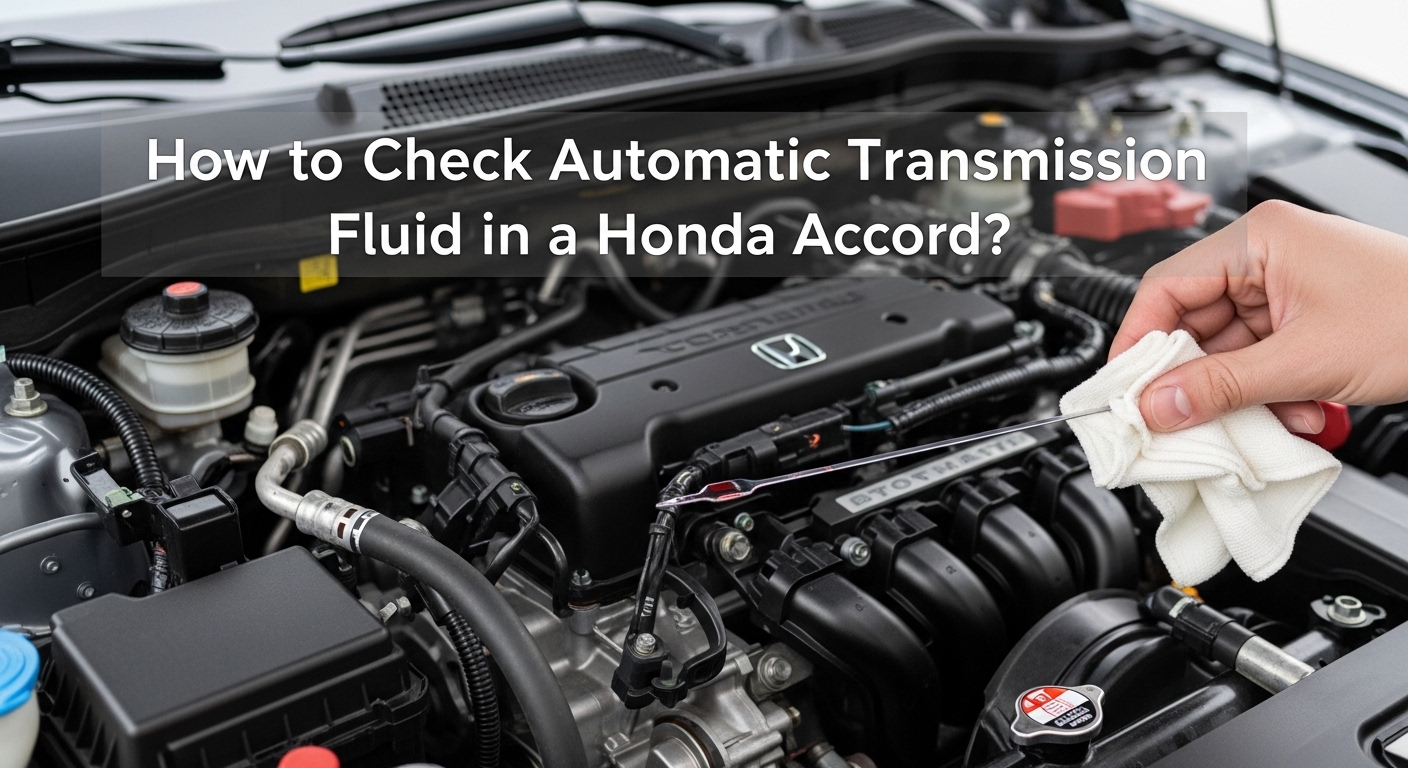
How to Check Automatic Transmission Fluid in a Honda Accord? Check Now!
Checking the transmission fluid in a Honda Accord is simple if you follow the correct procedure for your model year. Some models use a dipstick, while newer CVT versions follow a slightly different method. If you measure the level incorrectly, you can get a false reading and risk damage to the transmission.
This guide explains how to Check Automatic Transmission Fluid in a Honda Accord, the correct method used by professional mechanics, based on real workshop practice, not guesswork.
Does Your Honda Accord Have a Transmission Dipstick?
Not every Accord has a traditional dipstick. Older automatic models do. Many newer CVT models either have a different style dipstick or require a more controlled fluid-level check. The marks can sometimes be faint, so use a flashlight if needed.
Here is a quick breakdown:
| Model Year | Transmission Type | Dipstick Present? |
| 1998 to 2012 | Traditional Auto | Yes |
| 2013 to 2017 | CVT (4-cyl) | Yes (short tube style) |
| 2018+ | CVT | Yes, but tighter access |
| Hybrid | e-CVT system | Different system design |
Always confirm by checking under the hood near the firewall area.
What Tools Do You Need Before Checking Transmission Fluid?
You do not need much. Keep it simple.
Basic tools:
- Clean with a lint-free cloth
- Flashlight
- Long funnel (if topping up)
Avoid using a dirty rag. Even small debris can contaminate the fluid.
Should the Engine Be Hot or Cold When Checking ATF?
Transmission fluid expands when warm. Checking the cold can make it appear low even when it is fine. I have seen owners panic the first time they check a 2013 Accord CVT.
ATF temperature:
- Warm engine: 10–15 min drive
- Fluid near operating temp: 158–176°F
Do not check immediately after hard driving or aggressive stops; the temperature spike can make the reading unreliable. Most owners overlook this and think the fluid is low.
Avoid checking immediately after aggressive driving, as the reading spikes, and you might add fluid unnecessarily. Even some 2024 models show odd readings if not warmed correctly.
Should the Engine Be Running or Off During the Check?
This is where many owners get confused. On most Honda automatic models, the engine should be off when you pull the dipstick, but only after warming it up and shifting through gears.
Quick rule:
- Warm engine
- Shift through P-R-N-D
- Park on level ground
- Turn the engine off
- Check within 60 seconds
If you wait too long, the reading changes.
How Do You Check Automatic Transmission Fluid Step by Step?
Check transmission fluid level. Drive the car for 10–15 minutes until warm, then park on a level surface. Keep your foot on the brake and shift slowly through all gears before returning to Park.
Drive the car 10–15 minutes until warm, park on level ground, keep your foot on the brake, and shift through all gears slowly before returning to Park. This applies to most Accords from 1998 to 2017; CVT models are slightly more sensitive.
- Turn the engine off
- Remove dipstick, wipe clean, reinsert fully
- Pull again and read the level
Most people check cold and panicked, thinking fluid is low. I have seen this on both 2013 and 2024 CVTs; it is a common first-time mistake.
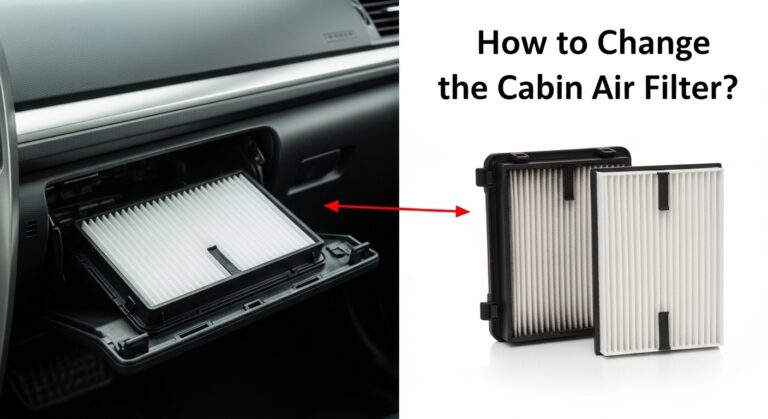
Step-by-step checks matter everywhere if you can change a cabin air filter with precision, handling your transmission fluid is just as simple!
Also Read: How to Change the Cabin Air Filter in a Honda Accord?
How Do You Check CVT Transmission Fluid in 2013+ Models?
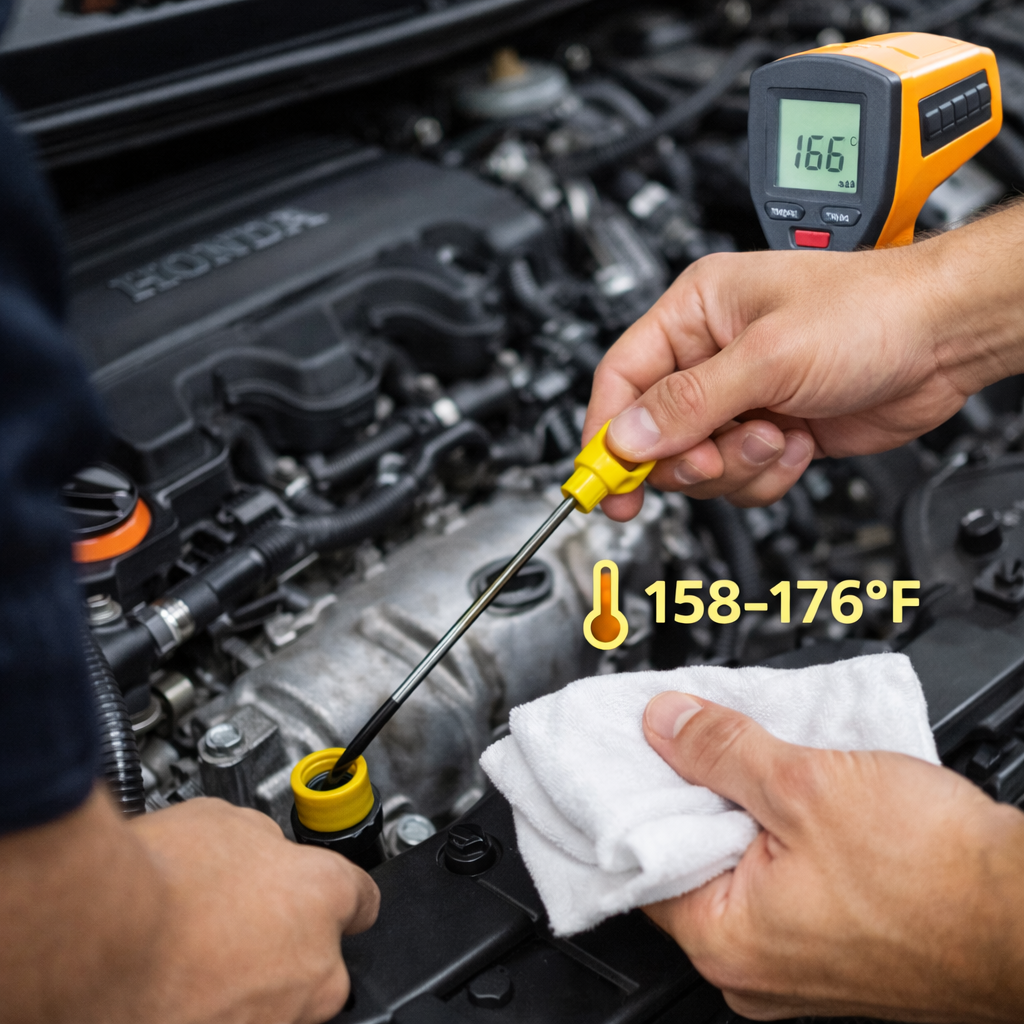
CVT systems in newer Accords are sensitive. Overfilling or incorrect checking can cause hesitation or jerky shifts; even a slight overfill on a 2013 CVT can cause drivability issues.
| Key Action | Detail | Example |
| Use only Honda CVT fluid | Avoid generic ATF clutches that are calibrated for Honda fluid | 2013 CVT failed after generic fluid use |
| Follow the warm-up procedure | Drive 10–15 min until fluid is near operating temp | The 2024 CVT needs a full warm-up to read accurately |
| Check quickly after shut-off | Fluid level changes fast | Delay 1 min can give a false high reading |
| Never overfill | Even a tiny amount matters | 1/4 quart overfill caused hesitation |
I have seen CVTs hesitate when fluid is slightly overfilled; small mistakes add up fast.
Is the Honda Accord Transmission Sealed for Life?
Sealed transmission myth. Some people believe newer Accord transmissions are sealed and never need service. That is not true. Even CVT models require periodic fluid inspection and replacement to prevent long-term wear.
Even so-called ‘lifetime’ fluids benefit from periodic inspection, as explained by Consumer Reports.
How Do You Read the Honda Accord Transmission Dipstick Correctly?
Look at the fluid mark carefully.
- Fluid should be pink or light red
- The level must sit between the two marks
- Slightly below the top mark is ideal
If it is above the upper mark, that is overfilled. If it barely touches the stick, it is too low.
What Color Should Honda Accord Transmission Fluid Be?
- Light red/pink: normal
- Light brown: ageing but usable
- Dark brown: needs replacement soon
- Black/burnt smell: internal damage
If it smells burnt, do not ignore it; overheating can ruin the transmission. Even on a 2024 model, burnt fluid can indicate early clutch wear.
What Are the Signs of Low Transmission Fluid?
How to Check Automatic Transmission Fluid in a Honda Accord? Low fluid levels affect hydraulic pressure, leading to gear engagement issues.
- Delayed or slipping gears
- Rough or jerky shifts with whining noise
Notice hesitation from Park to Drive? Check the fluid immediately; ignoring this on a 2013 or 2024 Accord can quickly wear the clutch packs.
Ever felt that sudden jerk? Low fluid could be the culprit, which is why your Accord might hesitate when you press the gas.
Also Read: Why Does My Honda Accord Jerk When I Accelerate?
What Happens If You Overfill the Transmission?
Too much fluid is just as dangerous as too little.
Overfilling can cause:
- Fluid foaming
- Pressure spikes
- Seal damage
- Slipping gears
Foamed fluid cannot lubricate properly.
I have personally seen transmissions start slipping within weeks because someone added just a little extra fluid. Overfilling causes foaming, and foamed fluid cannot build proper pressure.
What Type of Transmission Fluid Does a Honda Accord Use?
Honda transmissions are picky. Using universal ATF is risky.
| Transmission Type | Recommended Fluid |
| 5-Speed Automatic | Honda ATF-DW1 |
| Older Models | ATF-Z1 (now replaced by DW-1) |
| CVT | Honda HCF-2 CVT Fluid |
Never mix generic fluid unless it specifically states Honda compatibility. Honda service documentation consistently recommends using genuine Honda ATF-DW1 or HCF-2 fluid, as internal clutch materials are calibrated for these formulations.
How Much Transmission Fluid Does a Honda Accord Hold?
Capacity depends on the transmission type.
| Transmission | Drain & Fill | Full Capacity |
| Automatic | 2.5–3 quarts | 6–8 quarts |
| CVT | 3–4 quarts | 7–8 quarts |
A normal service is usually a drain-and-refill, not a full flush.
Can You Drive With Low Transmission Fluid?
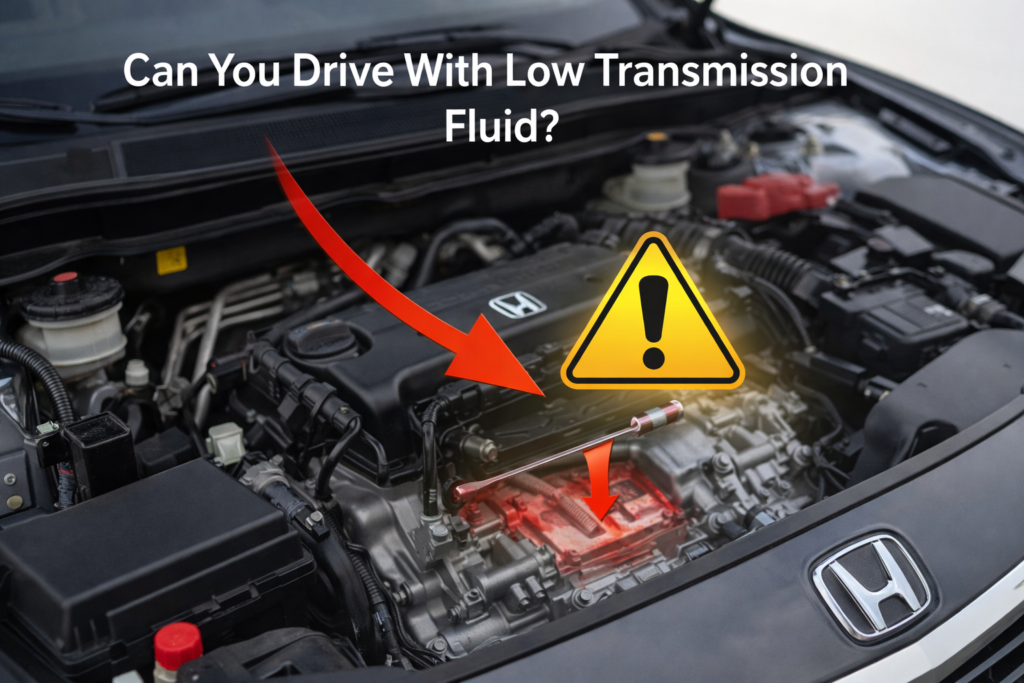
No, and here is why.
Driving low can:
- Burn clutch packs
- Overheat internal components
- Cause permanent damage
If the level is slightly low, top it off immediately. If it is very low, inspect for leaks before driving further.
Honda Accord Service Interval Reference
Honda Accord service interval: Honda recommends checking transmission fluid at service intervals, usually every 30,000 miles for normal driving. The Maintenance Minder system will alert you when service is due. If you tow, drive in stop-and-go traffic, or live in extreme heat, check sooner.
FAQs:
Should you check the Honda Accord transmission fluid with the engine running?
Yes, but only after warming the car and shifting through all gears before turning it off for an accurate reading.
Can low transmission fluid cause slipping in a Honda Accord?
Yes, low fluid levels reduce hydraulic pressure, leading to gear slipping and delayed engagement.
How often should transmission fluid be checked in a Honda Accord?
It is best to inspect it every 5,000–10,000 miles or during routine oil changes.
What happens if the transmission fluid looks dark brown?
Dark brown fluid usually means oxidation and heat breakdown, and it should be replaced soon.
Is it safe to drive long distances with low transmission fluid?
No, driving low can overheat internal parts and cause serious transmission damage.
What is the correct ATF temperature when checking?
The fluid should be near normal operating temperature, usually around 158°F to 176°F. If it’s colder than that, the level may read lower than it actually is.
Does Honda recommend transmission flushes?
No, Honda generally recommends a drain-and-refill instead of a full flush. Flush machines can push debris through the system, causing problems in older transmissions.
Conclusion:
Doing this regularly really saves headaches down the road. Even small mistakes like checking too cold or topping off a bit too much can get expensive fast. A 2013 CVT or 2024 Accord shows just how easily minor oversights become costly repairs. Keep an eye on fluid colour, level, and temperature. Little steps protect your transmission and extend its life