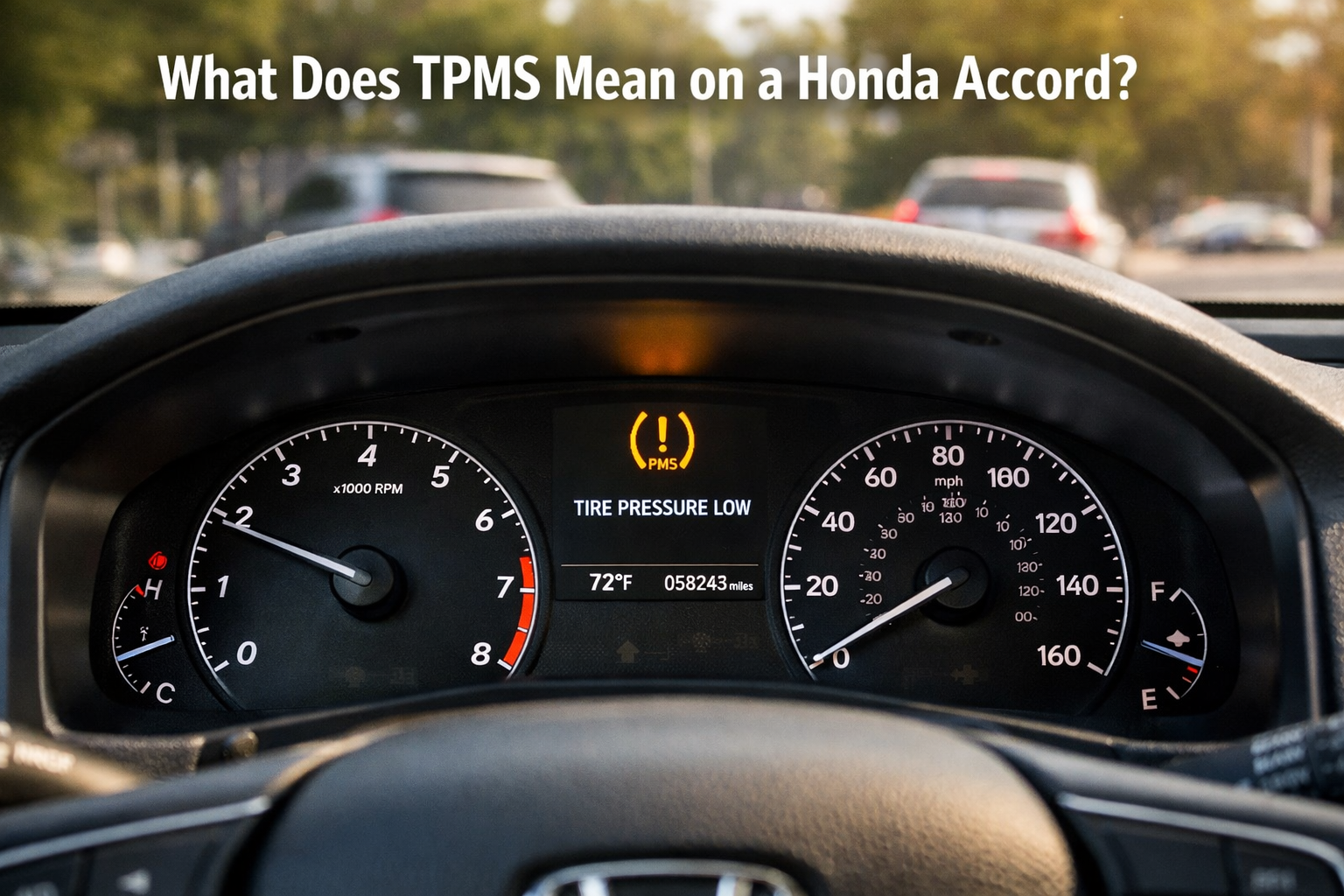
What Does Tpms Mean on a Honda Accord? (Complete 2026 Guide)
What does TPMS mean on a Honda Accord? TPMS stands for Tire Pressure Monitoring System, and it is one of those dashboard lights that almost everyone misreads at first. Some drivers panic the moment it turns on. Others ignore it and keep driving as if nothing happened. In real life, both reactions usually lead to wasted money just in different ways.
In this guide, you will learn precisely what TPMS means, how it works on different Accord models, why the light turns on, how to reset it correctly, and when it signals a real problem.
What Does TPMS Mean on a Honda Accord?
On a Honda Accord, TPMS stands for Tire Pressure Monitoring System. Its job is not to nitpick small pressure changes; it’s to warn you once a tire has lost enough air to become unsafe, even if the car still feels perfectly fine from the driver’s seat.
When the TPMS warning light appears on your dashboard, it means:
- Tire pressure has dropped significantly OR
- The TPMS system itself needs calibration or repair
TPMS became mandatory because underinflated tires cause damage quietly.
Most drivers do not realize this light is not optional it exists because people were getting injured before systems like TPMS became mandatory.
Also Read: What Does B1 Mean On A Honda Accord?
You do not always feel it right away, but braking distances increase, handling gets sloppy, fuel economy drops, and tires wear out faster than they should.
- Vehicle stability
- Braking performance
- Tire lifespan
- Fuel efficiency
Ignoring it often turns a cheap air refill into a ruined tire or suspension repair.
How the Honda Accord TPMS System Works?
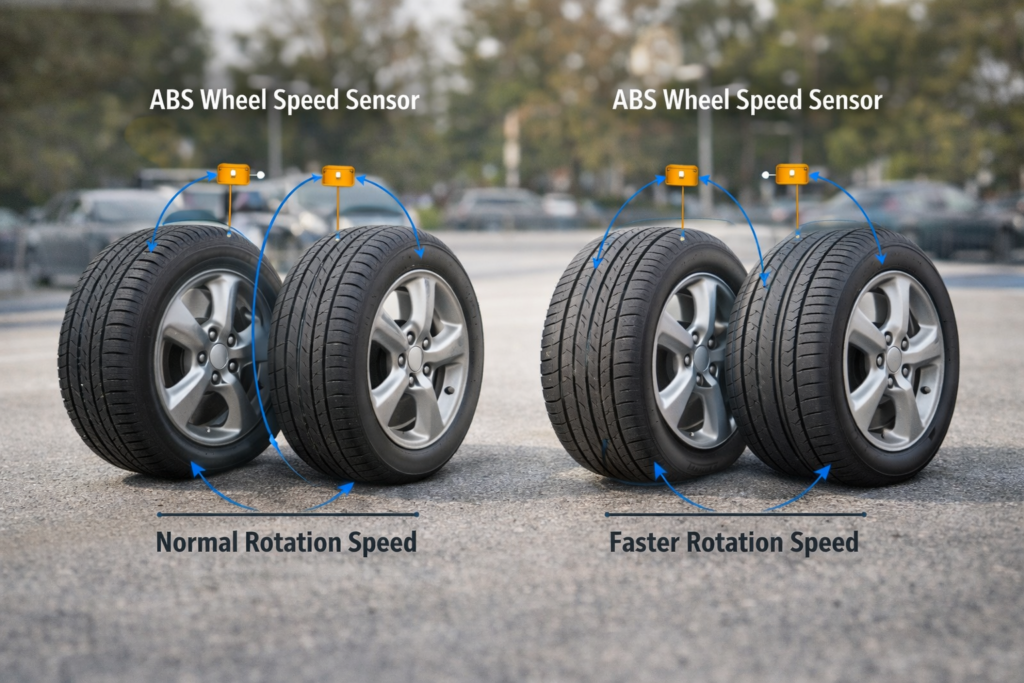
Honda TPMS system, tire pressure sensor, ABS wheel speed, indirect TPMS
Indirect vs. Direct TPMS: (Critical Difference Most Articles Miss)
Most modern Honda Accords use an indirect TPMS system rather than physical pressure sensors in each tire.
Here is how it works:
| System Type | How It Measures Pressure | Used In Honda Accord |
| Direct TPMS | Sensors inside tires measure PSI | Older models |
| Indirect TPMS | Uses ABS wheel speed data | Most 2013+ Accords |
Instead of using pressure sensors inside the tire, Honda relies on wheel-speed data from the ABS system. When one tire starts rotating differently from the others, the system assumes pressure has dropped and triggers the warning.
How does Indirect TPMS Detect Low Pressure?
When a tire loses air, it spins slightly faster than the others. The ABS detects this mismatch and turns on the warning light.
One thing many drivers do not realize is that indirect TPMS does not show exact PSI numbers. It only reacts once pressure has dropped enough to matter, not when it’s slightly off.
TPMS Warning Light Symbols on a Honda Accord?
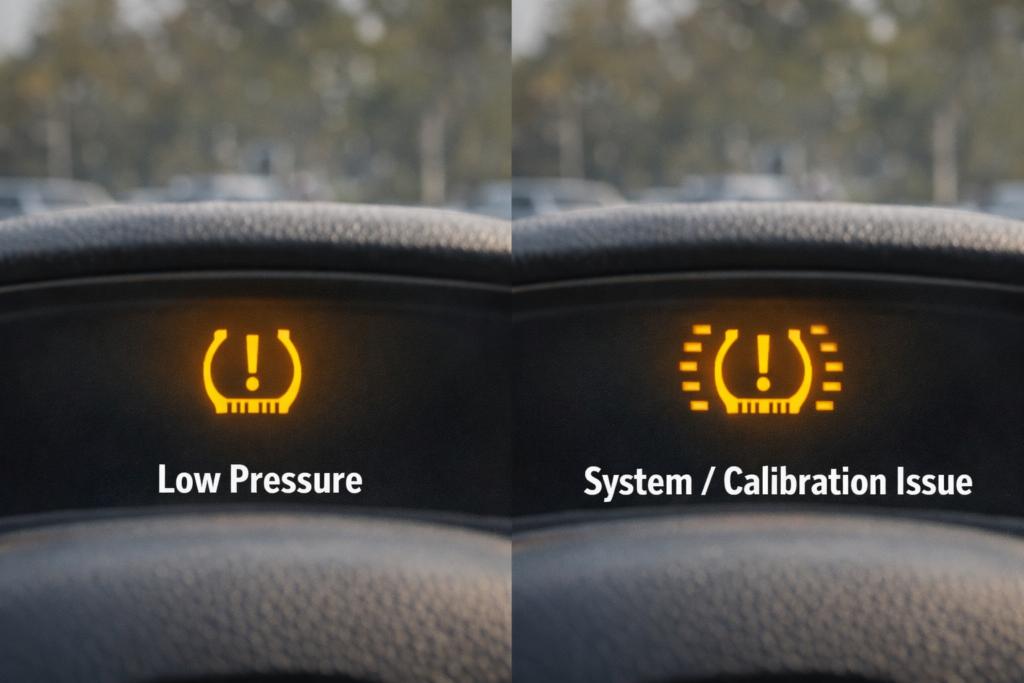
TPMS light meaning, tire pressure warning light
A solid TPMS light usually indicates that at least one tire is low on air pressure.
- Most common scenario
- Inflate tires to the recommended PSI
Blinking TPMS Light (Then Solid):
If the light blinks first and then stays on, the problem is usually with the calibration or the TPMS system, not air pressure.
TPMS Light After Tire Change:
- The system was not recalibrated
- Wheel size mismatch
- Common after rotations or new tires
Why Does the TPMS Light Come On in a Honda Accord?
detect, monitor, warn, calibrate
Common Causes:
- Low tire pressure (slow leak or temperature drop)
- A cold night alone can drop tire pressure enough to trigger the light the next morning. Tire rotation without recalibration
- Uneven tire sizes or aftermarket wheels
- ABS sensor issue
- TPMS system not initialized
Most drivers assume the system is wrong when the light comes on. In practice, it usually does exactly what it was designed to do: warn you before uneven tire wear or a potential blowout becomes obvious.
Correct Tire Pressure for a Honda Accord?
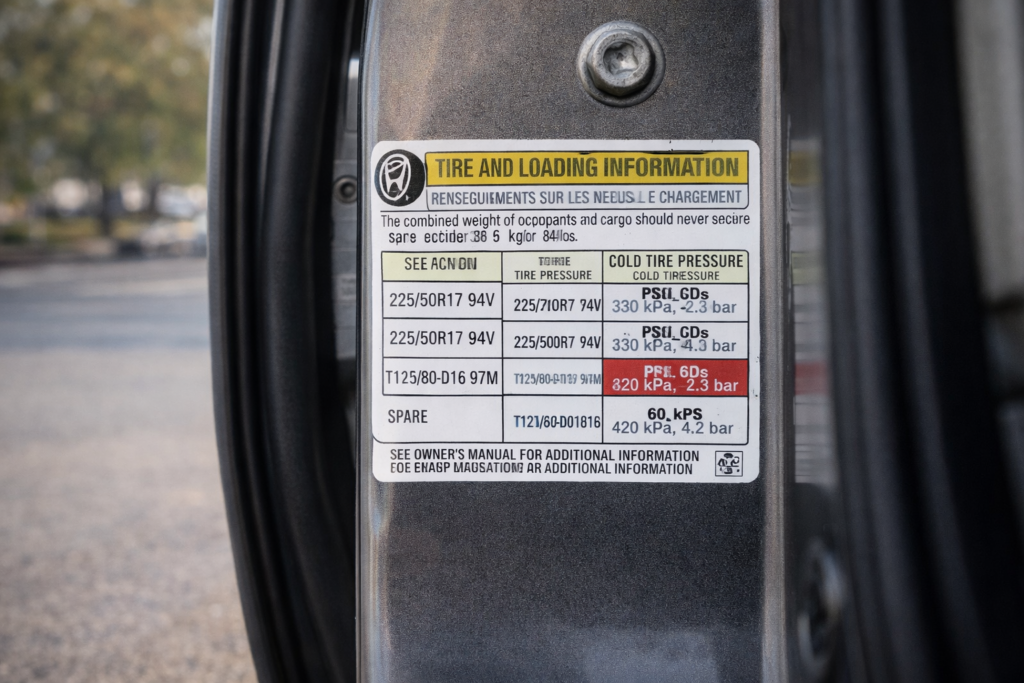
Recommended tire pressure Honda Accord, door jamb sticker
You will find the official PSI:
- Inside the driver-side door jamb
- In the owner’s manual
Typical range:
- 32 to 35 PSI (varies by model year and tire size)
The PSI printed on the tire sidewall is a maximum limit, not what Honda recommends for your Accord. Always follow Honda’s specifications
How to Reset TPMS on a Honda Accord? (Step-by-Step)
Reset TPMS Honda Accord, TPMS calibration
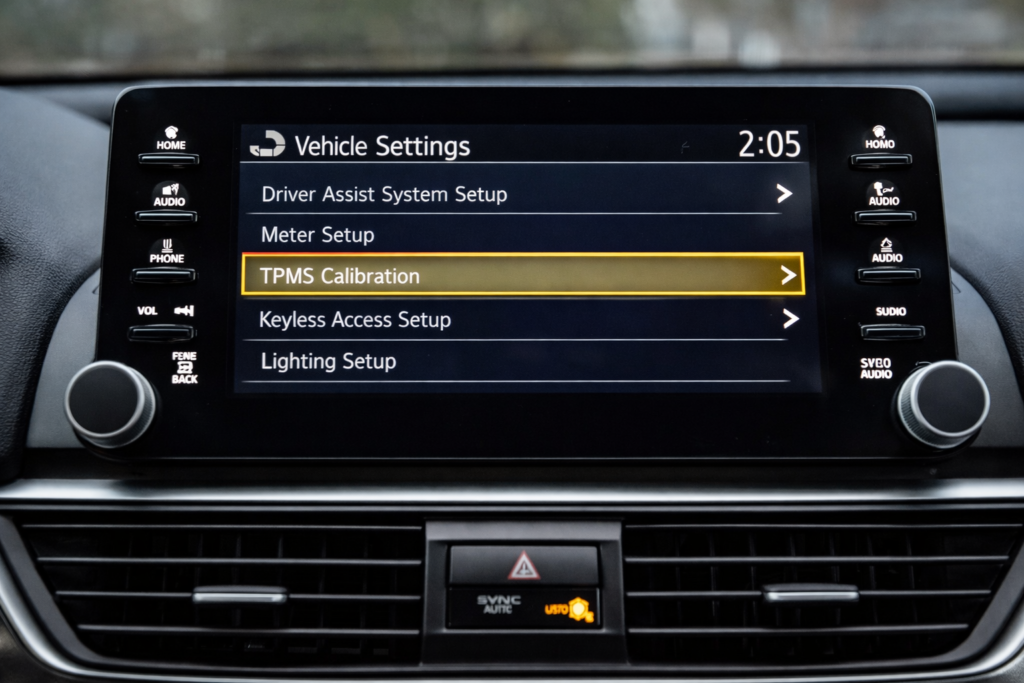
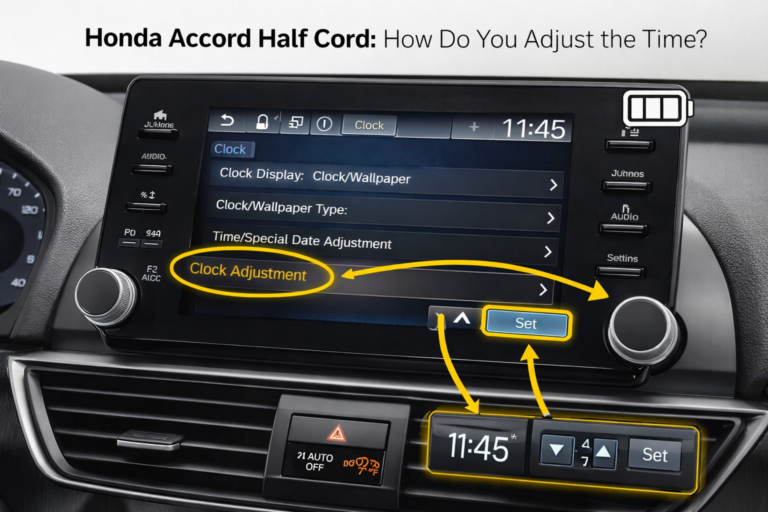
Method 1: Using the Infotainment System (Most Models)
- Inflate all tires to the correct PSI
- Turn ignition ON
- Go to Vehicle Settings → TPMS Calibration
- Select Calibrate
After calibration, the car usually needs a short, steady drive before the system relearns correctly.
Method 2: Steering Wheel Controls (Older Models)
- Press MENU
- Select Customize Settings
- Choose TPMS Calibration
- Confirm reset
If the light stays on after calibration, the issue is not pressure; it is a system fault.
Can You Drive With the TPMS Light On?
You can drive briefly, but treating it as safe to ignore is asking for trouble.
Ignoring the TPMS light usually causes problems that build slowly, not all at once. Tires start wearing unevenly, fuel economy quietly drops, and braking performance suffers long before anything feels dangerous. In real driving, the bigger risk is that underinflated tires run hotter, especially at highway speeds, which is how routine commutes turn into sudden blowouts. Most Honda Accord owners I have seen do not realize anything is wrong until the tire is already damaged beyond repair. Think of TPMS as an early warning, not a polite suggestion you can ignore; by the time the light comes on, the issue has already begun.
Read the guide about TPMS in all new passenger vehicles
If you do not know the exact PSI your Accord needs, you are basically guessing and TPMS hates guessing.
Also Read: What PSI Should Honda Accord Tires Be?
TPMS vs Low Tire Pressure: What is the Difference?
| Feature | TPMS System | Tire Pressure |
| Measurement | Relative change | Actual PSI |
| Accuracy | Approximate | Exact |
| Purpose | Alert driver | Maintain safety |
Key insight:
TPMS does not predict problems; it reacts once pressure has already dropped into an unsafe range.
Common TPMS Mistakes Honda Accord Owners Make?
Many TPMS issues stem from simple mistakes that recur. Drivers reset the system without actually inflating the tires, ignore seasonal pressure drops, or mix tire brands and tread depths without realizing how sensitive the system can be. A blinking TPMS light is often mistaken for low air, when it’s really asking for recalibration. Most Accord owners I’ve come across do not break the system; they confuse it. Some even overinflate their tires just to turn off the light, which creates handling and wear issues that are worse than the original warning. The uncomfortable truth is that most TPMS complaints are caused by skipped pressure checks, ignored recalibrations, or mismatched tires, not system defects.
Advanced TPMS Problems? (When It is Not About Air)
Modern Accords rely on multiple safety systems talking to each other TPMS is just one piece of a bigger puzzle.
Also Read: Which Honda Accord Has Blind Spot Detection?
ABS Sensor Issues:
- A dirty or damaged ABS sensor can confuse the system and trigger warnings even when the tire pressure is fine.
- Causes false TPMS alerts
Aftermarket Wheels:
- Incorrect wheel diameter
- Confuses indirect TPMS logic
Battery & Electrical Faults:
- Rare, but possible
- Requires a diagnostic scan
If calibration fails twice, stop guessing, get it scanned.
Expert Tips to Prevent TPMS Issues:
How to Prevent the TPMS light on the Honda Accord. A quick monthly pressure check prevents most TPMS warnings before they ever appear.
- Recalibrate after rotations
- Replace tires as a full set
- Avoid mismatched tread depths
- Inflate when tires are cold
- Do not ignore minor warnings
Spending a few minutes checking tire pressure might feel trivial, but it often prevents much bigger repair bills down the road, especially suspension and tire replacements.
FAQ’s:
What does TPMS mean on a Honda Accord dashboard?
TPMS means Tire Pressure Monitoring System. It warns when tire pressure drops below safe levels.
Why is my TPMS light on even though my tires are full?
The system may need recalibration, or there may be a sensor/ABS issue.
How long does it take for TPMS to reset?
Typically, 10 to 20 minutes of driving after calibration.
Is TPMS required by law?
Yes. TPMS is federally mandated in the U.S. for passenger vehicles.
Can cold weather trigger the TPMS light?
Yes. Tire pressure drops roughly 1 PSI for every 10°F drop in temperature.
Conclusion:
That small dashboard light is not there to annoy you. In most cases, it is the first sign that something has already started to go wrong, long before you can feel it while driving. Understanding what it means, why it activates, and how to respond correctly can save your tires, your fuel, and your life. Do not ignore it. Do not guess. Inflate, calibrate, and verify. If the light persists, it is telling you something important listen to.