Does the Honda Accord Hybrid Save Money Long Term? (Cost Breakdown)
Yes. The Honda Accord Hybrid can save money long term through lower fuel costs, strong fuel economy, and reduced brake wear. Drivers who keep the vehicle for several years and drive regularly typically see the greatest financial benefit.
In this guide, we compare fuel savings, maintenance costs, battery expenses, and total ownership costs to determine whether the Accord Hybrid is truly the smarter financial choice for long-term ownership.
Also Read: How does Honda Accord Hybrid work?
Accord Hybrid vs Gas Accord Costs
The Honda Accord Hybrid costs more upfront than a comparable gasoline Accord, but lower fuel expenses can reduce the gap over time. The exact savings depend on fuel prices, annual mileage, and how long the vehicle is owned.
Cost Comparison
| Expense Category | Accord Hybrid | Gas Accord |
| Starting MSRP | Higher upfront cost | Lower upfront cost |
| Fuel Economy | Around 44 to 48 MPG | Around 29 to 32 MPG |
| Annual Fuel Cost | Lower | Higher |
Looking at ownership as a whole gives a clearer picture than focusing only on purchase price. Fuel savings often become the deciding factor for many buyers.
Upfront Cost Difference
The Accord Hybrid usually costs a few thousand dollars more than a comparable gas-powered Accord. This higher purchase price is the main reason buyers question whether a hybrid truly saves money over the long term.
Typical Price Difference
| Model Type | Estimated Starting Price Difference |
| Accord Hybrid | Higher |
| Gas Accord | Lower |
| Typical Gap | $2,000 to $4,000 |
Fuel Economy Comparison
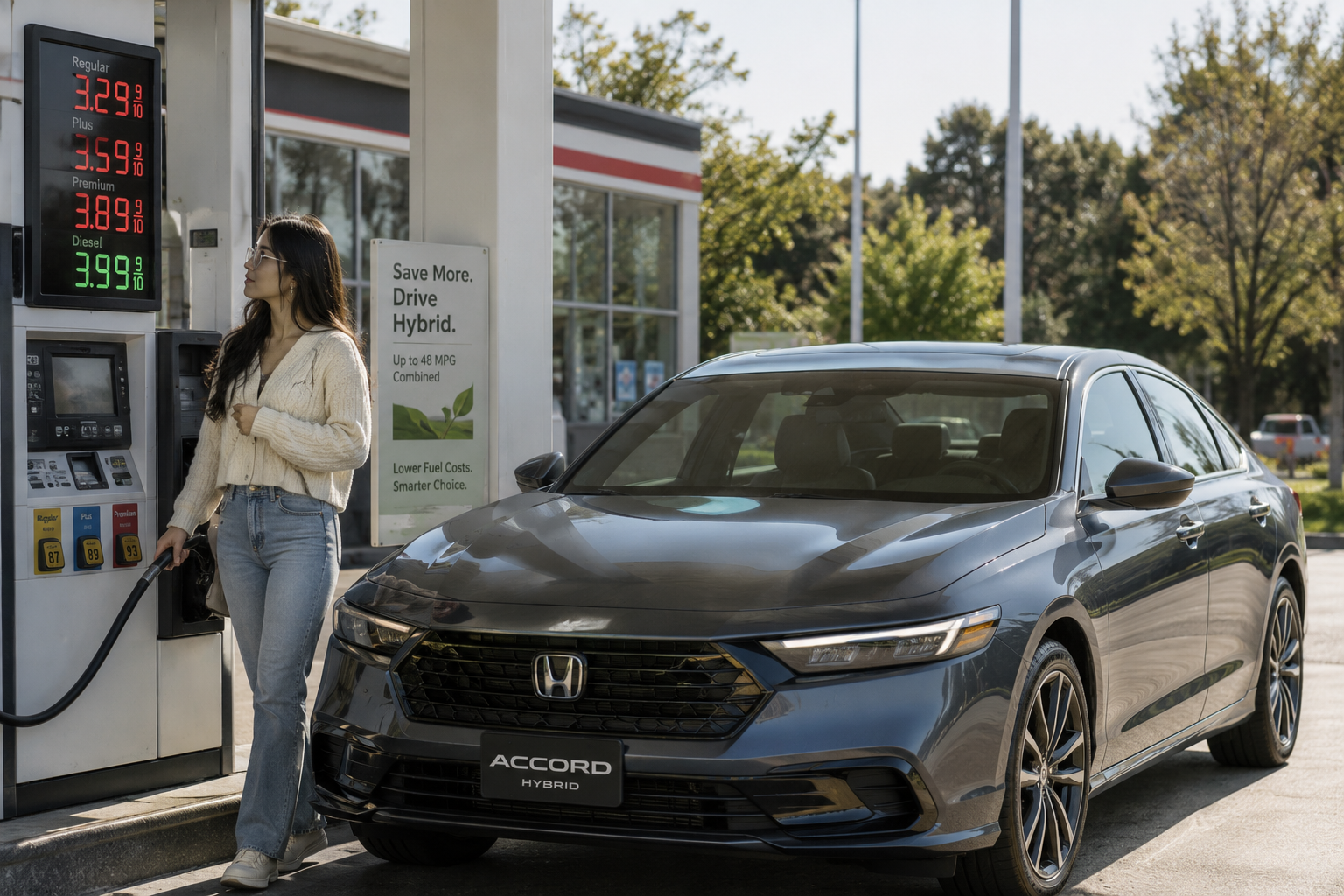
Fuel economy is where the Accord Hybrid gains its biggest advantage. Drivers who spend time in city traffic often notice larger savings because the hybrid system relies more heavily on electric power at lower speeds.
Fuel Economy Comparison
| Driving Type | Accord Hybrid | Gas Accord |
| Combined MPG | 44 to 48 MPG | 29 to 32 MPG |
| Annual Miles | 15,000 | 15,000 |
| Fuel Used Per Year | 330 gallons | 500 gallons |
If you are also comparing fuel economy with its biggest rival, see our Honda Accord Hybrid vs Toyota Camry Hybrid comparison.
Fuel Savings Over 5 Years
For drivers covering around 15,000 miles per year, fuel savings can add up quickly. Even moderate differences in fuel economy can translate into thousands of dollars over five years.
Example 5-Year Fuel Cost
| Category | Accord Hybrid | Gas Accord |
| Annual Mileage | 15,000 | 15,000 |
| Five-Year Fuel Cost | Lower | Higher |
| Estimated Savings | — | Hybrid saves money |
Fuel Savings Over 10 Years
The longer you keep the vehicle, the more valuable fuel savings become. Owners who keep their Accord for ten years often recover the hybrid premium and continue saving afterward.
Example 10-Year Fuel Cost
| Category | Accord Hybrid | Gas Accord |
| Annual Mileage | 15,000 | 15,000 |
| Ten-Year Fuel Cost | Lower | Higher |
| Total Savings Potential | Significant | Lower |
Maintenance and Repair Costs
Many buyers assume hybrids cost far more to maintain, but routine maintenance is generally similar. Oil changes, brake service, tire rotations, and filters remain part of normal ownership for both versions.
One advantage many buyers overlook is regenerative braking. Because the electric motor helps slow the vehicle, brake pads often last longer than they do in a conventional gas-powered Accord. While maintenance schedules remain similar overall, some owners report fewer brake replacements over the long term.
Maintenance Comparison
| Service Item | Accord Hybrid | Gas Accord |
| Oil Changes | Yes | Yes |
| Tire Rotation | Yes | Yes |
| Brake Service | Often Less Frequent | Normal |
| Transmission Service | Required | Required |
| Major Repairs | Similar | Similar |
Hybrid Battery Replacement Cost
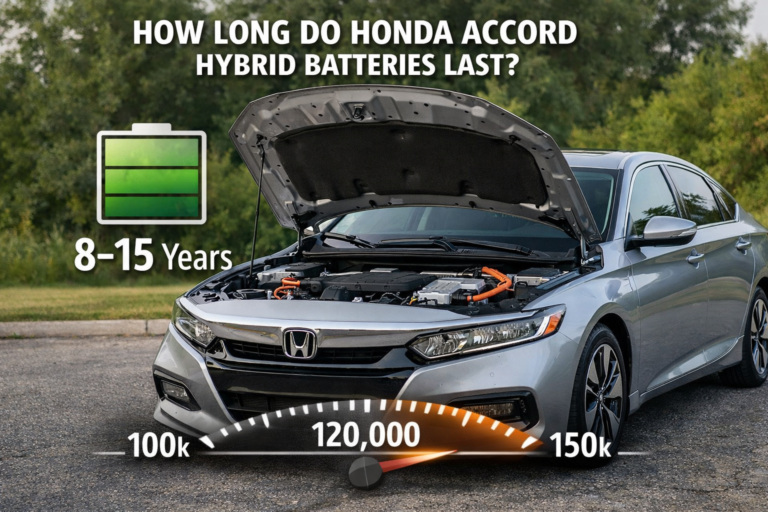
Honda hybrid batteries are covered by warranty for many years, and most owners never need replacement during normal ownership. Because of this, battery replacement should be viewed as a potential long-term expense rather than an expected maintenance item for potential hybrid buyers. However, Honda hybrid batteries are designed to last many years and often exceed 150,000 to 200,000 miles before replacement becomes necessary.
While battery replacement can be expensive, most owners never face this cost during normal ownership. For drivers who keep their vehicles for extremely high mileage, it is a possible future expense worth considering.
Ownership Cost Comparison
The best way to judge value is by comparing total ownership costs rather than individual expenses. Fuel savings, maintenance costs, resale value, and purchase price all contribute to the final result.
| Cost Category | Accord Hybrid | Gas Accord |
| Purchase Price | Higher | Lower |
| Fuel Costs | Lower | Higher |
| Maintenance | Similar | Similar |
| Brake Wear | Lower | Normal |
| Resale Value | Strong | Strong |
| Long-Term Cost | Often Lower | Often Higher |
When Does the Hybrid Pay for Itself?
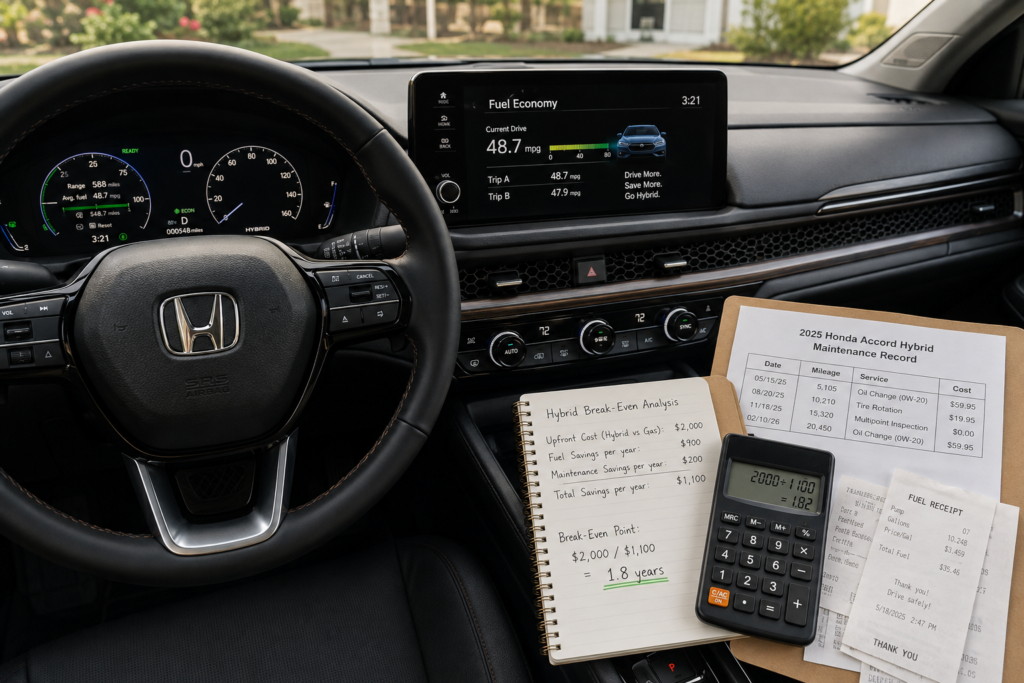
The break-even point depends largely on annual mileage. Drivers who travel more miles each year recover the hybrid premium faster because they benefit from greater fuel savings.
Example Break-Even Timeline
| Annual Miles | Estimated Break-Even Time |
| 10,000 | 6 to 8 years |
| 15,000 | 4 to 6 years |
| 20,000+ | 3 to 5 years |
Actual break-even time varies depending on fuel prices, purchase price differences, and driving conditions.
Who Should Buy the Accord Hybrid?
The Accord Hybrid makes the most sense for drivers who plan to keep their vehicle for several years and spend significant time commuting.
Best Buyers
- Daily commuters
- High-mileage drivers
- Rideshare drivers
- City drivers
- Long-term owners
Drivers who spend more time in city traffic benefit most from how the hybrid system switches between engine and electric power.
When the Hybrid Is not Worth It
Not every buyer benefits equally from a hybrid. Drivers with low annual mileage may take much longer to recover the higher purchase price through fuel savings.
The Gas Accord May Be Better If:
- You drive very little each year
- Most trips are short and infrequent
- You plan to sell the car quickly
- Purchase price is your main concern
FAQs
Does the Honda Accord Hybrid save money over a gas Accord?
Yes. The Accord Hybrid generally saves money through lower fuel consumption and reduced brake wear. Drivers who travel 12,000 to 15,000 miles or more each year often recover the higher purchase price through fuel savings over time. The exact amount depends on fuel prices, mileage, and how long the vehicle is owned.
How long does the Accord Hybrid take to pay for itself?
The break-even point varies based on fuel prices, mileage, and purchase price differences. Many drivers recover the additional cost within several years through reduced fuel expenses.
Is replacing an Accord Hybrid battery expensive?
Battery replacement can be costly, but it is uncommon during normal ownership. Most Honda hybrid batteries are designed to last many years and often exceed 150,000 miles before requiring replacement.
Does the Accord Hybrid cost more to maintain?
Not significantly. Routine maintenance remains similar to the gasoline Accord. In some cases, regenerative braking can even reduce brake wear and lower maintenance costs over time.
Is the Accord Hybrid worth it for high-mileage drivers?
Yes. High-mileage drivers usually benefit the most because fuel savings accumulate faster. Drivers covering long distances each year often reach the break-even point much sooner than low-mileage owners.
Conclusion:
The Honda Accord Hybrid can be a smart long-term investment for drivers who prioritize fuel savings and plan to keep their vehicle for several years. Although the initial purchase price is higher, lower fuel costs and strong reliability help offset the difference over time. For commuters, high-mileage drivers, and long-term owners, the Accord Hybrid often delivers meaningful savings while maintaining the comfort, practicality, and dependability that make the Accord one of the most popular sedans in its class.
Fuel economy figures are based on EPA estimates and may vary depending on driving habits, weather conditions, vehicle maintenance, and road conditions. For official ratings, see the EPA fuel economy database.