What Does D3 Mean on a Honda Civic? (Gear Explained)
You are driving your Honda Civic, you see D3 on the gear, and you ignore it. Most drivers do. But that small option can actually help you control your car better in traffic, hills, and rough driving conditions. In older automatic Civics, D3 limits the transmission so it does not shift above third gear. This keeps the engine ready for power when you need it.
Understanding how D3 works can help you drive smarter, protect your engine, and avoid common mistakes that most drivers make without even realizing it.
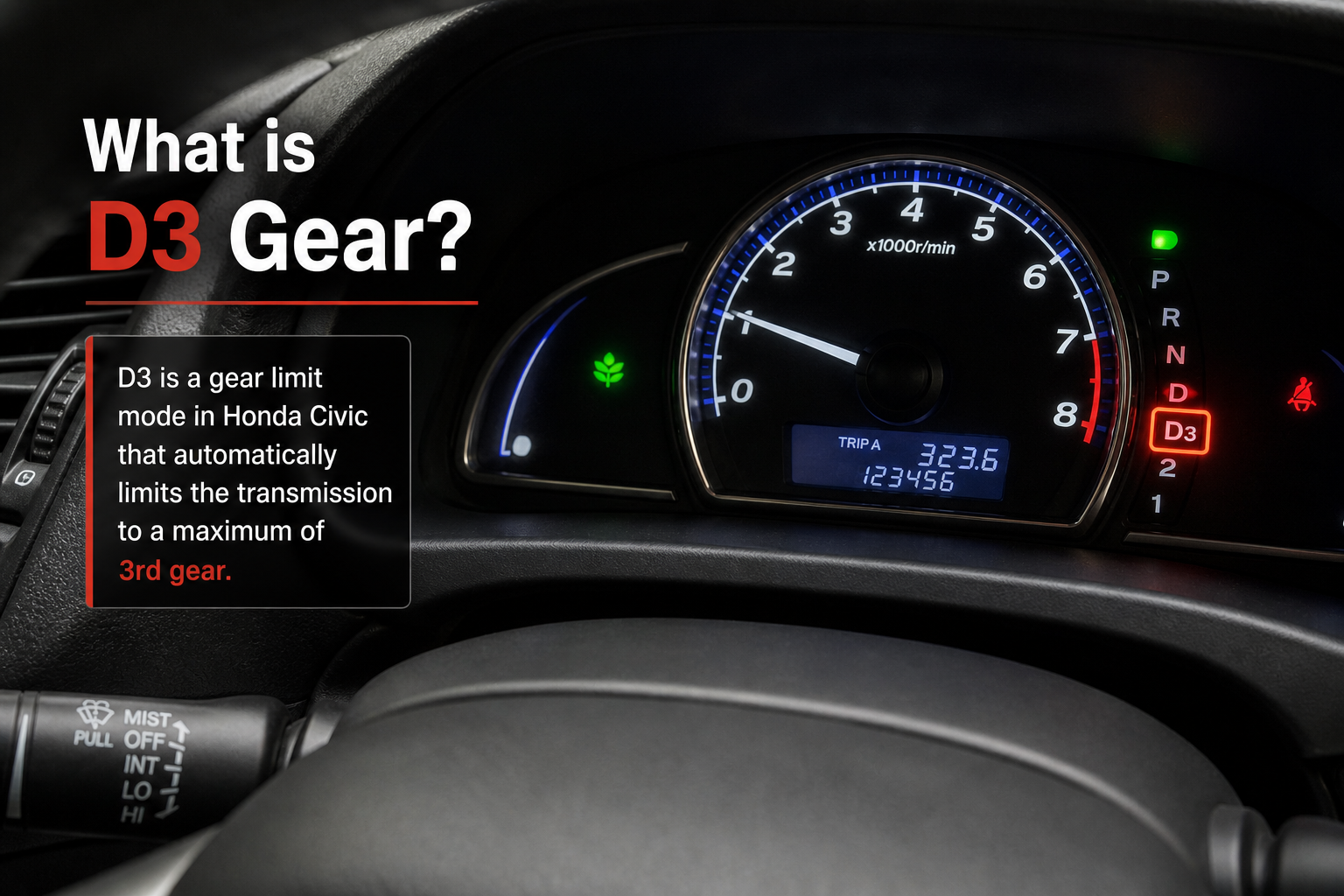
What Is D3 in a Honda Civic Transmission?
D3 means the transmission will not shift above third gear. It still uses 1st, 2nd, and 3rd automatically, but blocks higher gears. You will mostly find this in older Honda Civic models with traditional automatic transmissions.
- Limits the car to 3rd gear only
- Helps control speed and power
- Common in pre-2016 automatic Civics
How Does D3 Work in an Automatic Car?
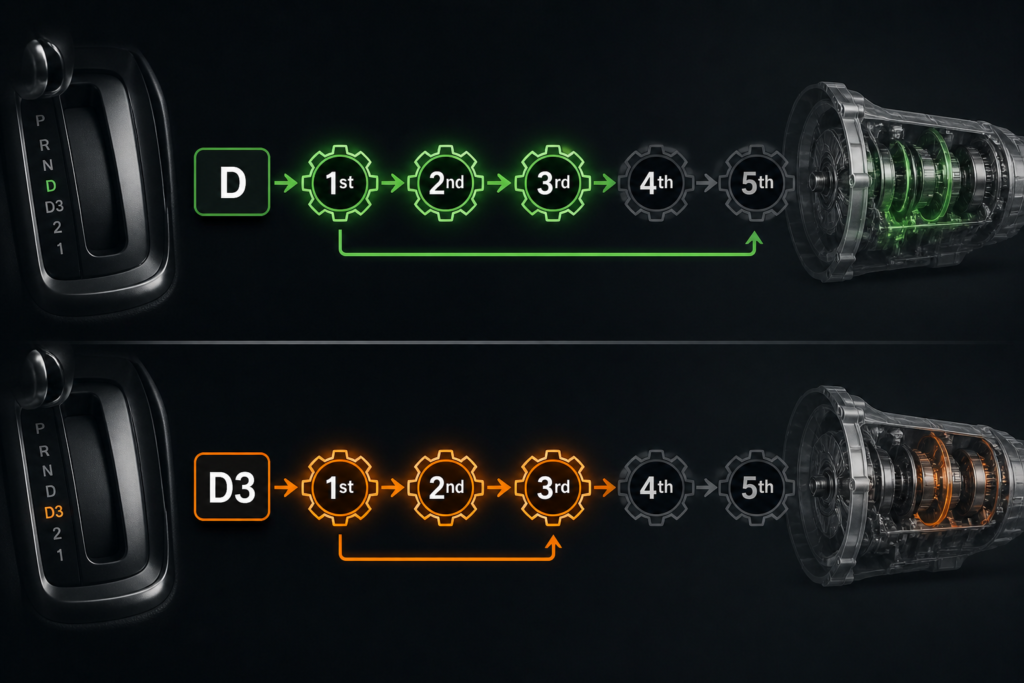
D3 changes how the transmission shifts. Instead of going up to higher gears, the engine stays in a lower gear range, which increases RPM and gives more control. As a result, the car avoids shifting into higher gears like fourth or overdrive, making it more stable in traffic, hills, or demanding driving conditions.
In older automatic Honda Civics, the transmission control system changes shift timing when you select D3. It keeps the engine in a higher RPM range and avoids early upshifting. This improves throttle response and gives better control in demanding conditions.
When Should You Use D3 While Driving?
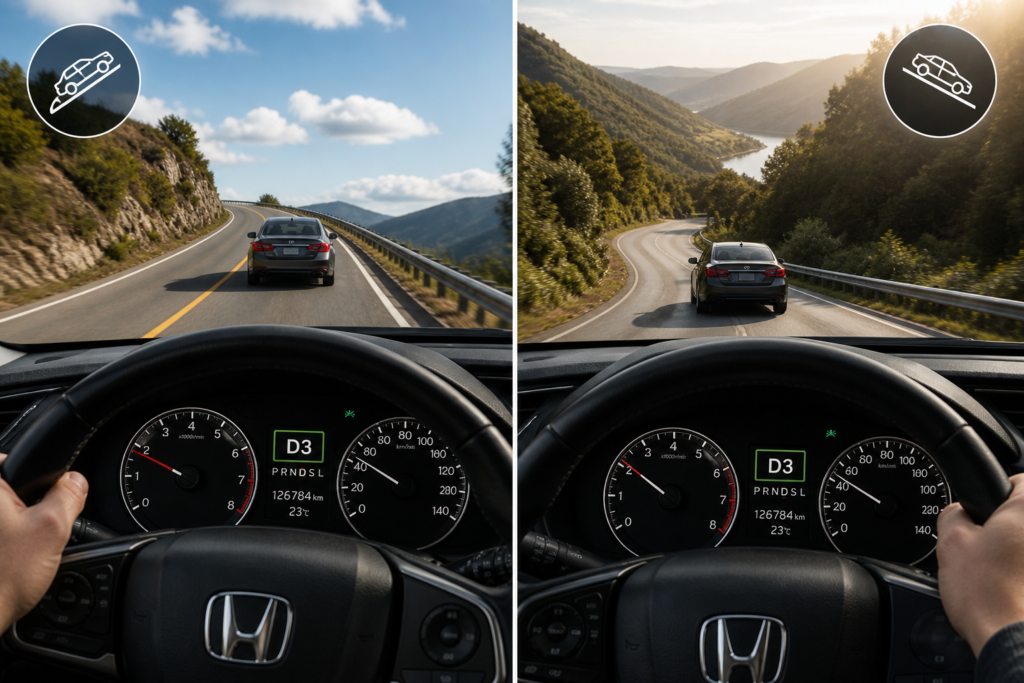
Use D3 when you need more control, not for normal cruising. It is helpful in situations where the car keeps shifting too much or struggles to maintain speed.
Best Situations to Use D3
- Driving uphill, where power is needed
- Going downhill to control speed
- Stop-and-go city traffic
- Overtaking at medium speeds
If you are driving in hilly areas like Murree or going down a long slope, using Normal Drive can make your car pick up too much speed. In that case, switching to D3 helps slow the car using engine braking, so you do not have to press the brakes constantly.
Is Driving in D3 Bad for Your Civic?
Driving in D3 is not harmful if used correctly because it is designed for specific situations. However, using it all the time is not ideal. Since the engine runs at higher RPM, it can increase engine load and fuel consumption, especially during long highway drives.
Does D3 Save or Waste Fuel?
D3 usually uses more fuel because the engine runs at higher RPM. But in city traffic, it can sometimes reduce gear hunting, which may balance fuel use slightly.
| Driving Condition | Fuel Impact |
| Highway cruising | Wastes more fuel |
| City traffic | Can be balanced |
| Uphill driving | Slightly higher usage |
| Downhill | Saves brakes, not fuel |
What is the Difference Between D and D3?
D allows a full gear range, while D3 limits the transmission to lower gears. This affects speed, fuel use, and driving comfort.
| Mode | Gear Range | Best Use |
| D | Full (1–5 or CVT) | Normal driving |
| D3 | Up to 3rd gear | Hills, traffic |
Also Read: What Gear to Drive in a Honda Accord?
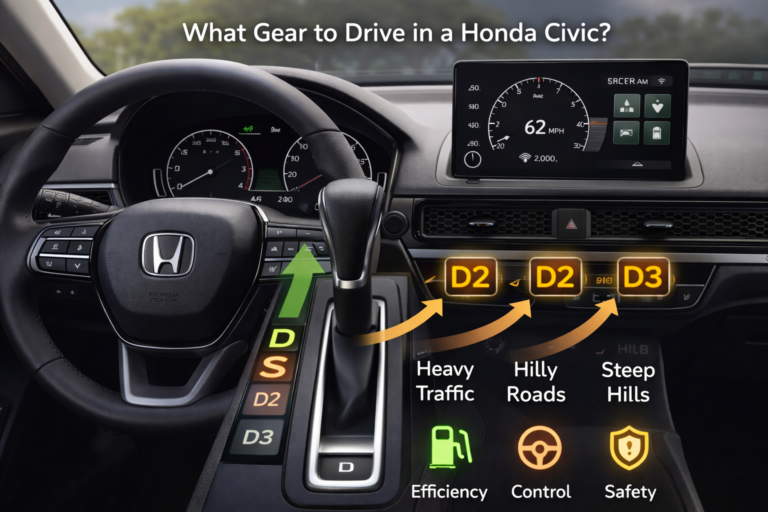
What Do D1, D2, and D3 Mean Together?
These are gear limits, not fixed gears. Each mode restricts how high the transmission can shift.
| Mode | Function |
| D1 | Only 1st gear |
| D2 | Up to 2nd gear |
| D3 | Up to 3rd gear |
This setup gives better control in different driving conditions.
Does the 2026 Honda Civic Still Have D3?
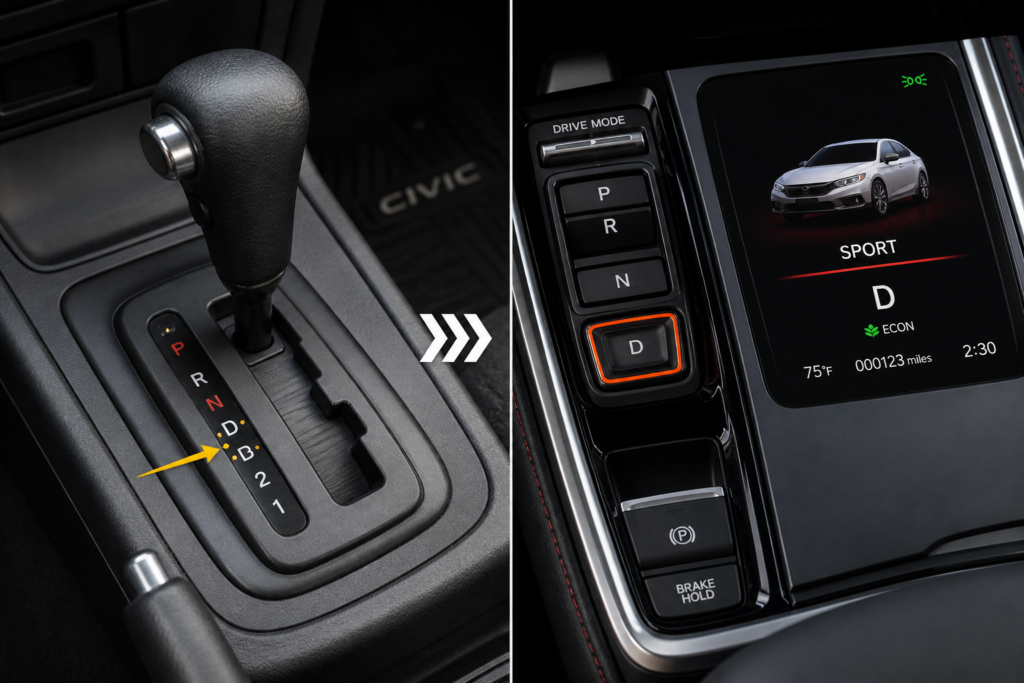
No, newer Honda Civic models no longer use D3 because they come with CVT transmissions, which do not rely on fixed gears like older automatics. Instead, these cars use features like sport mode, paddle shifters in some trims, and simulated gear steps to provide better control. This change mainly improves fuel efficiency and creates a smoother driving experience.
Why Would You Use D3 Instead of Drive?
D3 is useful when you need more control rather than comfort. It prevents the transmission from shifting too high, which helps maintain better engine response in difficult driving conditions like hills or heavy traffic. From a driving perspective, D3 is not about speed; it is about control, especially when automatic shifting feels inconsistent.
Read Guide: What is the Fastest Honda Civic?
What Happens When You Shift to D3?
When you shift to D3, the car adjusts its shifting behavior right away. The transmission stops going beyond third gear, which causes the engine to run at higher RPM. Because of this, the engine sound becomes slightly louder, but the car also feels more responsive and controlled, especially during slower or demanding driving situations.
Can D3 Help in Uphill or Downhill Driving?
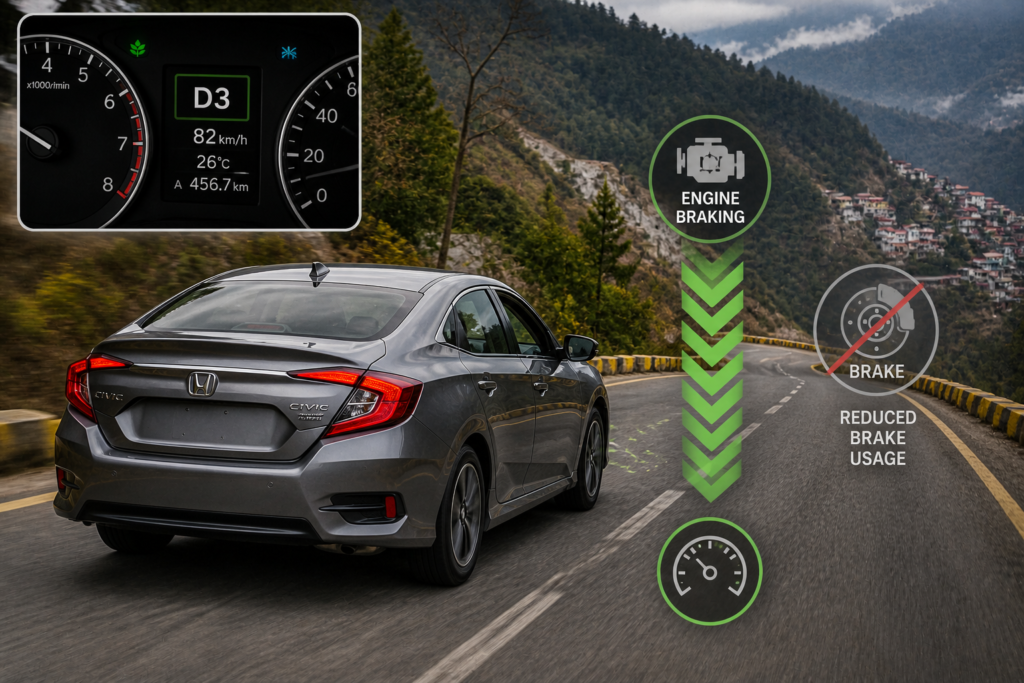
Yes, D3 is very useful in both situations. It keeps power steady uphill and controls speed downhill without overusing brakes.
How It Helps
- Uphill: maintains power without shifting
- Downhill: slows the car using engine braking
What Are Common Mistakes When Using D3?
Many drivers misuse D3 because they do not understand its purpose. This leads to poor fuel economy and unnecessary engine stress.
Avoid These Mistakes
- Using D3 on highways
- Keeping it on all the time
- Ignoring higher RPM
Common Driver Mistake:
Many drivers switch to D3 and forget to change it back. This leads to high RPM on open roads, more fuel usage, and unnecessary engine stress. This is one of the most common mistakes seen in daily driving.
FAQs:
Can You Drive Daily in D3 Mode?
No, daily use is not ideal. It is fine for short situations, but not for regular driving.
Does D3 Increase Engine Wear?
Slightly, if overused. Higher RPMs can add stress, but occasional use is safe.
Is D3 the Same as Sport Mode?
No, D3 limits gears, while sport mode changes throttle and shift behavior.
When Should You Avoid Using D3?
Avoid it on highways or when cruising at high speed. It reduces efficiency and comfort.
Can I use D3 in city driving?
Yes, D3 works well in stop-and-go traffic by reducing constant gear shifting and giving smoother control.
Is D3 useful for uphill driving?
Power stays consistent in this mode by preventing the car from shifting into higher gears too early.
Should I use D3 on highways?
No, it keeps RPM high and reduces fuel efficiency, making it unsuitable for high-speed cruising.
Why does my car feel louder in D3?
The engine runs at higher RPM in D3, which increases noise but improves control and responsiveness.
Do new Honda Civics still have D3 mode?
Modern Civics use CVT transmissions, so D3 is replaced by sport mode or simulated gear control systems.
Conclusion:
D3 is not just another gear; it is a control feature designed for specific driving conditions. In older Honda Civics, it helps with better handling in traffic, on hills, and on downhill roads. But it is not meant for everyday use, especially on highways. Modern Civics has moved away from D3 due to CVT technology, yet the purpose remains the same: giving drivers more control when needed. If you understand when and how to use it, D3 can improve both your driving experience and vehicle safety.