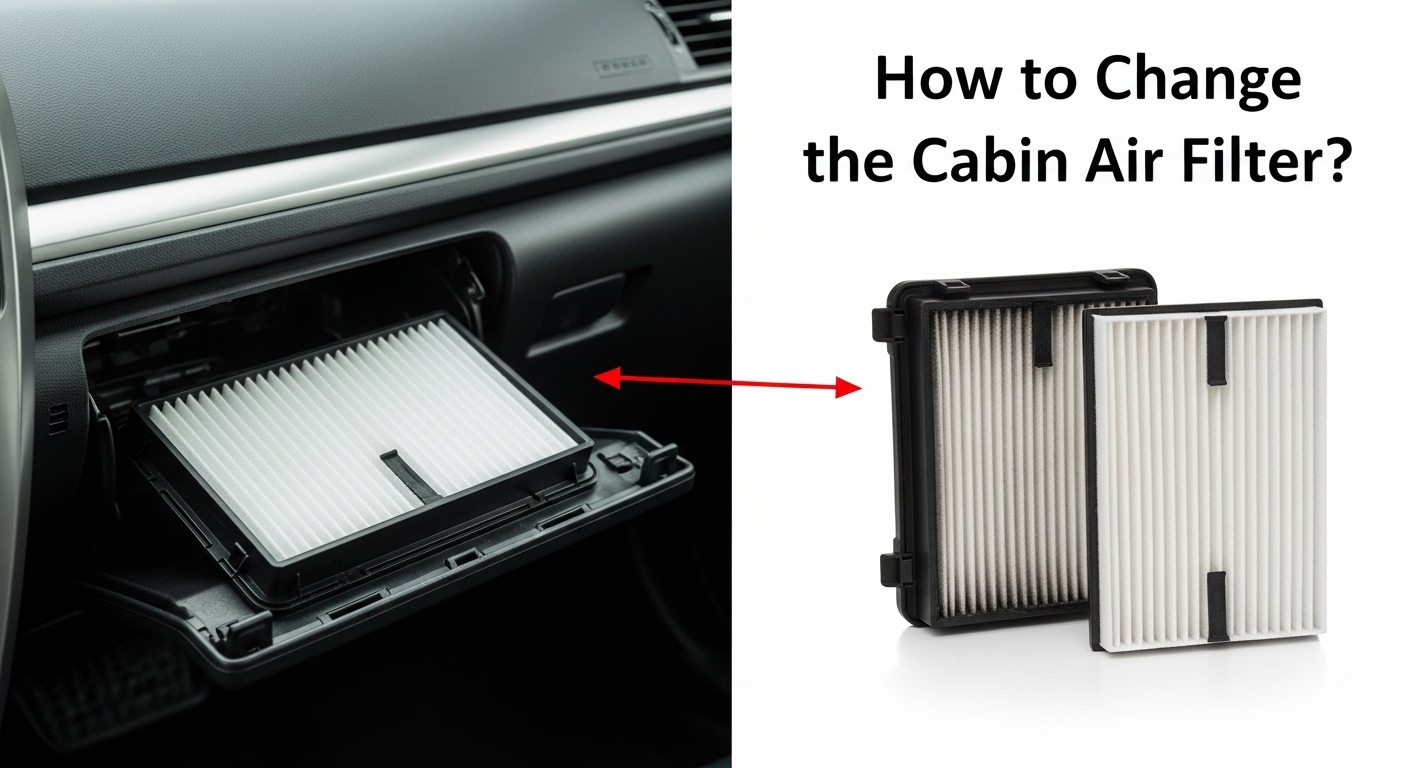
How to Change the Cabin Air Filter in a Honda Accord? (Learn How)
If your Honda Accord’s AC feels weak or you notice a dusty smell inside the cabin, your cabin air filter is probably clogged. This is one of the easiest maintenance jobs you can do yourself. Most owners finish it in under 15 minutes with basic tools.
In this step-by-step guide, we will walk you through how to change the cabin air filter in a Honda Accord safely and correctly, including real-world tips to avoid common mistakes.
What is a cabin air filter in a Honda Accord?
The cabin air filter in a Honda Accord cleans the air that enters the HVAC system. It traps dust, pollen, pollution, and debris before air flows through the AC and heater vents. Replacing it regularly improves airflow, air quality, and AC performance.
Where Is the Cabin Air Filter Located?
In most Honda Accords, the cabin air filter sits behind the glove box, inside a rectangular housing. Some newer models (2018+) have a hidden cover inside the dashboard.
Quick Tip: If your glove box swings out fully and hits a stop, that is a clue the filter is right behind it. Older Accords may have a slightly different location near the passenger footwell.
What Tools Do You Need for Replacement?
Honda Accords require minimal tools for this job:
- Phillips screwdriver – for glove box screws
- Flathead screwdriver – to release clips gently
- Gloves – optional, but keep your hands clean
- New cabin air filter – OEM recommended
You would not need a wrench or any advanced tools. Many DIYers complete the replacement in 10 to 15 minutes with just a screwdriver.
Honda’s maintenance schedule typically recommends inspection during regular service intervals.
Check your model’s exact schedule on the official Honda Owner’s site.
How Do You Remove the Glove Box Safely?
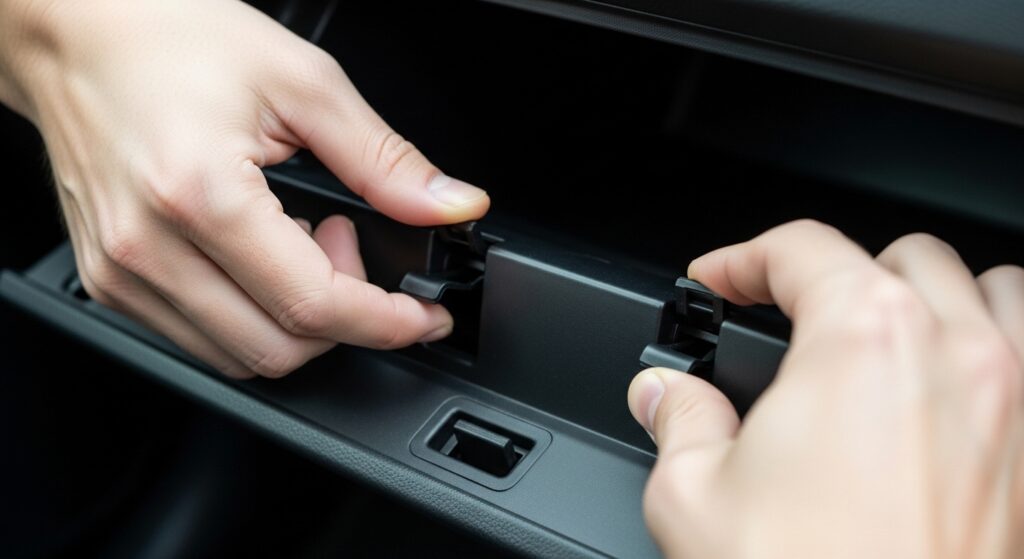
To access the filter, you must drop the glove box without breaking it:
- Open the glove box fully.
- Locate the glove box stoppers on each side and gently press inward.
- Let the box swing down slowly; do not force it.
- Carefully disconnect any damper cords if present.
Turn off the ignition before starting to avoid triggering dashboard warning lights. For 2013 to 2026 models, the stoppers are made of softer plastic, so pressing them gently avoids cracking.
In my experience, filters that have not been changed for over a year are usually packed with leaves and fine dust, especially in city driving. Pull it out slowly to prevent debris from falling into the blower motor housing.
How Do You Remove the Old Cabin Air Filter?
Once the glove box is down, you will see a rectangular cover:
- Push the tabs on both sides to release it.
- Pull the old filter out slowly to avoid spilling trapped dust.
- Note the airflow arrow; it must match when installing the new filter.
Real Example: Many owners ignore the arrow and insert it backwards, causing airflow restriction and odd AC noise.
How Do You Install the New Filter Correctly?
How to Change the Cabin Air Filter in a Honda Accord?
- Slide the new filter into the housing with the airflow arrow pointing toward the blower motor.
- Snap the cover back on.
- Lift and reconnect the glove box, ensuring dampers and stoppers are properly in place.
Test the AC after installation. You should notice cleaner airflow and less dust inside the cabin immediately.
For a visual walkthrough specific to 2018+ models, watch this step-by-step video.
What Happens If the Filter Is Installed Backwards?
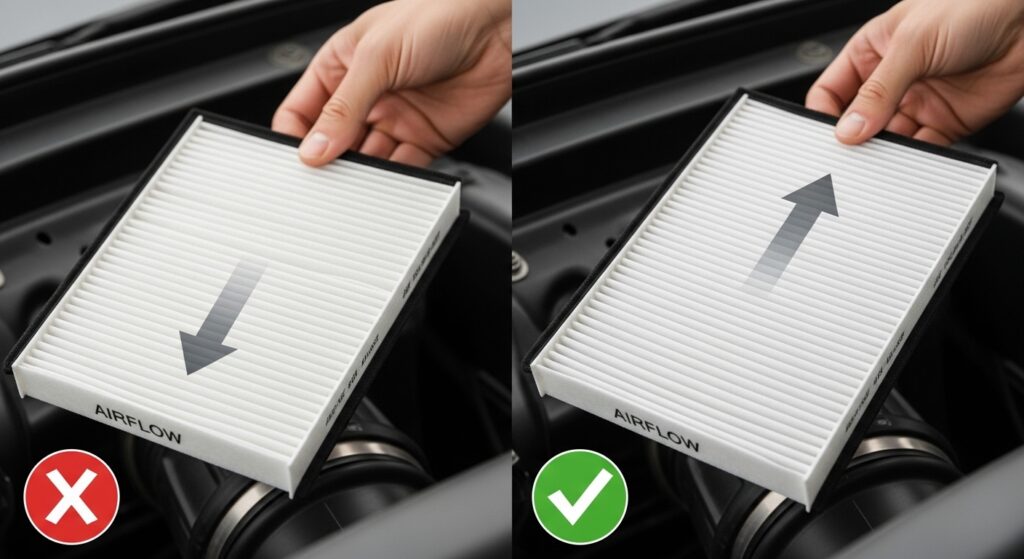
- Airflow becomes restricted.
- HVAC efficiency drops.
- Strange whistling or vibration sounds can occur.
Even though the engine would not suffer, backward installation reduces AC and heating performance, making your car feel stuffy. Restricted airflow forces the HVAC blower motor to work harder, potentially shortening its lifespan.
How Often Should You Replace the Cabin Air Filter?
Honda recommends replacing every 12,000 to 15,000 miles, but real-world conditions matter:
| Condition Type | Replacement Interval |
| Normal City/Highway Driving | 12k to 15k miles |
| Dusty or Rural Areas | 6k to 10k miles |
| Heavy Traffic / Pollution | 8k to 12k miles |
If you drive in dusty regions like Arizona, checking the filter every 6 months avoids clogging.
Just like oil changes, maintenance timing matters. See our full guide on When to Get an Oil Change for Honda Accord to keep your service schedule aligned.
What Are the Signs of a Clogged Cabin Air Filter?
- Reduced airflow from the AC vents
- Musty or mouldy smell when the AC runs
- Dust accumulation on the dashboard and vents
Real-world tip: If your AC seems weak during summer, check the cabin air filter first before calling a mechanic; it is often the culprit.
How Much Does It Cost to Replace It?
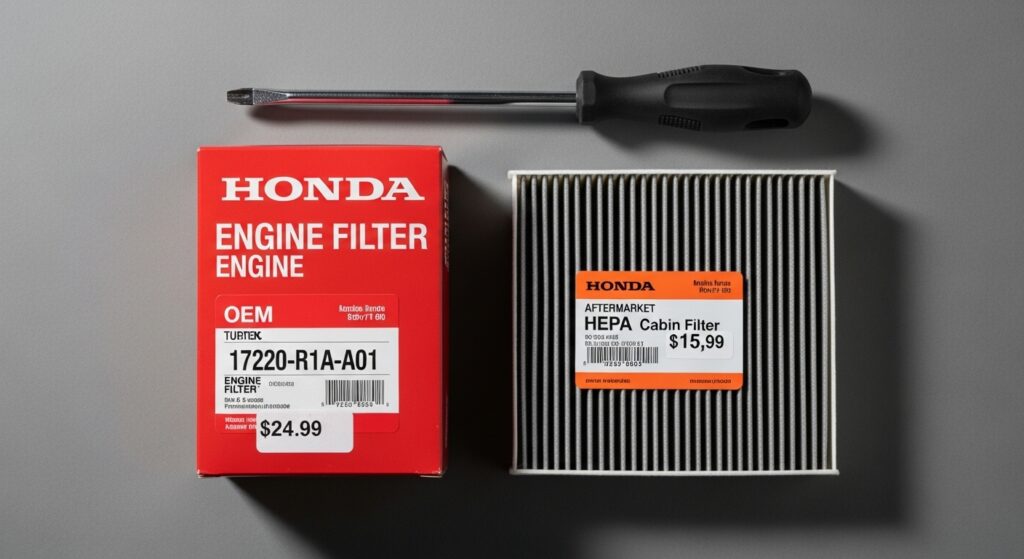
Replacing a cabin air filter is inexpensive but varies by type:
| Filter Type | Cost Range | Notes |
| OEM Honda Filter | $20 to $25 | Recommended for best fit |
| Aftermarket High-Flow | $10 to $18 | Slightly cheaper, may vary in quality |
| HEPA-Type | $25 to $35 | Best for allergies, slightly bulkier |
Installing it yourself saves $40 to $60 compared to dealer service. Many DIYers finish in 10 to 15 minutes, making it cost-effective.
If you like saving on DIY maintenance, you may also want to check the real breakdown in Honda Accord Alternator Replacement Cost before your next electrical repair.
What Is the Correct Cabin Air Filter Part Number?
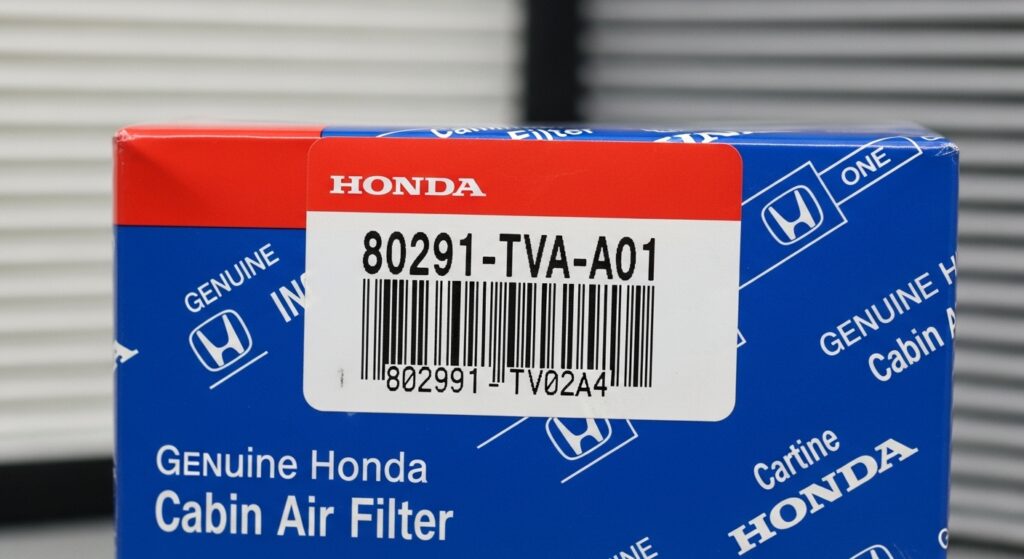
Mostly Honda Accord models use part number 80291-TVA-A01 (check your owner’s manual to confirm for your year).
Always verify by VIN if ordering online to ensure correct fitment.
Using the exact OEM part improves sealing and prevents unfiltered air from bypassing the filter housing.
Verify the exact OEM part number for your year on HondaPartsNow.
Are There Model Year Differences in the Honda Accord?
- 2008 to 2012: Standard glove box removal, simple rectangular filter.
- 2013 to 2020: Slightly larger glove box, sometimes dampers present.
- 2021 to 2026: Hidden housing covers, airflow arrows clearly marked.
Always check your owner’s manual; even small differences can change removal steps slightly.
What Common Mistakes Should You Avoid?
- Installing the filter backwards
- Forgetting to reconnect glove box dampers
- Using cheap filters that do not seal properly
- Ignoring replacement intervals
These mistakes reduce AC efficiency and may let dust bypass the filter.
Is OEM or Aftermarket Cabin Filter Better?
OEM Filters: Guaranteed fit, high-quality filtration, optimal airflow.
Aftermarket Filters: Affordable, may have additional features like HEPA, but check fitment carefully.
For daily driving, OEM is generally safest. For allergy-prone drivers, HEPA aftermarket filters can add real value.
By following this guide on changing the cabin air filter in a Honda Accord, you ensure clean air, improve HVAC efficiency, and avoid unnecessary shop visits.
FAQ’s:
Can I drive without a cabin air filter?
Yes, but dust and debris can enter the HVAC system, reducing air quality.
Does a dirty cabin air filter affect gas mileage?
No, but it can reduce AC efficiency and cabin airflow.
How long does it take to change the cabin air filter in a Honda Accord?
Most Honda Accord owners can replace the cabin air filter in 10 to 15 minutes using basic hand tools.
Is the cabin air filter the same as the engine air filter?
No. The cabin filter cleans interior air, while the engine air filter protects the engine intake system.
Where is the cabin air filter located in a Honda Accord?
In most models, it sits behind the glove box inside a rectangular housing connected to the HVAC system.
Conclusion:
Changing the cabin air filter in your Honda Accord is quick, inexpensive, and makes a noticeable difference in air quality. With just a few simple steps, you can improve airflow, reduce dust, and keep your HVAC system running smoothly.