Are Honda Civics Front Wheel Drive? (Check Specs)
Are Honda Civics Front Wheel Drive? Most people asking this question are worried about snow, traction, or performance. The short answer is simple: Honda has built the Civic as a front-wheel-drive car for over 5 decades. That decision is not accidental. It is tied to the Civic’s transverse-engine platform, fuel-economy targets, and cost strategy in the compact car segment.
In this guide, you will get a clear answer, historical context, winter performance insight, and practical buying advice based on real-world use, not just spec sheets.
Are All Honda Civic Models Front-Wheel Drive?
Almost all of them are FWD, including performance and hybrid trims.
From old base sedans to the latest hybrids, Honda has kept the same drivetrain layout. That includes the sporty Honda Civic Type R, which still sends power only to the front wheels via a limited-slip differential rather than AWD.
Current & Recent Civic Drivetrain (Old to 2026)
| Model / Generation | Years | Drivetrain |
| Early Civic (1st–4th Gen) | 1972 to 1991 | FWD |
| Civic (5th–10th Gen) | 1992 to 2021 | FWD |
| 11th Gen Civic | 2022 to 2026 | FWD |
| Civic Si | All years | FWD |
| Civic Type R | 1997 to 2026 | FWD |
| 2025–2026 Civic Hybrid | 2025 to 2026 | FWD |
Has Honda Ever Offered an AWD Honda Civic?
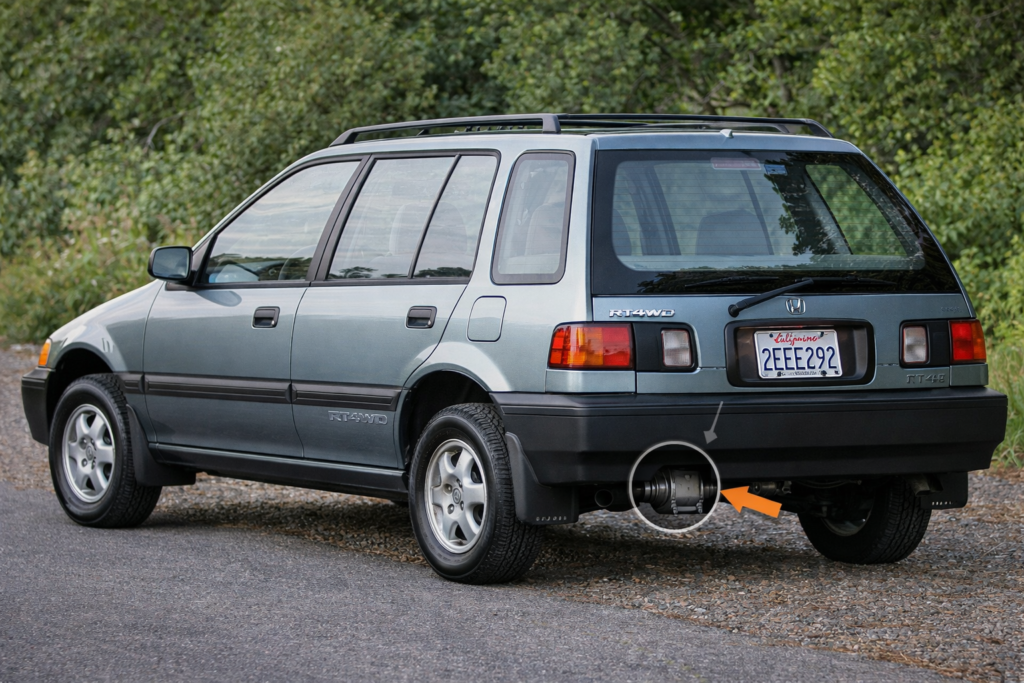
Yes, but only once and very briefly.
Between 1988 and 1991, Honda sold a Civic Wagon with a part-time AWD system. It was rare and aimed at light off-road and snow use. It disappeared due to low demand and added cost.
That experiment never returned. Every Civic thereafter went back to FWD-only.
Why Does Honda Use Front-Wheel Drive in the Civic?
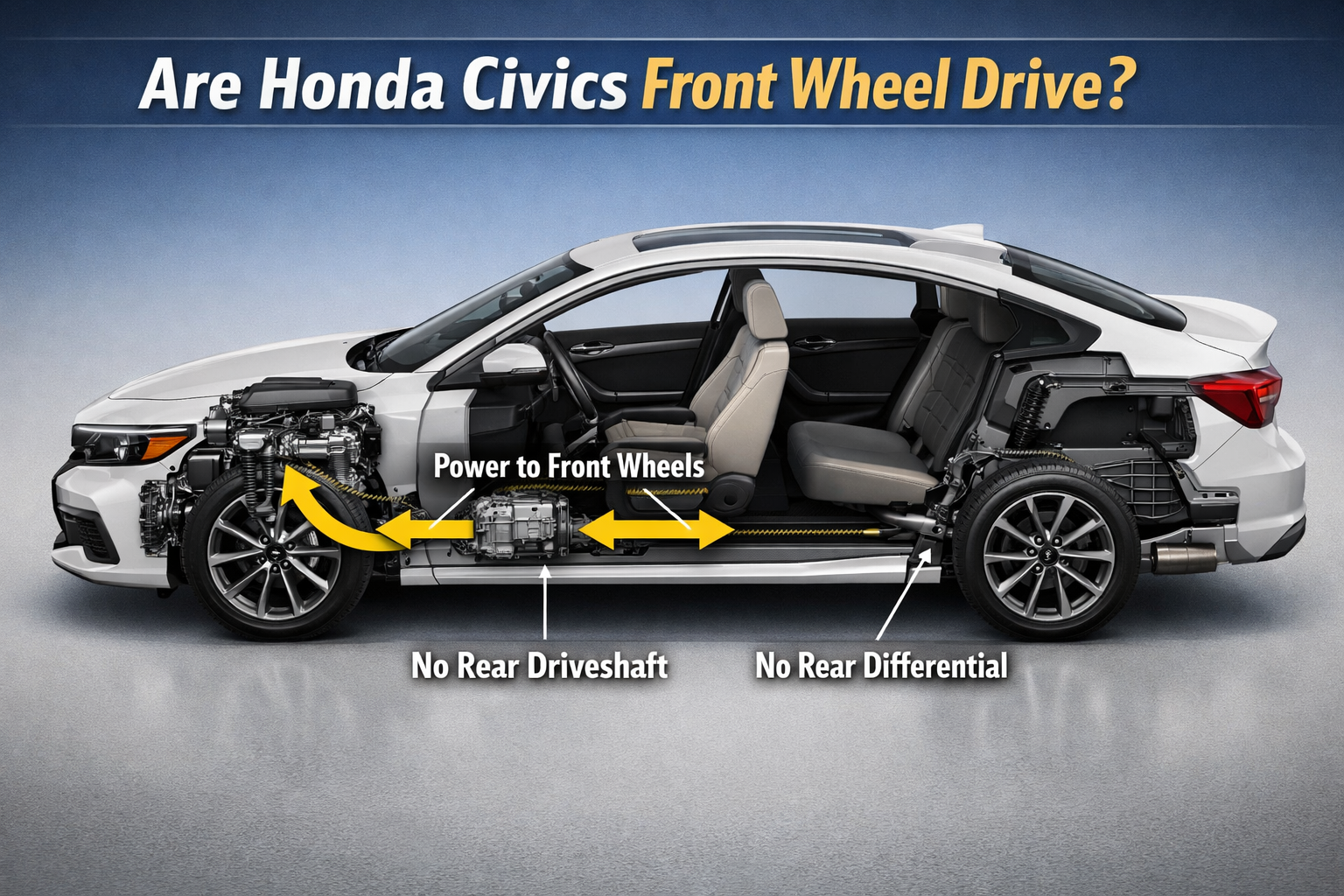
Honda engineers designed the Civic around a transverse engine layout from day one. In this front-engine configuration, the engine and transmission sit sideways, sending power directly to the front axle. That mechanical layout reduces drivetrain complexity, saves weight, and improves front axle load distribution, which directly supports fuel efficiency and stable handling.
Front-wheel drive helps the Civic stay lighter by avoiding the extra hardware of an all-wheel-drive system, such as a rear differential and driveshaft. That lower weight improves fuel economy and keeps running costs down. It also allows for a more compact mechanical layout, which frees up cabin and trunk space. On top of that, fewer components mean lower manufacturing costs, helping Honda keep the Civic competitively priced in the compact car segment.
Adding AWD would increase the weight by roughly 150–200 pounds and raise the price. In the compact car segment, that matters.
Honda reduces torque steer through suspension geometry, electronic stability control, and precise calibration of the traction control system. Even the Civic Type R uses a helical limited-slip differential to control front-wheel power delivery under hard acceleration.
Curious how Honda keeps their engines reliable across decades? Timing belts vs. chains make all the difference.
Read Guide: Do Honda Accords Have Timing Belts Or Chains?
Is a Front-Wheel Drive Honda Civic Good in Snow?
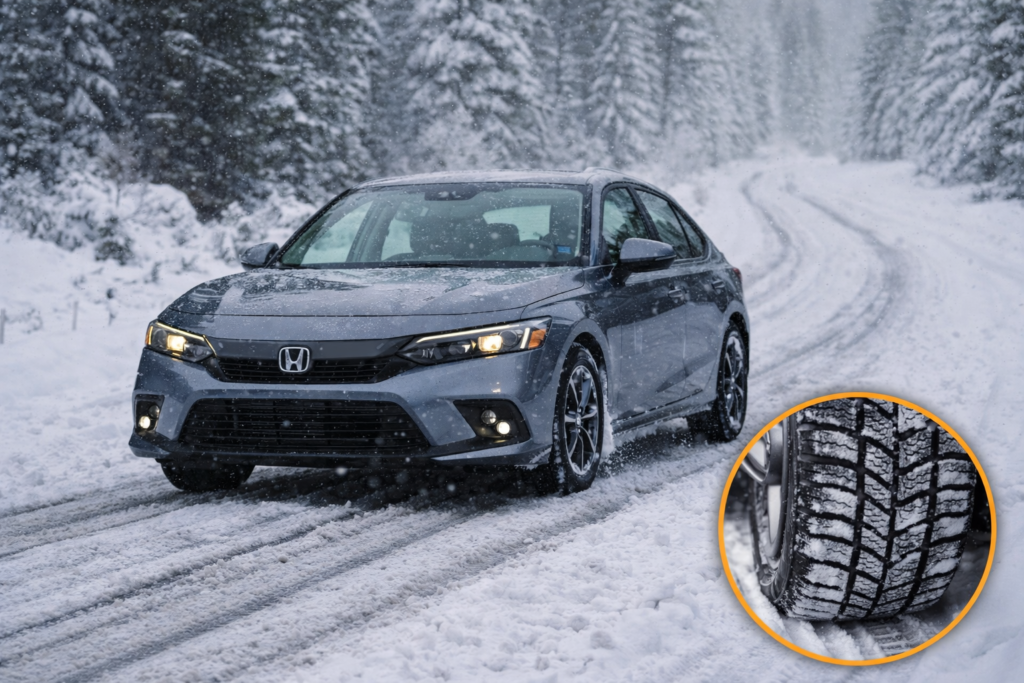
Yes, if you use proper winter tyres.
FWD puts engine weight over the front axle, which helps traction in snow. But tyre choice matters more than drivetrain.
- FWD + winter tyres = very capable in snow.
- AWD + all-season tyres = still limited in braking.
- Civic’s traction control helps prevent wheel spin.
Real-world example: Many drivers in Canada use Civics year-round without AWD. Tires make a real difference.
In real winter testing, stopping distance depends more on tyre compound than drivetrain configuration. AWD helps you move forward, but it does not shorten braking distance. That’s why a front-wheel drive Civic with winter tyres often feels more controlled than an AWD car on all-season tyres.
How Does the Honda Civic Compare to AWD Competitors Like the Toyota Corolla?
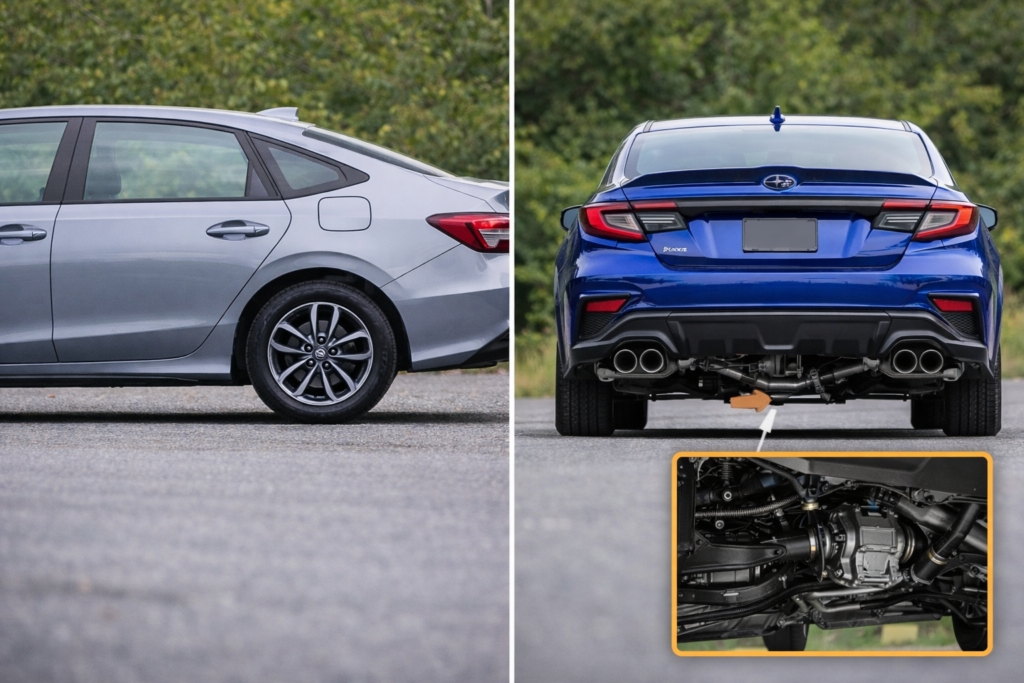
The main rival offering AWD in this class is the Toyota Corolla, but only in select hybrid trims.
| Feature | Honda Civic (2026) | Toyota Corolla AWD Hybrid |
| Drivetrain | FWD only | AWD available |
| MPG Focus | High efficiency | Slightly lower with AWD |
| Weight | Lighter | Heavier with AWD |
| Price Impact | Lower base cost | AWD costs more |
If you live in a heavy-snow area and want factory AWD, the Corolla offers it. If you care more about handling feel and price balance, Civic remains strong.
The Civic stays lighter by avoiding rear differential hardware. In the compact car segment, extra drivetrain weight reduces efficiency and slightly dulls steering feel. Honda prioritises balance over added traction hardware.
Read Guide: How Many MPG Does A Honda Accord Get?
What is the Difference Between FWD, AWD, and RWD?
Here is the simple breakdown:
FWD (Front-Wheel Drive)
- The front wheels pull the car.
- Better fuel economy.
- Common in compact cars like the Civic.
AWD (All-Wheel Drive)
- All four wheels get power.
- Better traction in snow or mud.
- Adds weight and cost.
RWD (Rear-Wheel Drive)
- The rear wheels push the car.
- Better for performance balance.
- Rare in compact sedans.
Should You Be Concerned About the Civic Being FWD?
If you live in extreme snow regions with steep hills, AWD gives added confidence when starting from a stop. But if your concern is safety, remember this: braking and steering control matter more than how many wheels receive power. The Civic’s electronic stability control and predictable front-engine layout make it stable in real-world driving. For most drivers, the fear around FWD is bigger than the actual limitation.
FAQs:
Are Honda Civics Front Wheel Drive?
Yes, almost every Honda Civic from 1972 through 2026 has a front-wheel-drive layout.
Is the 2026 Honda Civic Hybrid Front Wheel Drive?
Yes, the 2026 Civic Hybrid remains FWD only and does not offer an AWD option.
Has Honda ever made an AWD Civic?
Honda briefly offered a Civic Wagon with part-time AWD from 1988 to 1991.
Does front-wheel drive affect Civic performance?
FWD improves efficiency and stability, though high-power models rely on tuning and limited-slip systems to manage traction.
Do modern Honda Civics come with factory AWD?
No, current Civic sedans, hatchbacks, Si, and Type R models are not available with AWD.
Conclusion:
The Civic’s long-standing use of front-wheel drive is not a limitation; it is a deliberate design choice. Honda prioritises fuel economy, interior space, and affordability in this segment, and FWD supports all three. While AWD may help in extreme weather, most drivers will find the Civic fully capable with proper tyres and smart driving habits.