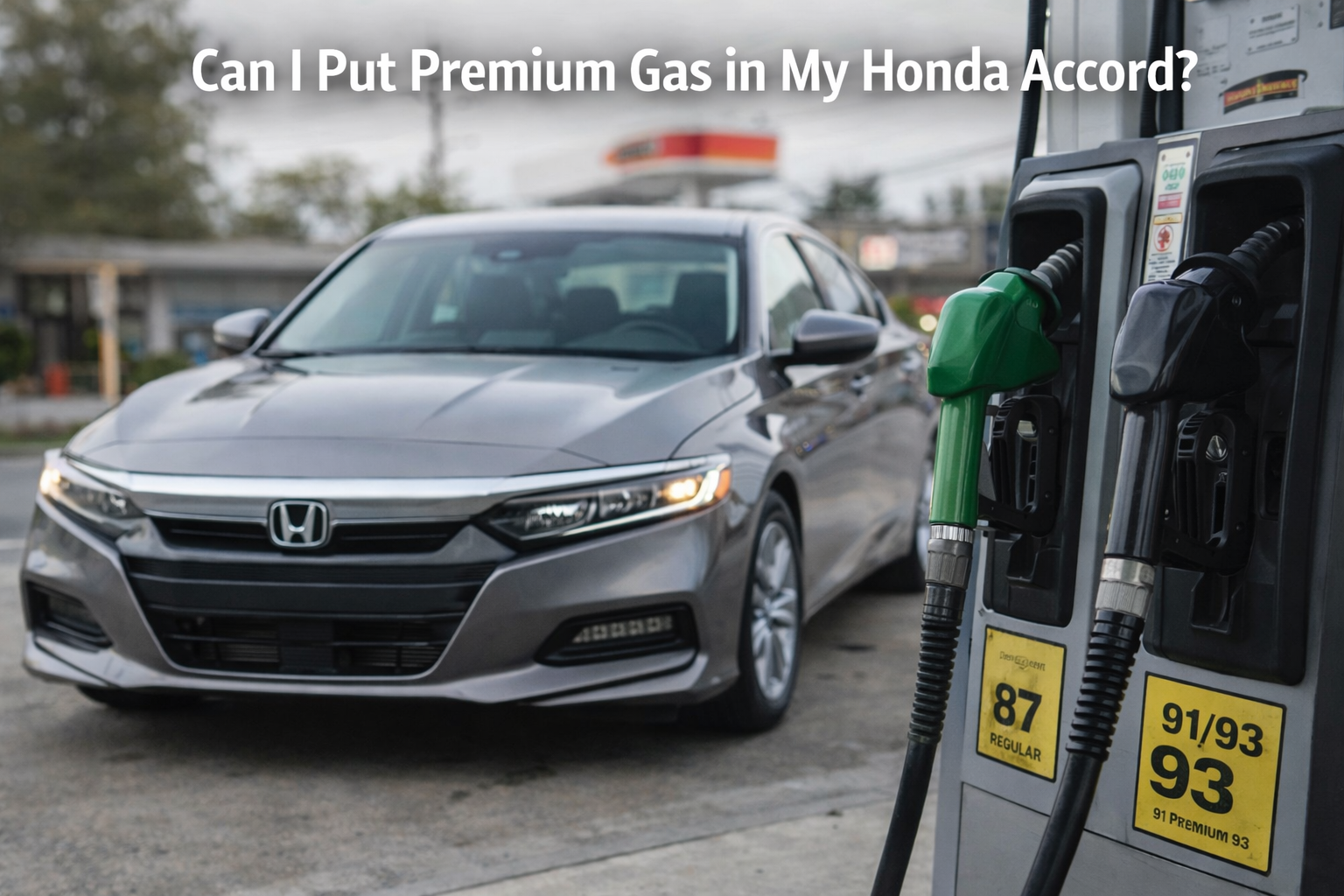
Can I Put Premium Gas in My Honda Accord? (Expert Tips 2026)
Honda Accord drivers often ask: Can I put premium gas in my Honda Accord? The short answer is yes, it is safe and may offer subtle advantages. However, with 2026 models recommending 91 octane while allowing 87 as a minimum, understanding the nuances is key.
In this guide, we will cover fuel recommendations, performance effects, cost implications, and, for most Accord owners, the key question: Is premium worth the extra money, or is regular still fine?
What Fuel Does Honda Recommend for the Accord?
Honda’s fuel recommendations prioritize reliability and performance. For the 2026 Honda Accord, the official specifications list regular unleaded gasoline as the standard, but recent updates suggest a preference for higher-octane fuel in certain scenarios.
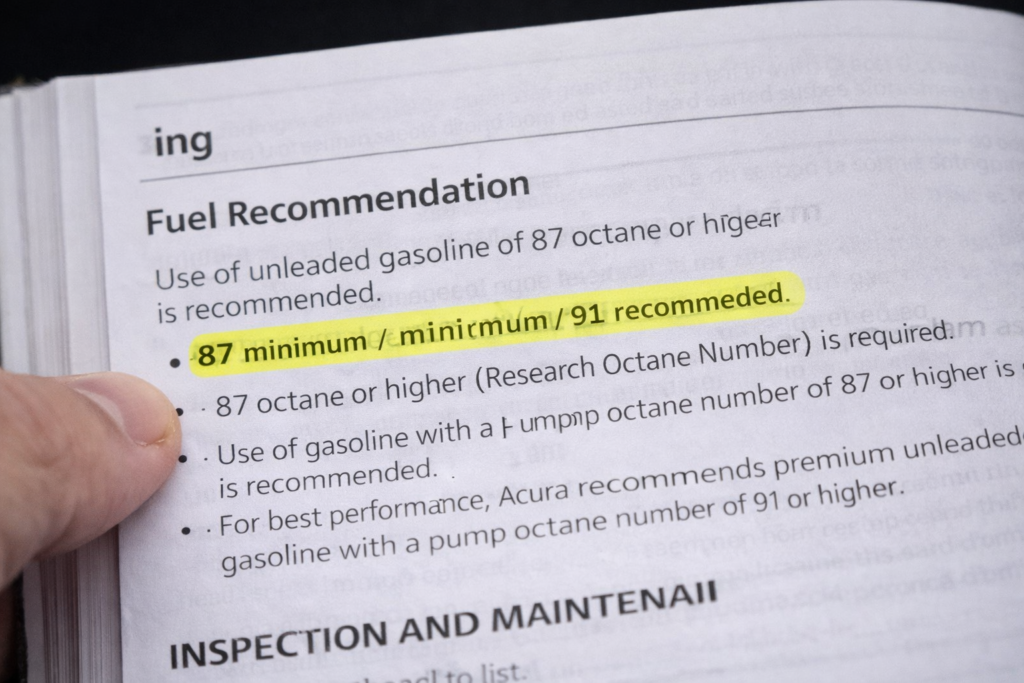
Official Honda Guidelines:
According to Honda’s latest documentation, all 2026 Accord trims from LX to Touring Hybrid recommend regular unleaded fuel with an octane rating of 87 or higher. However, in SPORT mode, premium gasoline (91 octane or above) is advised to maximize responsiveness. Honda leaves some wiggle room here, which is why owners get confused. The manual recommends 87, but the car performs slightly better on 91 under certain conditions.
Ethanol blends like E10 are acceptable, but E85 is strictly prohibited, as it can damage fuel systems not designed for high-ethanol content. Always consult your owner’s manual for model-specific details.
In real-world driving, most owners will never feel a difference unless they push the car hard or drive in extreme heat.
Differences by Model and Generation:
The 11th-generation Accord (2023 onward) features turbocharged 1.5L and 2.0L engines in gas models, with hybrids using a 2.0L Atkinson-cycle setup. For 2026, gas-only trims like LX and SE maintain a 87-octane minimum, but forums note spec sheets recommending 91 for optimal performance across all engines. Compared to earlier generations, such as the 10th-gen (2018-2022), the shift emphasizes premium for turbo models to mitigate knocking under load. Hybrids, however, show no significant difference and can run on regular unleaded fuel due to their efficiency-focused design.
This shift confused many owners because Honda allows 87 but quietly rewards 91 in newer turbo setups.
Curious about the exact fuel Honda recommends for your model? Check out our full guide here!
Also Read: What Gas Does A Honda Accord Take?
When Premium Might Be Advised:
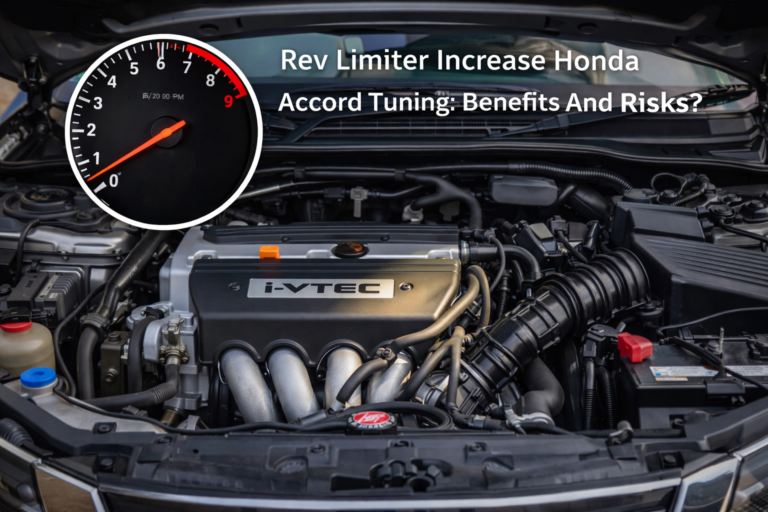
If you drive aggressively, sit in traffic during hot summers, or notice pinging under load, premium actually makes sense. For tuned engines, it is essential to prevent detonation. If your Accord is modified, higher octane ensures the knock sensor does not retard timing excessively. In stop-and-go traffic, the premium does not feel magical, just slightly smoother.
Premium vs. Regular Gas: Key Differences
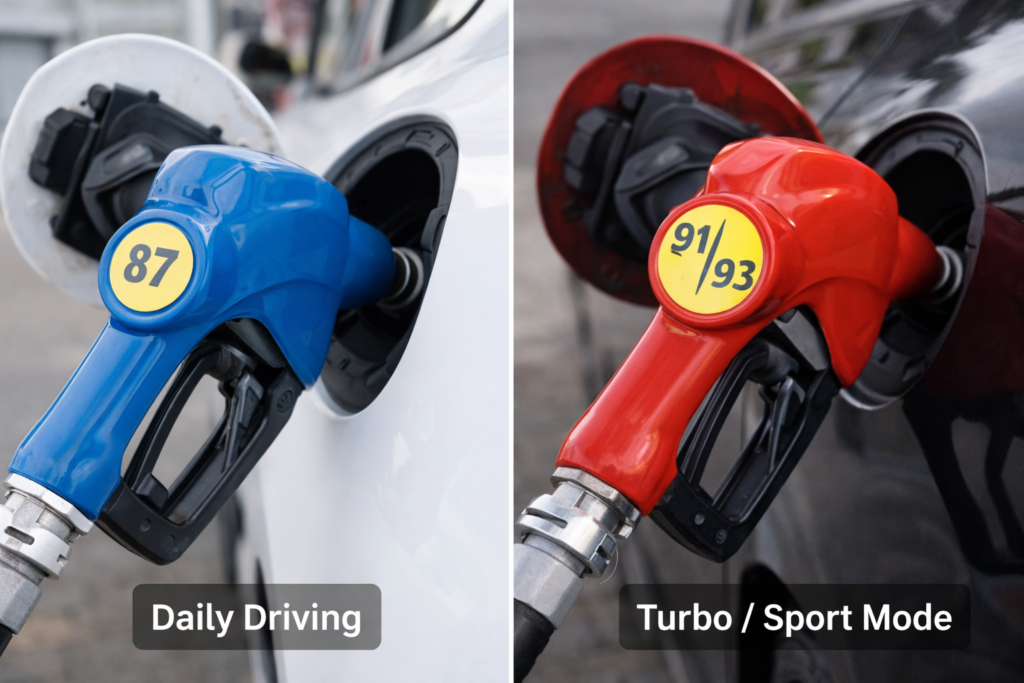
Understanding the difference between premium and regular gas is crucial for Accord owners. The primary distinction lies in octane ratings, which influence combustion stability.
For normal commuting, most drivers would not notice anything beyond a slightly lighter wallet.
Octane Ratings Explained:
Regular unleaded typically rates at 87 octane, while premium ranges from 91 to 93. Octane measures resistance to premature ignition, or knocking. Higher ratings prevent this in high-compression engines.
For the Accord’s 10:1 compression ratio in gas models, 87 octane is sufficient, but 91 provides a buffer against pinging.
Impact on Engine Performance:
Regular gas burns faster, making it suitable for low-compression setups. Premium reduces knocking, potentially boosting power by 5 to 7 horsepower in tests, though real-world gains are minimal for stock Accords. It also cleans engines more effectively due to its superior detergents.
Cost and Availability Comparison:
As of early 2026, regular gas averages $2.84 per gallon nationally, with premium at $3.34 to $3.64, a 50- to 80-cent premium. Availability is widespread, but rural areas may limit options.
Most people scan this table and already know which fuel they are using. The real question is whether upgrading is worth paying for every fill-up.
| Fuel Type | Average Price (2026) | Octane Rating | Best For |
| Regular Unleaded | $2.84/gallon | 87 | Daily driving, hybrids |
| Mid-Grade | $3.09/gallon | 89 | Moderate performance |
| Premium | $3.49/gallon | 91 to 93 | Turbo engines, SPORT mode |
Benefits of Using Premium Gas in the Honda Accord?
While not required, premium gas provides tangible benefits for certain driving conditions.
Potential Power Gains:
In dyno tests similar to those on Honda CR-Vs, premium yielded a 7-hp increase, but track times showed no improvement. For Accord’s 2.0T, advanced timing enhances throttle response.
On the street, that extra power is hard to feel unless you’re already looking for it.
Improved Fuel Efficiency?
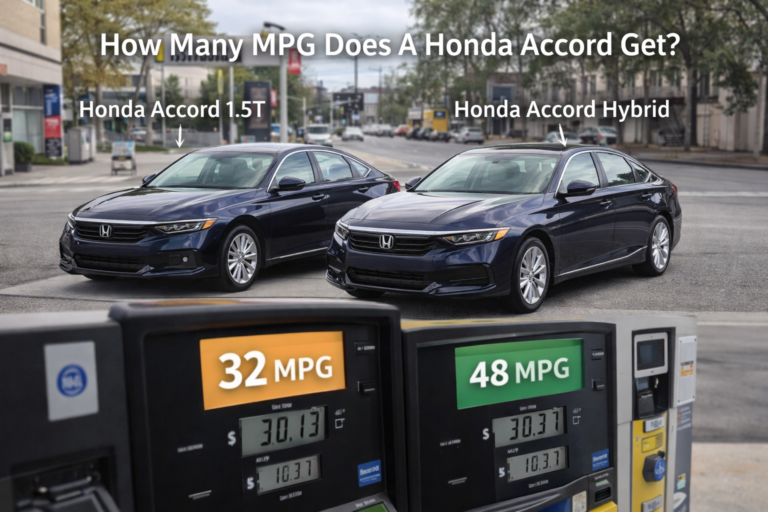
Marginal gains: Premium bumped MPG from 27.3 to 27.6 in studies, a 1% improvement that does not justify a 21% higher cost. For 2026 hybrids, expect 51/44 MPG on regular.
Fuel Statistics Through the Ages: A Record of a Honda Accord 2000 to 2010
Long-Term Engine Health:
Premium detergents reduce deposits, extend valve life, and prevent piston issues in 1.5T/2.0T engines. Over very long ownership, this may help keep things cleaner, but it is not a magic shield against wear.
Premium may help engines last longer, but what about other key components, such as your alternator? Learn the replacement costs.
Also Read: Honda Accord Alternator Replacement Cost?
Are There Risks or Myths About Using Premium Gas?
There is a lot of bad advice floating around about premium fuel. For most stock Accords, the premium is optional, not required.
Common Misconceptions Debunked
Myth: Premium always boosts performance. Reality: For non-required engines like the Accord, gains are negligible. Another: It is a waste of money, true for most, but beneficial for tuned setups.
When Premium Could Harm:
Rarely, modern knock sensors adjust. However, consistent use of low-octane fuel risks damage.
Ethanol and Additives Insights:
Ethanol acts as a solvent and can cause deposits if its concentration exceeds 10%. Opt for Top Tier to mitigate.
Does Premium Gas Really Perform Better Than Regular?

Tests help, but they do not always match daily driving. Even these tests do not perfectly reflect daily driving, which is why owner experience matters just as much.
Dyno Results for Accord Models:
Car and Driver’s analogous tests showed minor HP boosts but no acceleration gains. User forums report 1-2 MPG improvements in hot climates.
User Reviews and Anecdotes:
Accord owners note smoother idling on premium, but many see no difference after switching.
Factors Affecting Outcomes:
Weather, driving style, and tuning influence results. In cold starts, the premium may reduce knocking.
Top Tier Gasoline: Why It Matters?
Top Tier gasoline exceeds EPA standards with enhanced detergents.
What Is Top Tier?
A certification ensuring 19x fewer deposits. Brands like Shell and Exxon qualify.
Benefits Over Standard Gas:
Reduces emissions by 45 to 72% over 5,000 miles; costs just 3 cents more on average.
Where to Find It?
Use the Top Tier locator for stations.
Do Turbo or V6 Honda Accords Need Premium Gas?
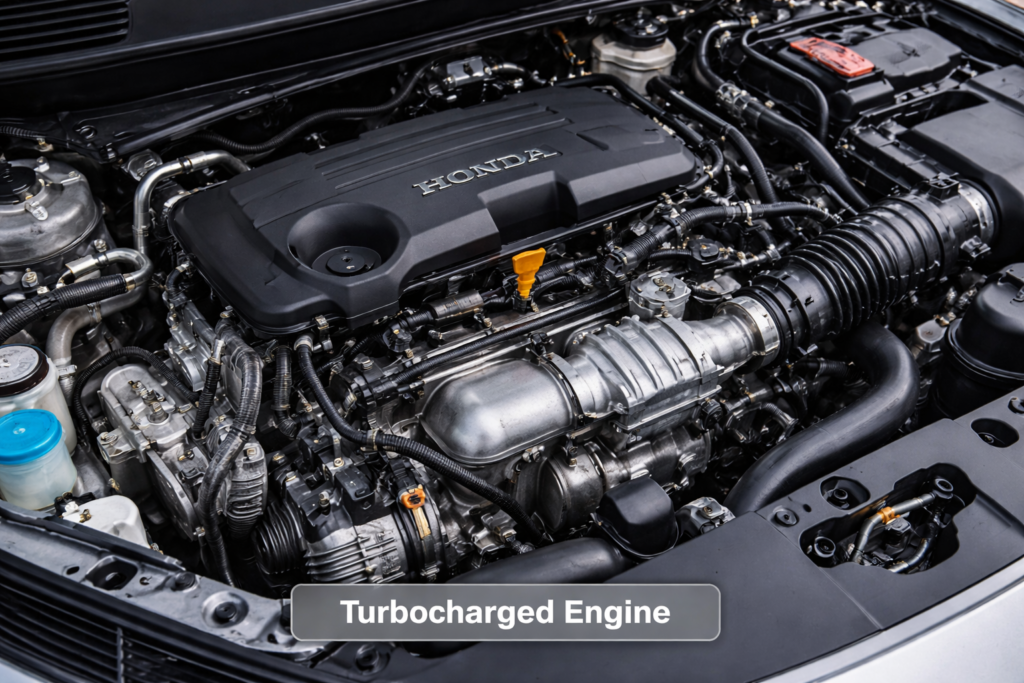
Turbo models benefit more from the premium.
Many turbo Accord owners switch to premium only in summer, then go back to regular the rest of the year.
1.5T and 2.0T Specifics:
For 2026 1.5T, 87 works, but 91 prevents piston issues.
V6 Recommendations:
Older V6 Accords (pre-2018) run fine on regular gas; no premium required.
Tuned vs. Stock Differences?
Tuned engines require premium to avoid detonation.
Is It Safe to Switch Between Regular and Premium Gas?
Safe, but follow best practices.
Honda designed these engines to tolerate switching, so you are not hurting anything by experimenting.
How to Safely Switch?
Run the tank low before changing; no harm to components.
What to Expect?
Slight performance shifts; monitor for knocking.
Common Issues and Fixes:
If pinging occurs, revert and check sensors.
Is Premium Gas Worth the Cost and Environmental Impact?
Most people just want decent mileage without overpaying.
Emission Reductions:
Premium reduces CO emissions, improving air quality.
Budget Impact Analysis:
For 15,000 miles at 32 MPG, premium adds $250 to 400 annually. Not worth it unless performance-driven.
Eco-Friendly Alternatives:
Hybrids reduce fuel use; consider ethanol-free for classics.
How Can You Avoid Fuel Problems in a Honda Accord?
Prevent issues proactively.
Storage and Shelf Life:
Gas deteriorates in 3 to 6 months; use stabilizers for seasonal storage.
Common Problems and Prevention:
Water contamination can cause rust; use Top Tier to prevent it.
Maintenance Tips:
Regular valve cleanings for GDI engines.
What Common Mistakes Do Accord Owners Make With Fuel?
Many wonder: Does a Honda Accord need premium gas? No, and for most drivers, regular works just fine. Honda recommends higher octane mainly to protect turbo engines under stress, not for everyday commuting. What happens if you add a premium? Safer combustion, minor boosts.
Avoid mixing E85, as it is incompatible. Users report doubts on piston durability; premium helps in turbos.
What octane for the 2019 Accord 2.0T? 87 minimum, 91 preferred.
What Fuel Tips Do Honda Experts Actually Recommend?
For advanced users: Monitor knock via OBD-II apps; use premium fuel in hot weather to improve turbo efficiency.
Long-tail advice: Benefits of premium in Honda Accord include cleaner valves over 100,000 miles. For 10th-gen, fuel type impacts the MPG test personally.
Always opt for Top Tier; calculate savings with a fuel log app.
External: Honda Official Specs
FAQ’s:
Does a Honda Accord need premium gas?
No, for stock Accords, regular 87 octane is sufficient, but 2026 models recommend 91 octane for optimal performance and reduced knocking in turbocharged engines.
What happens if you put premium gas in a Honda Accord?
It is safe and may improve efficiency and cleanliness, though gains are minimal for stock models.
Can I use E85 in my Honda Accord?
No, Honda engines are not certified for E85; use only 0-10% ethanol blends to avoid damage.
Is premium gas better for turbo engines?
Yes, it prevents detonation in high-compression turbos, such as the 2.0T, especially under load.
What octane gas should I use in my Honda Accord?
87 minimum; 91 recommended for 2026 trims, particularly in SPORT mode or hot conditions.
Conclusion:
Can you put premium gas in your Honda Accord? Yes, and for 2026 models, it is often recommended for peak performance. Weigh benefits like reduced knocking and emissions against costs. Prioritize Top Tier regular unless tuned or in SPORT mode. If your Accord runs smoothly on regular, there is no strong reason to pay more. Use premium when conditions demand it, not because the pump label sounds better. Ready to refuel wisely? Schedule a Honda service check today!